
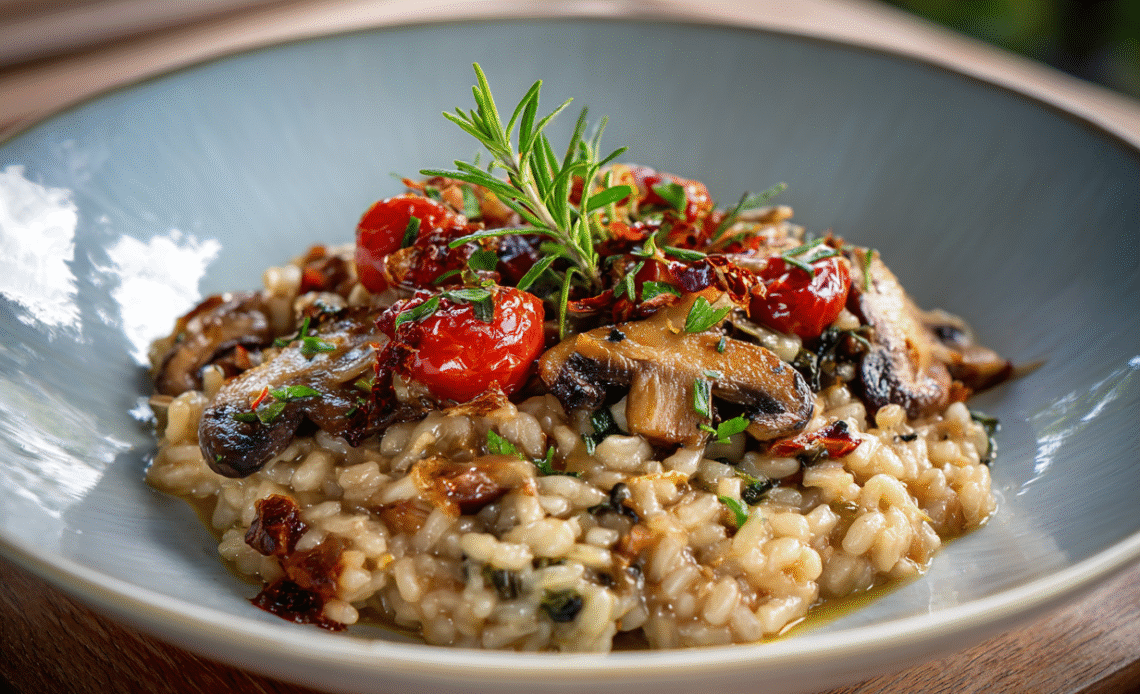
There’s something uniquely comforting about a bowl of perfectly cooked risotto. Its creamy texture and rich flavor feel indulgent, almost decadent. Yet, for those mindful of their sugar intake or overall health, traditional risotto can seem like a forbidden pleasure, often laden with butter, Parmesan cheese, and excessive salt. What if you could enjoy that same luxurious creaminess in a way that’s both nourishing and aligned with your wellness goals? Our healthy take on mushroom risotto proves that you can have your comfort food and feel good about it too, offering all the satisfaction with none of the guilt.
What Is Mushroom Risotto and Why Does This Version Matter?
Traditional mushroom risotto is an Italian classic where arborio rice is slowly cooked with broth until it reaches a creamy consistency, typically finished with generous amounts of butter and Parmesan cheese. While undeniably delicious, this method can make the dish high in saturated fat and sodium. Some recipes might also include white wine, which adds sugar, or rely on stock cubes high in sodium and hidden sugars.
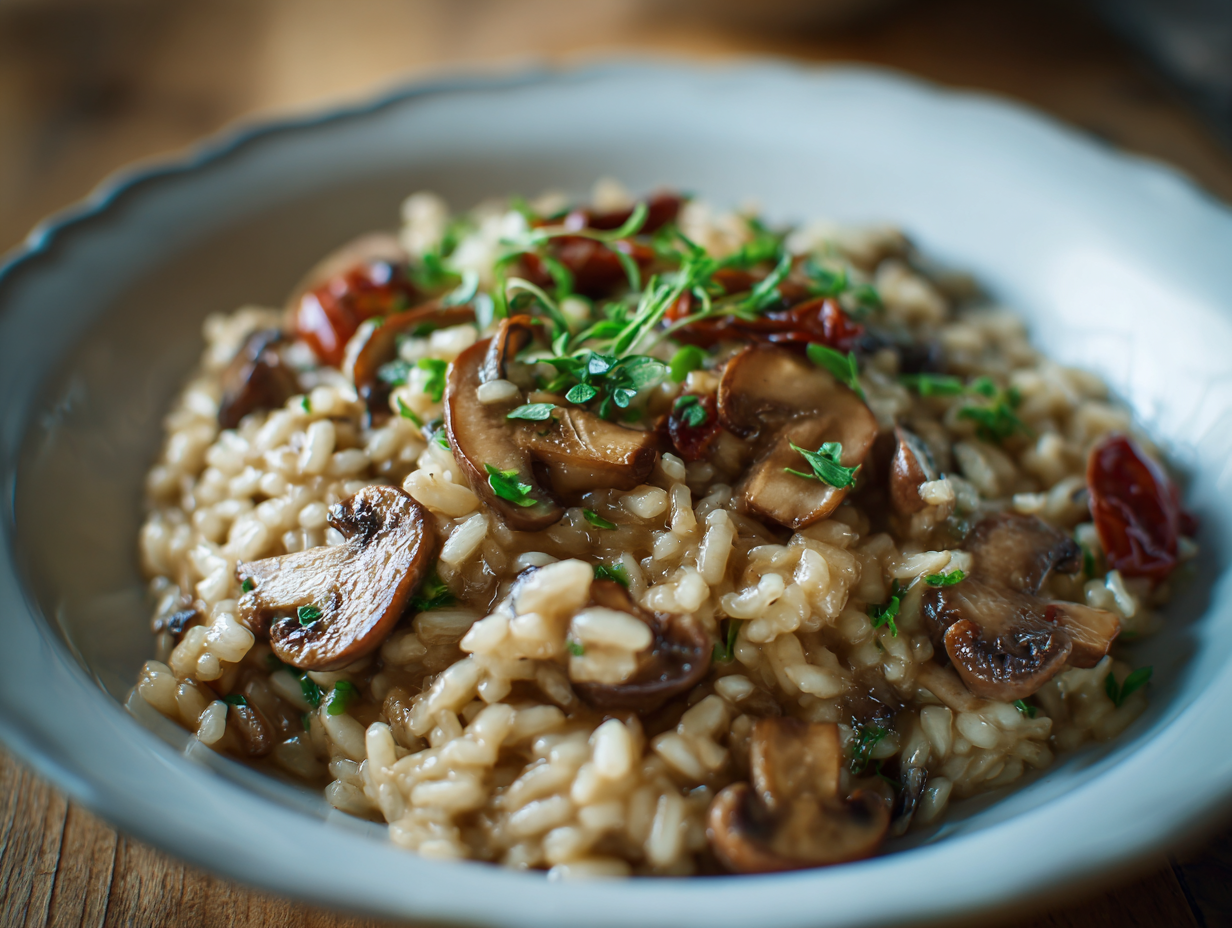
Our approach to mushroom risotto maintains the essential creamy texture while making smart, health-conscious adjustments. We use a minimal amount of vegetable oil instead of butter for the initial sauté, and our recipe relies on the natural starch from the risotto rice itself to create creaminess, rather than large quantities of cheese and fat. By using a reduced-salt vegetable stock and loading the dish with nutrient-rich mushrooms and peas, we’ve created a version of mushroom risotto that’s naturally lower in saturated fat and sodium while being completely sugar-free. This method proves that you don’t need rich ingredients to achieve that signature risotto comfort.
The Surprising Health Benefits in This Comforting Dish
This lightened-up mushroom risotto transforms from a simple comfort food into a nutritionally balanced meal:
- The Magic of Mushrooms: Mushrooms are the star of this dish, and they’re nutritional powerhouses. They are one of the few non-animal sources of vitamin D, especially when exposed to sunlight, and are rich in B vitamins like riboflavin and niacin. They also contain ergothioneine, a unique antioxidant that protects cells from damage.
- Smart Carbohydrates from Risotto Rice: Arborio rice is a short-grain rice high in amylopectin starch, which is what gives risotto its characteristic creaminess. While it is a refined grain, its high starch content provides sustained energy. The glycemic index of risotto can be moderated by the addition of vegetables and the fat from the small amount of oil used in cooking.
- Nutrient Boost from Peas and Spring Onions: The peas add a pop of color, plant-based protein, and fiber, while the spring onions provide prebiotic fibers that support gut health and add a mild, fresh flavor without the need for excess salt.
- Reduced-Sodium Approach: By using reduced-salt vegetable stock, we significantly lower the sodium content compared to traditional recipes that might use regular stock or bouillon cubes. This makes the dish more heart-healthy while allowing the natural flavors of the mushrooms and rice to shine through.
- Dietary Compatibility: This recipe is naturally vegetarian and can easily be made vegan by ensuring the vegetable stock is vegan. It’s also naturally sugar-free and, while not low-carb, provides a balanced meal when served with a side salad.
Navigating the Challenges of Perfect Risotto
Creating the perfect mushroom risotto can seem intimidating, but with a few key techniques, you can achieve restaurant-quality results at home:
- Achieving Creaminess Without Dairy: The creaminess in risotto comes from the starch released by the rice during the slow cooking process. The key is to add the stock gradually, stirring constantly to encourage the rice to release its starch. This creates a naturally creamy texture without needing heavy cream or excessive cheese.
- Preventing Mushy Rice: The goal is creamy but al dente rice. Use a timer and taste the rice frequently toward the end of cooking. It should be tender but still have a slight bite to it. Remember that it will continue to cook slightly after you remove it from the heat.
- Building Flavor Without Excess Salt: Sautéing the spring onions and garlic until fragrant builds a solid flavor foundation. Using a quality reduced-salt stock and fresh mushrooms ensures deep flavor without relying on sodium. The black pepper at the end adds a final flavor boost.
Tips and Trends for Modern Healthy Cooking
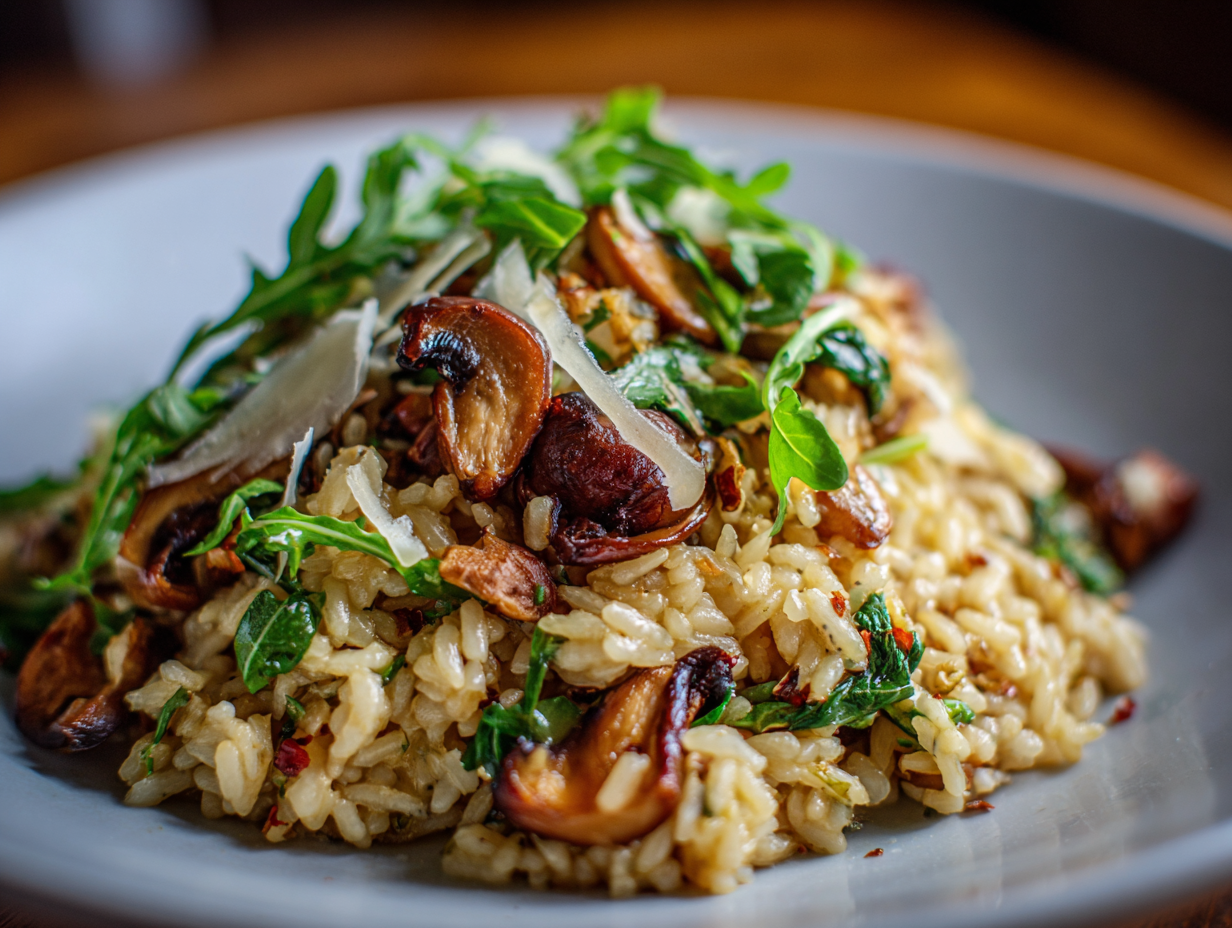
This healthier mushroom risotto fits perfectly with contemporary trends toward plant-forward eating and mindful indulgence. Using AI meal planners can help you incorporate such balanced, comforting meals into your weekly routine. The growing appreciation for umami-rich ingredients like mushrooms makes this dish particularly relevant for those seeking depth of flavor without heavy sauces or excess salt. Mastering fundamental techniques like risotto-making is a valuable skill for creating satisfying, restaurant-quality meals at home that align with a health-conscious lifestyle.
Frequently Asked Questions
Question: Can I make this mushroom risotto without constant stirring?
Answer: While constant stirring yields the best creamy texture, you can get good results with frequent stirring. The key is to not leave the risotto unattended for more than a minute at a time, and to ensure each addition of stock is nearly absorbed before adding the next.
Question: What can I use instead of arborio rice?
Answer: While arborio is ideal, you can use other short-grain rice like carnaroli (which holds its shape better) or vialone nano. Long-grain rice won’t provide the same creamy texture due to its different starch content.
Question: My risotto turned out too dry/thick. How can I fix it?
Answer: If your risotto becomes too thick, simply stir in a little more warm stock or hot water until it reaches your desired consistency. The resting period will also thicken it slightly, so you may want to make it a bit looser than perfect before taking it off the heat.
Question: Can I add protein to this mushroom risotto?
Answer: Absolutely. Stir in cooked chicken, shrimp, or tofu at the end, or serve with a poached egg on top. For plant-based protein, add cooked lentils or chickpeas with the peas.
Conclusion
This healthy mushroom risotto demonstrates that comfort food doesn’t require compromise. By focusing on technique and quality ingredients, we’ve created a version that satisfies both the soul and the body. It’s a reminder that eating well is about balance, not deprivation—and that the most satisfying meals are often the simplest ones made with care.
We hope this recipe brings comfort and nourishment to your table! Have you tried making our healthy mushroom risotto? What variations did you enjoy? Share your experience in the comments below, and for more balanced, sugar-free recipes, explore the rest of sugardetoxlab.com.