

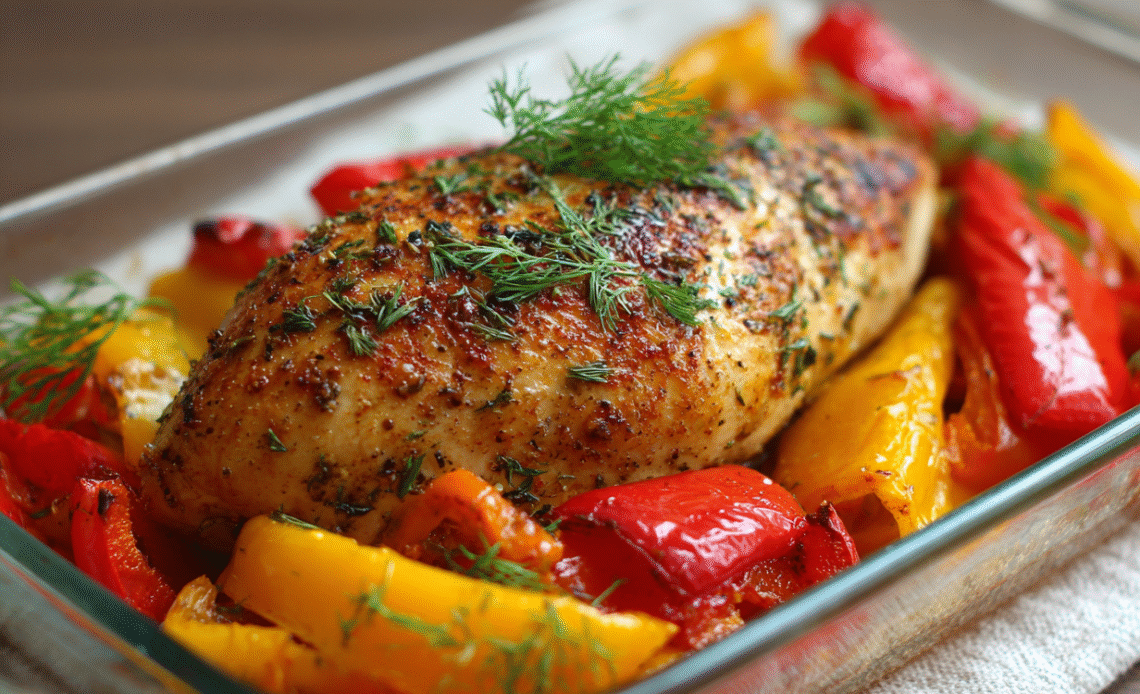
Finding dinner recipes that are both satisfying and aligned with health goals can sometimes feel like a challenge, especially when you’re committed to a sugar-free lifestyle. That’s why dishes like roast chicken breast with peppers are such valuable additions to your recipe collection. This roast chicken breast with peppers proves that eating well doesn’t mean sacrificing flavor or satisfaction—it means choosing ingredients wisely and preparing them in ways that maximize both taste and nutrition. The combination of lean protein and vibrant vegetables in this roast chicken breast with peppers creates a meal that’s as beautiful on the plate as it is beneficial for your body.
What Makes This Roast Chicken Breast with Peppers Special?
Roasted chicken and vegetables is a classic combination enjoyed across many cultures, but traditional versions can sometimes be heavy on oil, salt, or include sugar-laden marinades and sauces. Some recipes might use chicken with skin for extra flavor, or include starchy vegetables with high glycemic index values without balancing them with other nutrients.
Our approach to roast chicken breast with peppers maintains all the comfort and satisfaction of the classic while making thoughtful adjustments for health. We use skinless chicken breast to reduce saturated fat, and the flour coating helps create a delicious crust without needing excessive oil. The colorful peppers add natural sweetness and vibrant color, while the paprika and herbs provide depth of flavor without relying on salt or sugar. What makes this roast chicken breast with peppers particularly valuable for a sugar-free lifestyle is its complete absence of added sugars—the natural sweetness from the roasted peppers and onions, combined with the savory herbs and spices, creates a perfectly balanced flavor profile that needs no enhancement.

The Nutritional Benefits of This Balanced Meal
This roast chicken breast with peppers transforms simple ingredients into a nutritionally complete meal:
- Lean Protein Power: Chicken breast is an excellent source of lean protein, providing all the essential amino acids your body needs for muscle repair and maintenance. It’s particularly rich in tryptophan, selenium, and B vitamins, especially B3 (niacin) and B6. The high protein content also promotes satiety, helping you feel full and satisfied longer.
- Colorful Pepper Benefits: The red and yellow peppers are more than just colorful additions—they’re nutritional powerhouses. Bell peppers are an exceptional source of vitamin C, containing even more than oranges by weight. They also provide vitamin A, vitamin B6, folate, and various antioxidants that help protect cells from damage.
- Smart Carbohydrate Choices: The baking potatoes provide energy-sustaining complex carbohydrates with a moderate glycemic index, especially when eaten with their skins on for extra fiber. The broccoli adds additional fiber, vitamins C and K, and various phytonutrients.
- Herb and Spice Benefits: The paprika and oregano contribute more than just flavor. Paprika contains capsaicinoids and carotenoids with antioxidant properties, while oregano is rich in antioxidants and has antimicrobial properties.
- Reduced-Sodium Approach: Using reduced-salt stock helps control sodium levels while still providing a flavorful cooking liquid for the chicken and vegetables.
- Dietary Compatibility: This recipe is naturally sugar-free and can be adapted for various dietary needs. For a gluten-free version, use gluten-free flour or cornstarch. While not strictly low-carb, it provides a well-balanced meal suitable for most healthy eating patterns.
Creating the Perfect Roast Chicken and Vegetables
Achieving the perfect roast chicken breast with peppers requires attention to technique to ensure everything cooks evenly and develops maximum flavor:
- Chicken Preparation: Coating the chicken breasts in seasoned flour before roasting helps create a delicious crust while keeping the meat moist inside. The flour also helps thicken the cooking liquid into a light sauce.
- Vegetable Size Consistency: Cutting the potatoes, peppers, and onions into uniform sizes ensures they cook evenly. The potato wedges should be similar in thickness so they’re all perfectly tender when the chicken is cooked through.
- Layering Flavors: Starting the potatoes first gives them a head start since they take longer to cook than the other vegetables and chicken. Adding the peppers and onions later prevents them from becoming overcooked and mushy.
- Stock Addition: Adding reduced-salt stock to the roasting pan creates steam that helps keep the chicken moist while also developing a light sauce from the pan drippings and vegetable juices.
- Broccoli Timing: Steaming or boiling the broccoli separately ensures it maintains its bright green color and crisp-tender texture, providing a fresh contrast to the roasted components.
Modern Approaches to Healthy Roasting
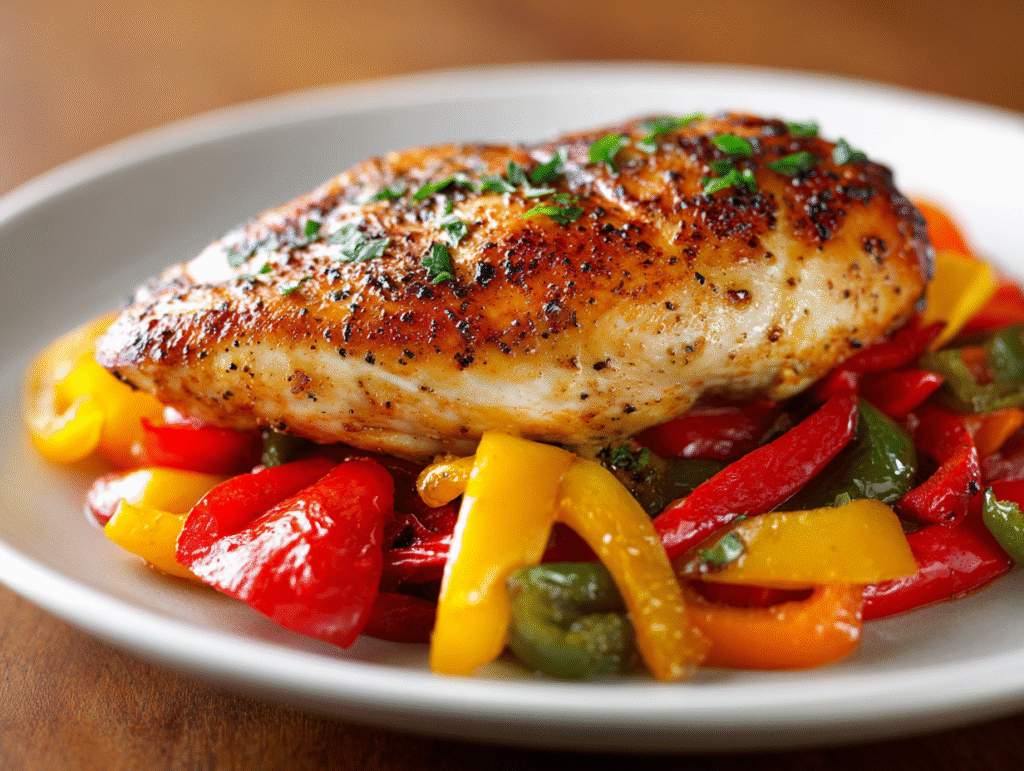
This roast chicken breast with peppers represents how traditional roasting techniques can be adapted for modern health consciousness. Using AI meal planners can help you incorporate such balanced, one-pan meals into your weekly routine. The trend of “sheet pan dinners” is perfectly exemplified here, making clean-up easy while delivering maximum flavor. Batch roasting vegetables and protein together aligns with efficient meal preparation strategies for busy households.
Frequently Asked Questions
Question: Can I use chicken thighs instead of breasts?
Answer: Yes, chicken thighs would work well but will have a higher fat content. Adjust cooking time as needed—thighs may require slightly longer cooking.
Question: My chicken turned out dry. How can I prevent this?
Answer: Use a meat thermometer to avoid overcooking—remove chicken when it reaches 74°C. Also, ensure your oven temperature is accurate, as ovens can vary. Letting the chicken rest for 5 minutes after roasting helps redistribute juices.
Question: Can I make this dish with frozen vegetables?
Answer: Fresh vegetables are recommended for roasting as frozen vegetables release more water and won’t achieve the same caramelization. However, you can use frozen peppers and onions in a pinch—pat them dry thoroughly before using.
Question: Is it necessary to use flour for coating the chicken?
Answer: The flour helps create a crust and thickens the cooking liquid. For a gluten-free version, you can use cornstarch or gluten-free flour, or omit it entirely, though the texture will be different.
Conclusion
This roast chicken breast with peppers demonstrates how simple techniques and quality ingredients can create a meal that’s both comforting and exceptionally good for you. It’s a reminder that healthy eating doesn’t require complicated recipes or hard-to-find ingredients—just thoughtful preparation and an understanding of how to maximize natural flavors. This dish proves that when you focus on whole foods and balanced combinations, you can create meals that satisfy both your taste buds and your nutritional needs.
We hope this recipe becomes a trusted favorite in your kitchen! Have you discovered the joy of one-pan roasting? Share your experiences and variations in the comments below. For more balanced, sugar-free recipes, explore the rest of sugardetoxlab.com.