

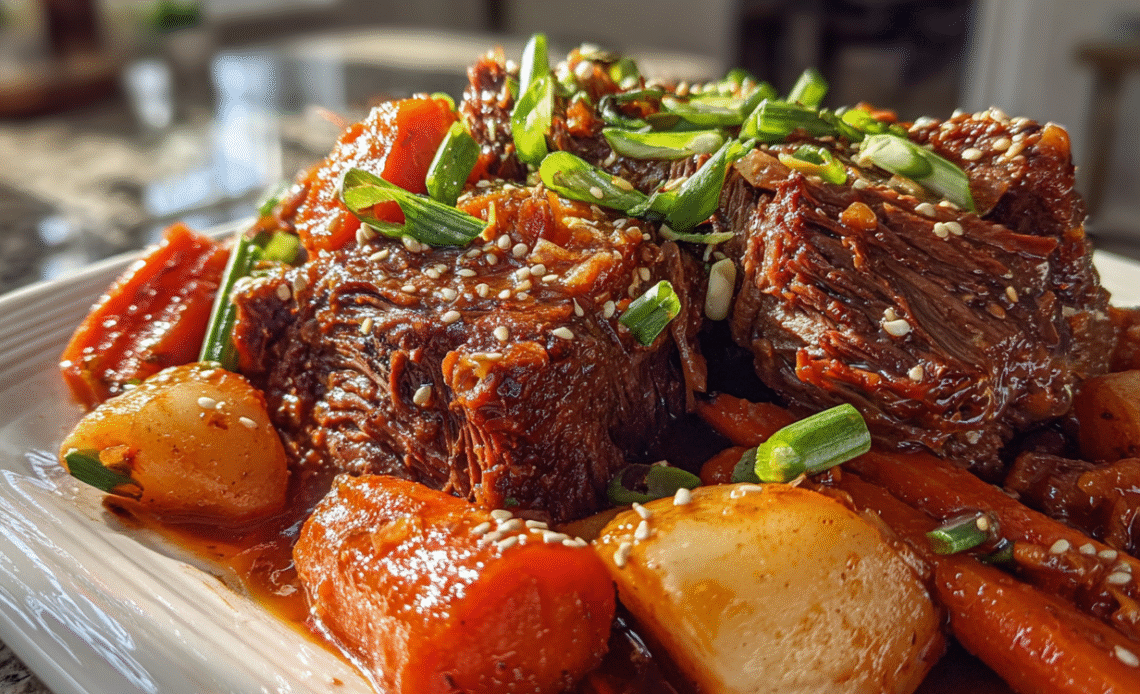
If you’re craving a comforting, slow-cooked dinner with bold, unforgettable flavor, Korean Style Pot Roast is the perfect dishes to bring to your table. This recipe takes the familiar richness of a classic pot roast and infuses it with Korean-inspired ingredients like gochujang, soy sauce, garlic, and ginger. The result is melt-in-your-mouth beef, tender vegetables, and a deeply savory, slightly sweet, and subtly spicy sauce that feels both cozy and exciting.
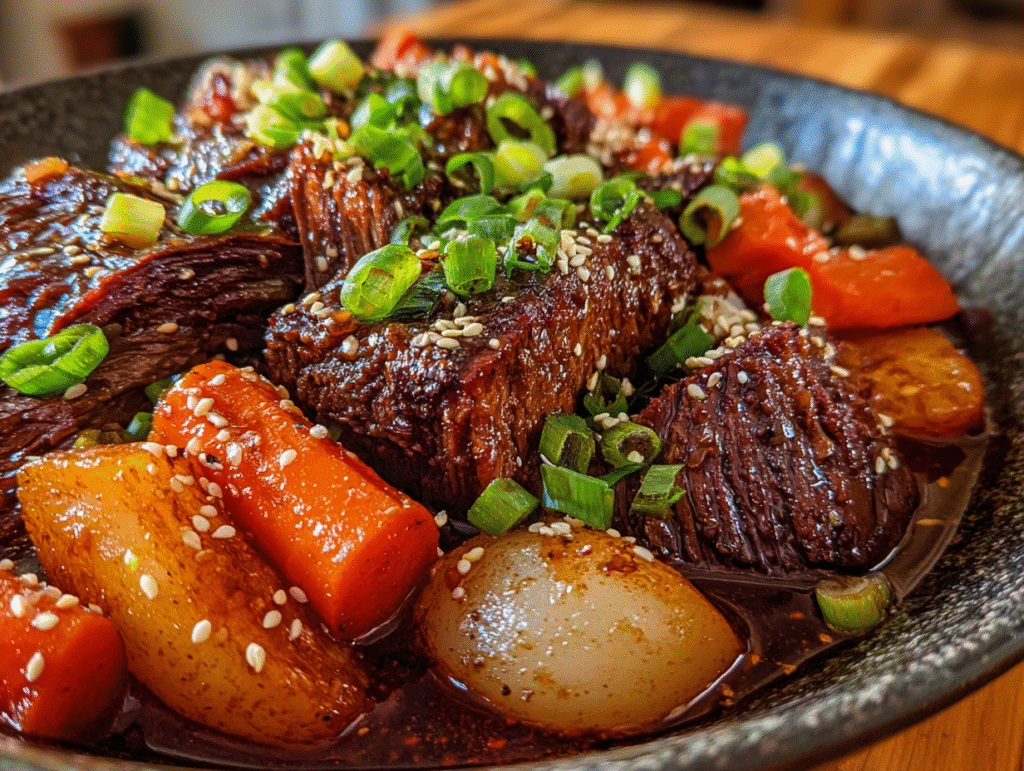
Perfect for weekend dinners, special family meals, or make-ahead comfort food, Korean Style Pot Roast delivers big flavor with surprisingly simple steps.
What Is Korean Style Pot Roast?
Korean Style Pot Roast is a fusion dish that blends traditional Western pot roast techniques with classic Korean flavors. Instead of herbs like rosemary and thyme, this version relies on umami-rich ingredients such as soy sauce, gochujang (Korean chili paste), sesame oil, and ginger.
Why This Fusion Works So Well
- Slow cooking tenderizes the beef beautifully
- Korean seasonings penetrate deeply over time
- Sweet, salty, spicy, and savory flavors stay balanced
- Familiar comfort food meets global flavor
It’s approachable, hearty, and packed with personality.
Why You’ll Love This Korean Style Pot Roast Recipe
This dish is designed to be impressive yet easy enough for home cooks.
Key Reasons to Make It
- Uses affordable, flavorful chuck roast
- One-pot cooking for easy cleanup
- Deep, restaurant-style flavor at home
- Beginner-friendly slow-cooking method
- Excellent leftovers that taste even better the next day
If you love comfort food with a twist, this recipe belongs in your rotation.
Ingredients for Korean Style Pot Roast
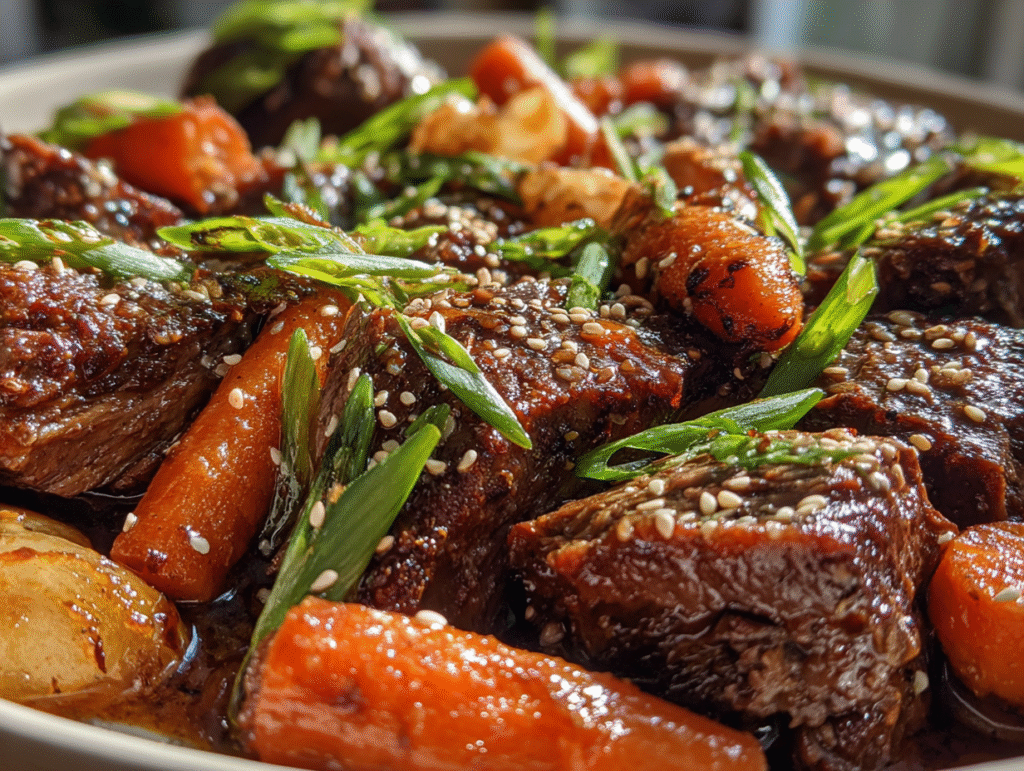
Each ingredient plays an important role in building flavor.
Main Ingredients
- 3–4 lbs chuck roast
- 3 carrots, peeled and cut into chunks
- 1 large onion, sliced
- 5 garlic cloves, minced
- 1 tablespoon fresh ginger, minced
- 1/4 cup soy sauce
- 2 tablespoons gochujang (Korean chili paste)
- 2 tablespoons brown sugar
- 2 tablespoons rice vinegar
- 1 tablespoon sesame oil
- 1 cup beef broth
- 2 green onions, chopped (for garnish)
- 2 tablespoons chopped cilantro (optional)
Ingredient Breakdown: Why Each One Matters
Chuck Roast
Chuck roast is ideal for pot roast because it becomes incredibly tender when slow-cooked and absorbs flavors well.
Gochujang
This fermented Korean chili paste adds depth, heat, and subtle sweetness—essential to authentic Korean-style flavor.
Soy Sauce and Beef Broth
These create a savory, umami-rich braising liquid that forms the backbone of the sauce.
Ginger and Garlic
These aromatics brighten the dish and balance the richness of the beef.
Sesame Oil
Used sparingly, sesame oil adds a nutty finish that ties everything together.
How to Make Korean Style Pot Roast Step by Step
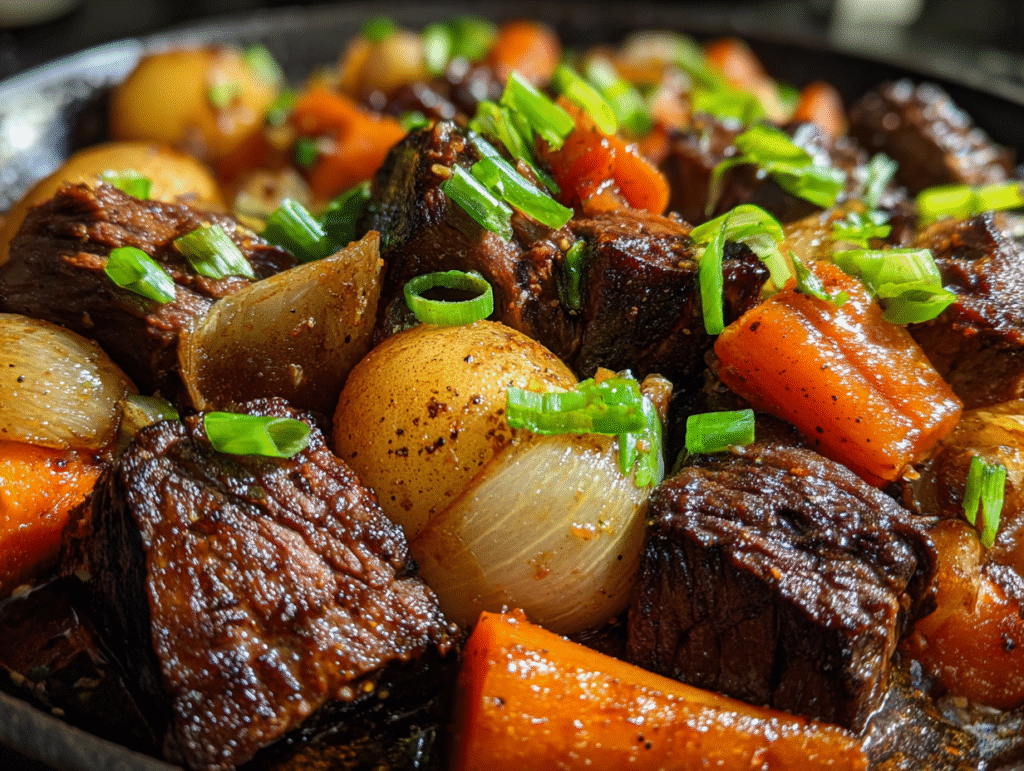
This recipe can be made in a Dutch oven, oven-safe pot, or slow cooker. Below is the classic stovetop-to-oven method.
Step 1: Prepare the Beef
- Pat the chuck roast dry with paper towels
- Season lightly with salt and pepper
Drying the meat helps achieve a better sear.
Step 2: Sear the Chuck Roast
Heat a large Dutch oven over medium-high heat.
- Add a small amount of oil
- Sear the roast on all sides until deeply browned
This step builds flavor through caramelization.
Step 3: Sauté Aromatics
Reduce heat to medium.
Add:
- Sliced onion
- Garlic
- Fresh ginger
Cook for 2–3 minutes until fragrant.
Step 4: Make the Korean-Style Braising Sauce
In a bowl, whisk together:
- Soy sauce
- Gochujang
- Brown sugar
- Rice vinegar
- Sesame oil
- Beef broth
Pour the mixture into the pot, scraping up browned bits from the bottom.
Step 5: Add Vegetables and Braise
Add carrots around the roast.
- Bring liquid to a gentle simmer
- Cover with a lid
Transfer to a 325°F (165°C) oven.
Step 6: Slow Cook Until Tender
Cook for 3–3½ hours, turning the roast once halfway through.
The beef should be fork-tender and easily shreddable.
Step 7: Rest and Garnish
Remove from oven and let rest for 10–15 minutes.
Garnish with:
- Chopped green onions
- Optional cilantro
Slice or shred before serving.
Pro Tips for the Best Korean Style Pot Roast
- Don’t skip the sear—it adds depth
- Use low-sodium soy sauce if sensitive to salt
- Adjust gochujang for spice tolerance
- Let the roast rest before slicing
- Spoon sauce over beef just before serving
Common Mistakes to Avoid
- Cooking at too high a temperature
- Using lean cuts of beef
- Overloading with gochujang
- Skipping aromatics
- Rushing the cooking time
Patience is key for perfect texture.
Slow Cooker and Instant Pot Options
Slow Cooker Method
- Sear beef first (recommended)
- Cook on LOW for 8 hours or HIGH for 5 hours
Instant Pot Method
- Sear using sauté mode
- Pressure cook for 60–70 minutes
- Natural release for best texture
What to Serve with Korean Style Pot Roast
This dish pairs beautifully with simple sides.
Serving Ideas
- Steamed white rice or jasmine rice
- Mashed potatoes
- Roasted broccoli or bok choy
- Pickled cucumbers or kimchi
The sauce is incredible over starches.
Storage and Make-Ahead Tips
Refrigeration
Store leftovers in an airtight container for up to 4 days.
Freezing
Freeze shredded beef and sauce for up to 3 months.
Reheating
Reheat gently on the stovetop or in the microwave with extra sauce.
Nutritional Highlights
- High in protein
- Rich in iron and collagen
- Balanced sweet, salty, and spicy flavors
- Filling and satisfying
Portion control keeps it balanced.
Frequently Asked Questions
What cut of beef is best for Korean style pot roast?
Chuck roast is best because it becomes tender and flavorful during slow cooking.
Is Korean style pot roast spicy?
It has mild to moderate heat. You can reduce gochujang for a milder version.
Can I make Korean style pot roast ahead of time?
Yes. It tastes even better the next day as flavors deepen.
What can I substitute for gochujang?
You can use a mix of miso paste and chili paste, but flavor will differ.
Is Korean style pot roast gluten-free?
It can be if you use gluten-free soy sauce.
Can I shred Korean pot roast instead of slicing?
Absolutely. Shredded beef works beautifully for rice bowls or wraps.
Why This Recipe Is Beginner-Friendly
- Straightforward steps
- Minimal prep
- Forgiving cooking method
- One-pot convenience
Even novice cooks can succeed.
Final Thoughts: Comfort Food with a Korean Twist
Korean Style Pot Roast is proof that comfort food can be bold, exciting, and globally inspired without being complicated. With tender beef, rich sauce, and layers of savory-sweet heat, this dish brings warmth and depth to any meal.
Ready to Try It?
Cook this Korean Style Pot Roast for your next family dinner, save it for meal prep, or share it with friends who love fusion comfort food.
If you enjoyed this recipe, don’t forget to bookmark it, comment, or share it online.