
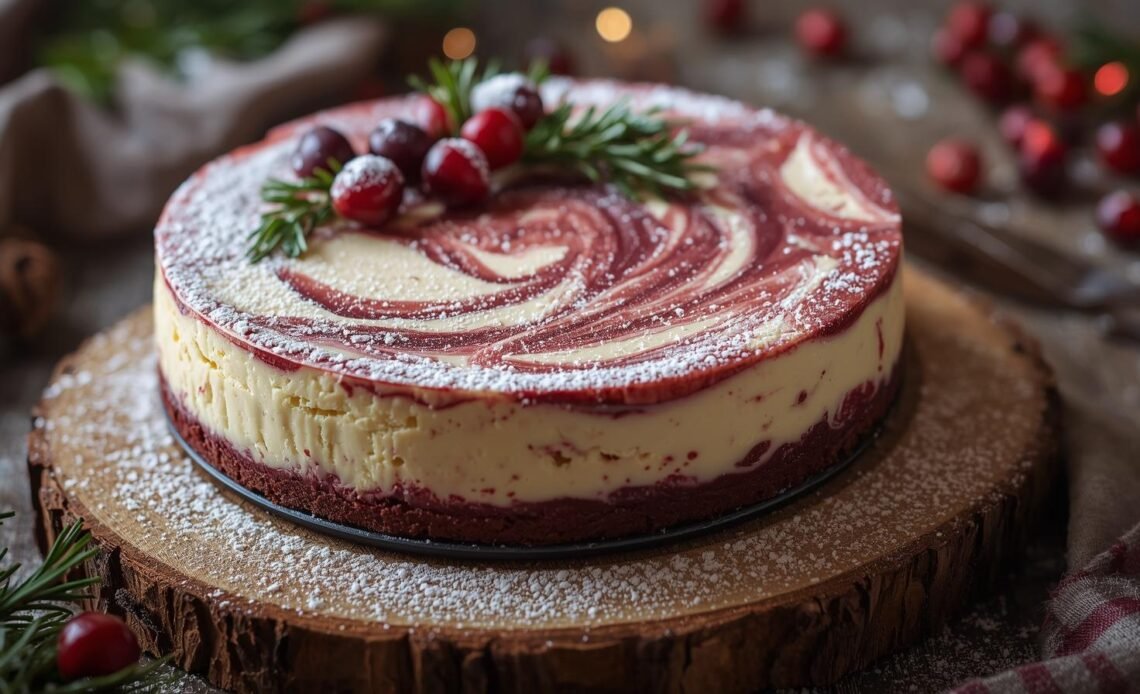
The holiday season brings with it a world of culinary temptations, where traditional desserts often come loaded with refined sugars and heavy ingredients that can leave you feeling weighed down. The iconic red velvet cake, with its rich color and creamy frosting, is a classic favorite, but its standard preparation is typically far from light. What if you could present a stunning, layered dessert that satisfies those festive cravings while aligning with a more mindful approach to eating? This Christmas Red Velvet Cheesecake is that very solution—a show-stopping centerpiece designed for indulgence without the guilt.
This recipe reimagines the classic by balancing flavor and wellness. We’ve carefully structured the layers to maximize taste and texture while providing opportunities for smarter ingredient choices. This Christmas Red Velvet Cheesecake isn’t about deprivation; it’s about celebration through thoughtful creation, proving you can enjoy the flavors of the season while honoring your health goals.
What Is Christmas Red Velvet Cheesecake and Why It Matters?
Traditional red velvet cake is known for its subtle cocoa flavor, vibrant red color, and signature cream cheese frosting. Often, it relies on a significant amount of oil and sugar for its signature moist, tender crumb. When combined with a cheesecake layer, the result is typically a decadent, but very sugar-dense, dessert.
This version matters because it shifts the focus. We are not creating a “diet” dessert, but rather a more balanced one. The importance lies in the conscious construction. By baking the red velvet layers and cheesecake layer separately, we achieve a perfect texture for each. Furthermore, this method allows for straightforward adaptations. You can control the quality of the cocoa powder, which contains flavanols known for their antioxidant properties, and opt for a reduced amount of food coloring or use natural alternatives like beet powder. This Christmas Red Velvet Cheesecake demonstrates that a celebratory dessert can be both beautiful and made with a mindful touch.
Making a Mindful Choice: Ingredient Insights
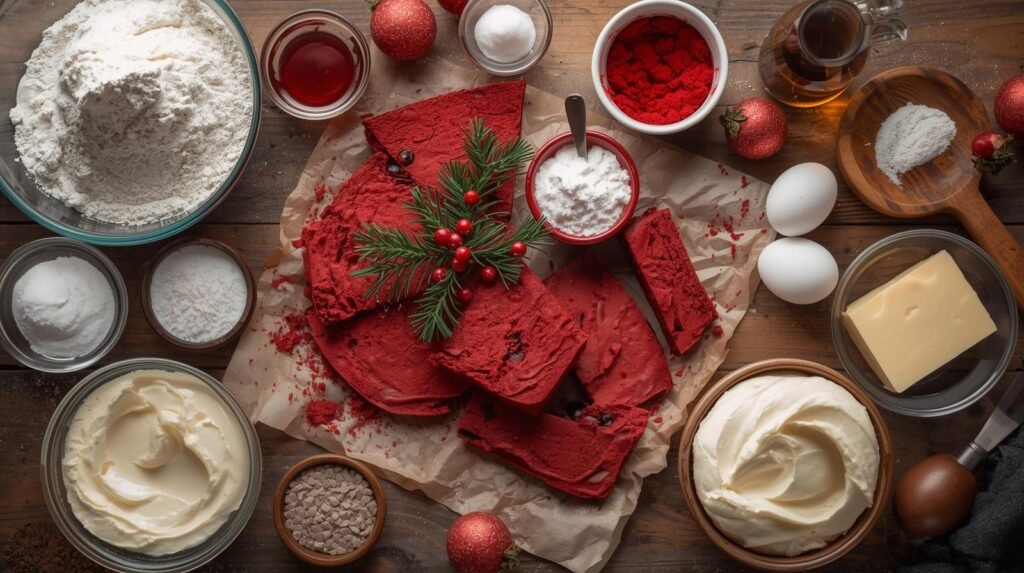
While this is a dessert, choosing high-quality ingredients can make a nutritional difference. Understanding the role of each component allows for smarter swaps and a more balanced indulgence.
- The Role of Cocoa: Using a high-quality unsweetened cocoa powder is key. It provides the distinct red velvet flavor and is a source of polyphenols. The bitter notes of the cocoa can also help balance the perception of sweetness, potentially allowing for a slight reduction in sugar.
- Cultured Dairy Benefits: Both buttermilk and sour cream are cultured dairy products. They contribute to the tender texture of the cake and the tangy flavor profile of the cheesecake. Cultured dairy can be easier to digest for some individuals and contains beneficial bacteria.
- Smart Fats: The vegetable oil in the cake layer provides moisture. For a healthier fat profile, you can substitute it with an equal amount of avocado oil or melted coconut oil. The fats from the cream cheese and butter also contribute to satiety, helping you feel satisfied with a reasonable portion.
This dessert can be adapted for various dietary needs. For a lower-sugar version, sugar substitutes like monk fruit or erythritol can be used in place of granulated and powdered sugars. For a gluten-free version, a 1:1 gluten-free flour blend can replace the all-purpose flour.
Navigating the Challenges of a Layered Dessert
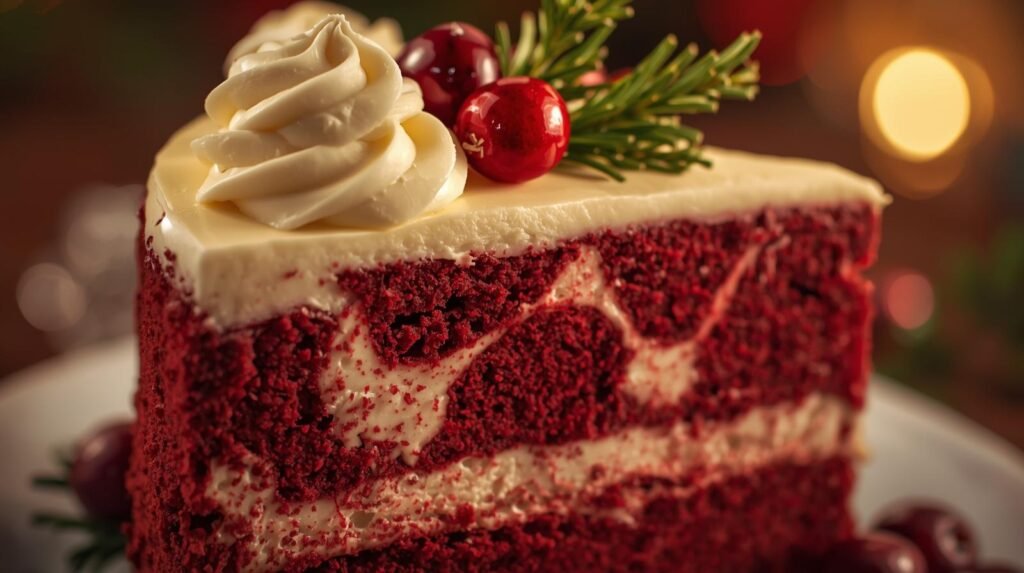
Creating a multi-layered dessert like this Christmas Red Velvet Cheesecake can seem daunting. The primary challenge is timing and patience, as each component needs to cool completely before assembly. Rushing this process can lead to a melted frosting or a collapsed cake. Plan to make this dessert over two days; bake the layers one day and assemble the next.
Another common hurdle is achieving the perfect red color without using excessive food coloring. If you prefer a natural route, beet powder is an excellent alternative, though it will impart a slight earthy flavor and may result in a deeper, less vibrant red. For the traditional bright red, a highly concentrated gel food coloring is more effective than liquid, requiring less volume to achieve the desired hue.
Tips and Trends for Modern Holiday Baking
The trend of “health-conscious baking” is stronger than ever. Home bakers are increasingly using technology, like AI-powered recipe apps, to calculate nutritional information and find suitable sugar substitutes for traditional recipes. Ingredients like monk fruit sweetener and erythritol are becoming pantry staples for those looking to manage their sugar intake. Digital kitchen scales are also invaluable tools for ensuring accuracy, which is crucial for the success of layered baked goods like this cheesecake.
Frequently Asked Questions (FAQ)
Question: Can I make this cake in advance, and how should I store it?
Answer: Absolutely. This cake is an excellent make-ahead dessert. You can bake the red velvet layers and the cheesecake layer up to two days in advance. Wrap the cooled cake layers tightly in plastic wrap and store the cheesecake in the springform pan in the refrigerator. Assemble and frost the cake the day you plan to serve it. The fully assembled cake keeps well in the fridge for up to 5 days.
Question: My cheesecake layer cracked. What did I do wrong and how can I fix it?
Answer: Cracking often occurs from overmixing the batter (incorporating too much air) or a sudden temperature change. To prevent cracks, avoid overbeating after adding the eggs, and allow the cheesecake to cool gradually in the turned-off oven. Don’t worry! The cracked layer will be hidden between the cake layers and frosting once assembled.
Question: Can I use a different type of flour for the red velvet layers?
Answer: Yes, for a gluten-free version, a 1:1 gluten-free all-purpose flour blend can be substituted. The texture may be slightly denser. We do not recommend using almond or coconut flour alone, as they require completely different ratios of liquid and fat.
Question: Is there a way to reduce the overall sugar in this recipe?
Answer: Yes. You can reduce the sugar in the red velvet cake and cheesecake layers by 1/4 cup each without drastically affecting the structure. For the frosting, using a powdered sugar substitute designed for frosting will significantly lower the sugar content.
Conclusion
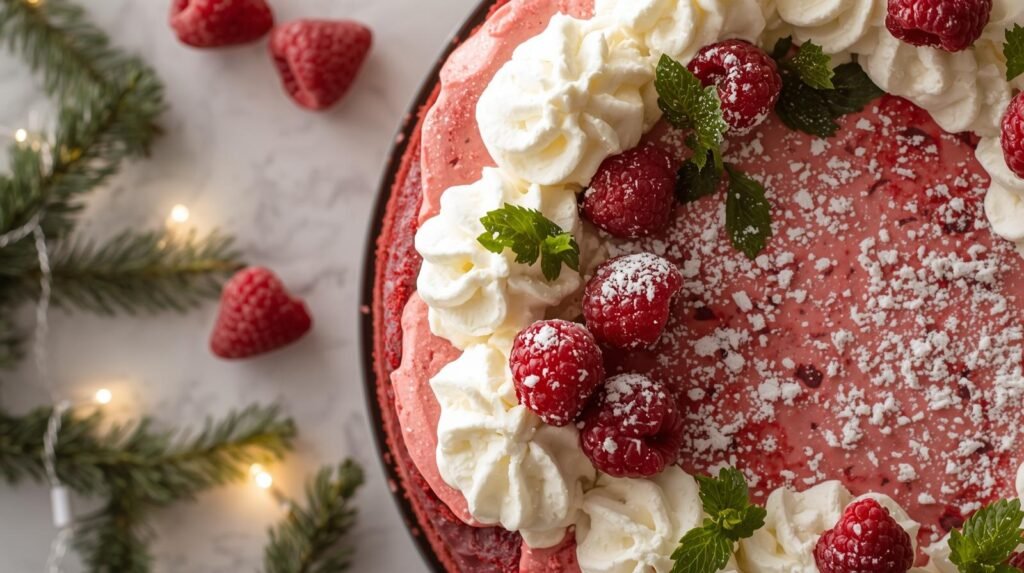
This Christmas Red Velvet Cheesecake is more than just a dessert; it’s a celebration of mindful baking and holiday spirit. It allows you to partake in festive traditions while making conscious choices about the ingredients you use. The stunning layers are a testament to the fact that you don’t have to sacrifice flavor or spectacle for a more balanced approach to indulgence.
We hope this recipe becomes a cherished part of your holiday gatherings. Share your beautiful creations with us on social media by tagging @sugardetoxlab. For more inspiring recipes that help you celebrate sweetly and smartly, explore the rest of our website and subscribe to our newsletter.