
If you’ve ever wandered through an Asian grocery store and spotted a long, white root vegetable that looks like a giant carrot, you’ve likely encountered daikon – white radish. This crisp, mild, and refreshing root is a staple in many Asian cuisines and is now gaining popularity worldwide for its versatility and nutritional value.
In this guide, you’ll learn what daikon – white radish is, its health benefits, how to cook it, and creative ways to use it in everyday dishes. Whether you’re exploring Asian cooking or simply adding more vegetables to your diet, this guide will help you enjoy daikon like a pro.
What Is Daikon?
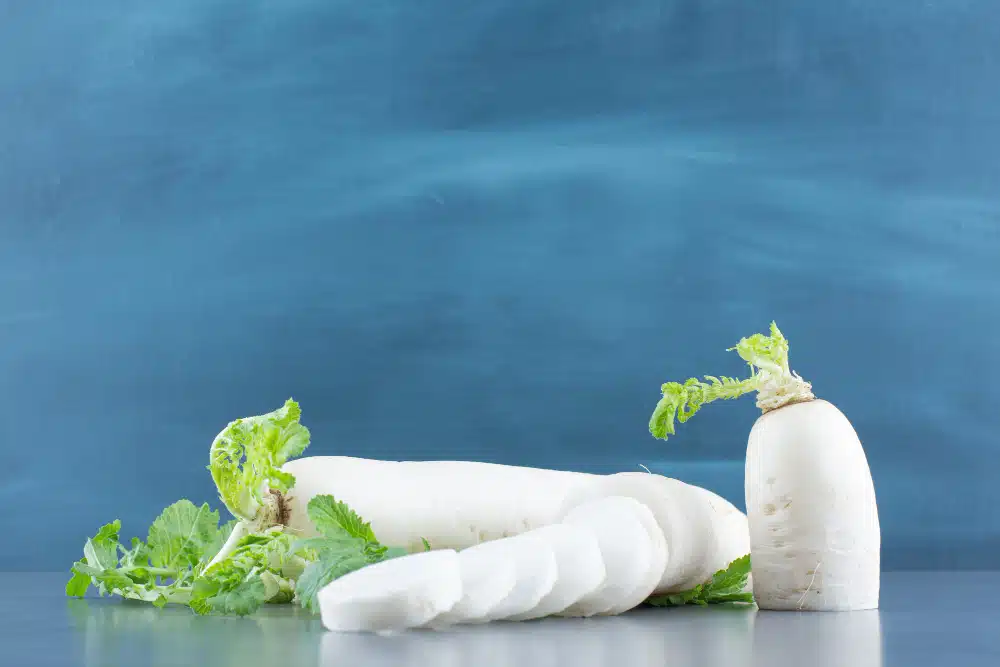
Daikon, also known as white radish, Japanese radish, or winter radish, is a mild-flavored root vegetable from the radish family (Brassicaceae). The name daikon comes from the Japanese words dai (big) and kon (root), meaning “big root” — and it fits perfectly.
Unlike the small, red radishes often found in Western salads, the white radish is long, cylindrical, and pale white, typically ranging from 6 to 20 inches in length. It has a crisp texture and mild taste that works beautifully in both raw and cooked dishes.
Common Names for Daikon:
- Japanese white radish
- Chinese radish (Lobak or Luo Bo)
- Korean radish (Mu)
- Indian radish (Mooli)
Daikon (white radish) is a key ingredient in Japanese, Chinese, and Korean cuisines, and is now beloved in Western kitchens for its mild flavor and impressive health benefits.
Nutritional Benefits of Daikon (White Radish)
This simple root is loaded with nutrition while being incredibly low in calories — making it ideal for healthy meal plans.
Nutrition Facts (per 100 grams of raw daikon):
- Calories: 18
- Carbohydrates: 4 g
- Fiber: 1.6 g
- Protein: 0.6 g
- Fat: 0 g
- Vitamin C: 27% of the daily value
- Folate, potassium, magnesium: small but important amounts
Key Health Benefits:
- 🫀 Heart Health: Potassium in white radish helps maintain healthy blood pressure.
- 💧 Aids Digestion: Enzymes in daikon improve digestion and reduce bloating.
- 💪 Boosts Immunity: High in vitamin C to support immune defense.
- 🌿 Detox Support: Acts as a natural diuretic, flushing out toxins.
- ⚖️ Supports Weight Loss: Low-calorie, high-fiber vegetable that promotes satiety.
What Does Daikon (White Radish) Taste Like?
Daikon has a crisp, juicy texture and mild, peppery flavor. It’s less spicy than red radishes and slightly sweet when cooked. Raw daikon offers a refreshing crunch, while cooked daikon becomes tender and subtly sweet — perfect for soups, stews, or stir-fries.
Because the white radish absorbs flavors easily, it’s a wonderful base ingredient for marinades, sauces, and slow-cooked dishes.
How to Choose and Store Daikon (White Radish)
Choosing fresh white radish ensures the best taste and texture in your recipes.
🛒 How to Choose Daikon:
- Select firm, smooth, heavy roots with bright white skin.
- Avoid any with soft spots or cracks.
- If greens are attached, they should be fresh and vibrant.
🧊 How to Store White Radish:
- Refrigerate: Wrap unwashed daikon in a paper towel and store it in a plastic bag. Keeps fresh for up to 2 weeks.
- Cut daikon: Store pieces in an airtight container for up to 5 days.
- Cooked daikon: Blanch or cook before freezing for up to 3 months.
How to Prepare Daikon: Step-by-Step
Here’s how to get your daikon ready for cooking:
Step-by-Step Preparation:
- Wash thoroughly under cold water to remove dirt.
- Peel the skin if desired (it’s edible but a bit tough).
- Cut into the desired shape — slices, cubes, or matchsticks.
- Blanch or lightly steam for soups and stir-fries.
Popular Cutting Styles:
- Slices: For soups or stir-fries.
- Julienned: For salads or slaws.
- Grated: For sauces or condiments like daikon oroshi.
- Cubed: For braised or simmered dishes.
How to Cook Daikon
Daikon can be enjoyed raw, cooked, pickled, or fermented, depending on your taste and the dish.
1. Raw Daikon – Fresh and Crunchy
Raw white radish is crisp and refreshing, perfect for salads or garnishes.
Try it in:
- Shredded daikon salad with sesame dressing
- Grated daikon as a topping for grilled fish
- Sliced daikon in sushi rolls
- Daikon slaw with vinegar and soy sauce
Pro Tip: Soak sliced daikon in cold water for 10 minutes to reduce sharpness.
2. Pickled Daikon (Sweet or Tangy)
Pickled white radish, known as takuan in Japan and danmuji in Korea, is a flavorful side dish.
How to Make Quick Pickled Daikon:
- Slice daikon into rounds or sticks.
- Mix rice vinegar, sugar, salt, and water.
- Submerge the daikon and refrigerate for 24 hours.
Serve with:
- Rice bowls
- Bibimbap
- Sushi or sandwiches
3. Cooked Daikon – Soft and Savory
Cooking brings out daikon’s sweetness and tenderness.
Popular Cooking Methods:
- Simmered: In Japanese oden (a winter stew).
- Stir-fried: With soy sauce, garlic, and sesame oil.
- Soup: Add to miso soup, ramen, or Korean beef soup (galbitang).
- Roasted: Toss with olive oil and bake for a low-carb side.
Tip: Add daikon early in soups to let it soften and soak up flavor.
4. Daikon Greens (Don’t Throw Them Away!)
The leafy tops of white radish are edible and full of nutrients.
How to Use Daikon Greens:
- Stir-fry with garlic and sesame oil.
- Add to miso soup or omelets.
- Blend into smoothies for extra fiber and minerals.

Creative Ways to Use Daikon (White Radish)
Looking for new ways to enjoy white radish? Try these creative ideas:
- Daikon fries: Bake thin sticks for a crunchy snack.
- Daikon noodles: Use a spiralizer for a low-carb pasta substitute.
- Daikon soup: Simmer with tofu and ginger for a healing broth.
- Daikon-carrot salad: Toss with rice vinegar and sesame seeds.
- Daikon kimchi: Add cubed radish to traditional kimchi for extra crunch.
Quick Tips for Cooking with Daikon
- 🧂 Season generously: White radish absorbs flavors easily.
- 🍲 Cook thoroughly: The longer it simmers, the softer and sweeter it gets.
- 🧊 Keep it fresh: Store in a cool, dry refrigerator compartment.
- 🌱 Use it all: The root and leaves are both edible and nutritious.
FAQs: What Is Daikon (White Radish) and How Can I Use It?
1. What is daikon used for in cooking?
Daikon (white radish) can be eaten raw, pickled, or cooked. It’s popular in salads, soups, stews, and as a garnish in Japanese and Korean cuisine.
2. Can I eat raw daikon radish?
Yes! Raw white radish is crunchy, mildly peppery, and perfect for salads or dipping sauces.
3. What’s the difference between daikon and regular radish?
Daikon is larger, milder, and juicier than red radishes. It’s ideal for cooking, while red radishes are more common in raw dishes.
4. How do you store fresh white radish?
Wrap in paper towels, place in a plastic bag, and store in the refrigerator for up to two weeks.
5. Is daikon (white radish) good for weight loss?
Absolutely. It’s low in calories, rich in fiber, and promotes satiety — perfect for low-carb or weight-loss diets.
6. Can I substitute white radish in recipes?
Yes, turnips or jicama can be good substitutes when daikon isn’t available.
Conclusion: Discover the Power of Daikon
Daikon, or white radish, is more than a root vegetable — it’s a culinary chameleon. With its crisp texture, subtle sweetness, and impressive nutritional profile, it deserves a spot in every healthy kitchen.
From refreshing salads and tangy pickles to warming soups and hearty stir-fries, there are endless ways to enjoy this versatile vegetable.
Call-to-Action:
Pick up a fresh daikon (white radish) on your next grocery run and try one of these easy recipes. You’ll soon see why this humble root has been a favorite in Asian kitchens for centuries.