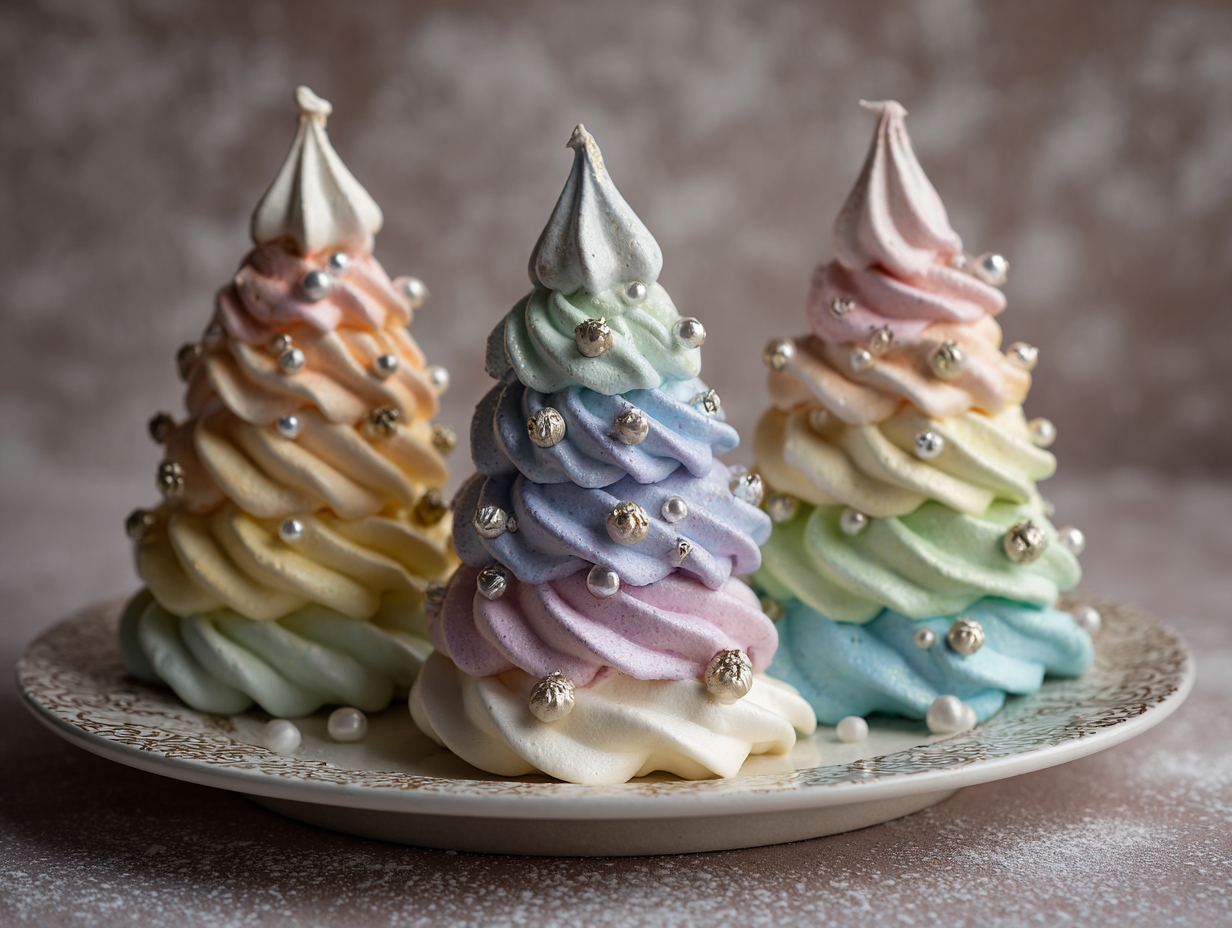


The quest for a festive dessert that feels celebratory yet light can be a real holiday challenge. At Sugar Detox Lab, we believe that holiday joy shouldn’t come with a side of heaviness. Sometimes, the most magical treats are those that captivate with their elegance and ethereal texture, not their density. Enter our Meringue Christmas Trees—a stunning, gluten-free confection that brings a touch of whimsical beauty to your table with a remarkably simple list of ingredients. These are the treats that prove mindful indulgence can be breathtakingly beautiful.
Imagine delicate, green-tinted trees with peaks and swirls, each one unique, standing proudly on a dessert platter like a miniature edible forest. They are crisp on the outside, with a slightly chewy, marshmallow-like center, and they dissolve on your tongue with a pure, sweet flavor. Creating these Meringue Christmas Trees is a delightful kitchen experiment that feels part pastry arts, part festive craft. Unlike rich butter cookies or fudgy truffles, these trees offer a sweet experience that is airy, portion-controlled, and naturally free from gluten and fat (aside from the trace amounts in the egg whites).
What Are Meringue Christmas Trees and Why Do They Matter?
Meringue is a classic mixture of whipped egg whites and sugar, baked at a low temperature until dry. It’s the foundation for pavlovas, pies, and elegant cookies. Our Meringue Christmas Trees take this basic technique and transform it into a festive work of art.
This recipe matters because it exemplifies maximal festive impact with minimal ingredients. In a season where baking can become a marathon of butter, flour, and chocolate, these trees offer a refreshingly pure alternative. They contain no flour, no butter, and no leavening agents—just egg whites, sugar, cream of tartar, and color. This makes them a fantastic option for those with gluten sensitivities or anyone seeking a lower-fat treat. The process of piping them is a mindful, almost meditative practice that focuses on technique and creativity.

A Mindful Look at the Simple Science of Meringue
Let’s appreciate the fascinating food science behind these seemingly magical treats. Understanding the “why” makes the process even more rewarding.
- The Architectural Wonder: Egg White Protein: The star ingredient is the egg white. When whipped, its proteins unfold and create a network of bubbles that trap air. This is what gives meringue its structure and incredible volume. Egg whites are a source of high-quality protein with minimal fat, making them a unique base for a dessert.
- The Stabilizing Agent: Cream of Tartar: This acidic powder, a byproduct of winemaking, is crucial. It helps stabilize the egg white foam, ensuring it reaches stiff, glossy peaks and doesn’t collapse or “weep” (release liquid) during or after baking.
- The Sweet Structure: Granulated Sugar: Sugar does more than sweeten; it dissolves into the egg white foam, creating a thick, glossy syrup that strengthens the meringue’s walls and gives it that crisp exterior and chewy interior. It’s what allows the shapes to hold during the long, slow bake. Being aware that this is a source of simple carbohydrates allows us to enjoy these as a special treat.
- Understanding the Sweetness Context: While these contain sugar, their airy nature means you consume less mass per piece than a dense cookie. They can satisfy a sweet craving with a smaller quantity of sugar overall.
This Meringue Christmas Trees recipe is naturally gluten-free and contains no dairy or fat (from added ingredients). It is vegetarian but not vegan (due to egg whites). It is not keto or paleo due to the refined sugar.
Navigating the Challenges of Perfect Meringue
Meringue has a reputation for being finicky, but with a few key rules, success is guaranteed. Here’s how to ensure your Meringue Christmas Trees stand tall and proud.
- The Absolute Rule: A Clean, Grease-Free Bowl: Any trace of fat (egg yolk, oil, butter) will prevent the egg whites from whipping properly. The Fix: Use a very clean glass, metal, or ceramic bowl. Wipe it down with a little lemon juice or vinegar on a paper towel to ensure it’s grease-free before you begin.
- The Patience Principle: Adding Sugar Slowly: Dumping all the sugar in at once will deflate your foam. The Fix: Once the egg whites are frothy and the cream of tartar is added, increase the mixer speed and add the sugar one tablespoon at a time, allowing each addition to fully incorporate before adding the next. This builds a strong, shiny, stable meringue.
- The Low-and-Slow Bake: Drying, Not Browning: Meringues must bake at a very low temperature to dry out without coloring (unless you want a hint of gold). The Fix: A reliable oven thermometer is helpful here. Bake at the prescribed low temperature (usually 200°F / 95°C) and do not open the oven door during the first half of baking. The slow heat drives out moisture while keeping the color pure white (or green!).

Tips and Trends for Modern Holiday Baking
These Meringue Christmas Trees are part of the trend towards “culinary crafts”—treats that are as much about the artistic process as the eating. They are a fantastic way to add a modern, elegant touch to your holiday spread. To ensure you have time for creative projects like this, an AI meal planner can be a lifesaver for organizing your family’s everyday meals during the hectic holiday season.
For a beautiful variation, try piping different sizes to create a forest scene. You can also use a small round tip to pipe tiny white meringue “snow” dots around the base of the trees on the parchment before baking. For a touch of flavor, add ¼ teaspoon of peppermint extract along with the gel coloring.
Frequently Asked Questions: Meringue Christmas Trees
Question: Why did my meringue turn out flat and runny?
Answer: This is usually due to one of three things: 1) A dirty/greasy bowl or whisk, 2) Egg whites that were not at room temperature, or 3) Sugar that was added too quickly, deflating the foam. Ensuring your tools are spotless and adding the sugar slowly are the most critical steps.
Question: Can I make these without a piping tip?
Answer: For the classic tree shape with ridges, a star tip is necessary. However, you can snip the end of a piping bag or zip-top bag and pipe simple “kiss” shapes (straight up and down) to create more abstract, modernist tree shapes. They will still be delightful.
Question: My meringues are sticky after cooling. What went wrong?
Answer: Stickiness means they retained moisture. This could be because they weren’t baked long enough, the oven temperature was too low, or, most commonly, they were made or stored on a humid day. Ensure they are baked until completely dry and cool them in the oven with the door ajar.
Question: Can I color them with natural ingredients instead of gel food coloring?
Answer: Yes, but with caution. Powdered natural colorants (like spirulina or matcha powder) can be used. However, liquid from things like spinach juice will thin the meringue and likely prevent it from reaching stiff peaks. Use powdered forms sparingly, as they can also slightly affect flavor.

Conclusion: Meringue Christmas Trees
These Meringue Christmas Trees are a celebration of simplicity, science, and holiday magic. They remind us that the most enchanting treats can be made from the humblest ingredients, with a focus on technique and a dash of creativity.
We encourage you to try this peaceful, rewarding recipe. Embrace the whir of the mixer, the focus of piping, and the joy of pulling a batch of edible evergreen trees from your oven. For more inspiration on celebrating the seasons with light, intentional, and beautiful recipes, explore our full collection at Sugar Detox Lab. Subscribe to our newsletter for regular ideas to support your journey toward a sweeter, healthier, and more creative life.