
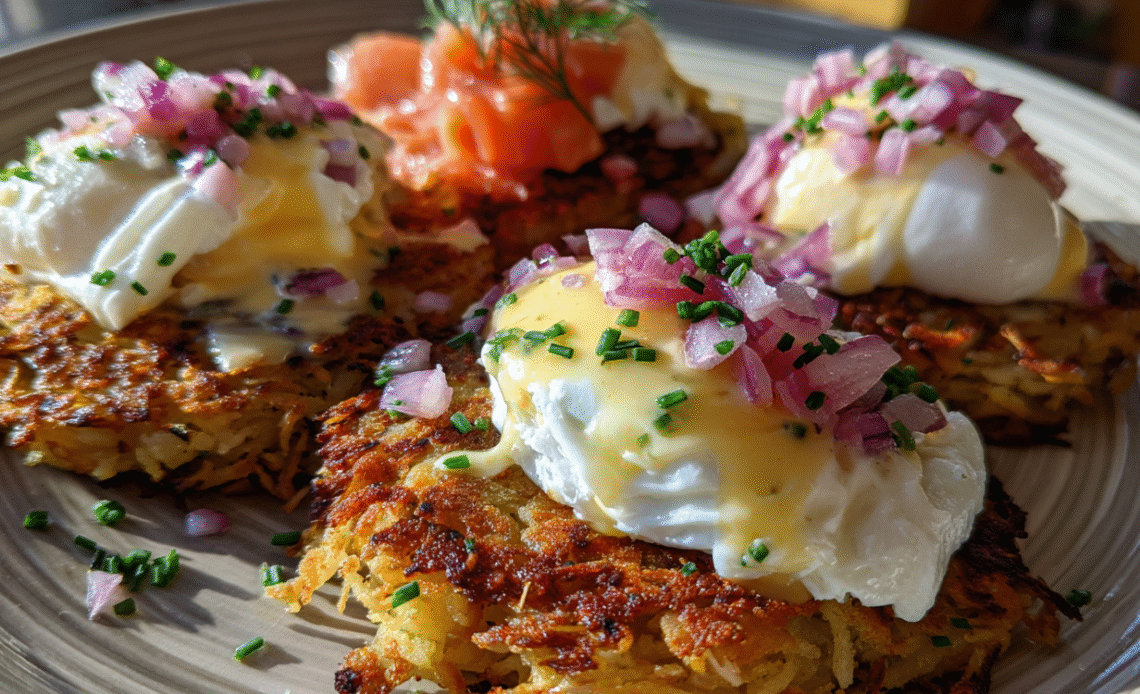
At Sugar Detox Lab, we believe that life’s special moments deserve food that feels as extraordinary as the occasion itself. Holiday brunches, milestone birthdays, or simply a Sunday when you want to create something unforgettable—these are the times to pull out all the stops. And few dishes say “special occasion” quite like Eggs Benedict. But we’ve taken this classic and given it a brilliant, culturally inspired twist that elevates it even further. Our Latke Eggs Benedict replaces the traditional English muffin with a crispy, golden potato latke—crisp on the outside, tender within. Topped with silky smoked salmon, a perfectly poached egg, and luxurious homemade hollandaise, this dish is a celebration on a plate.
What Is Latke Eggs Benedict and Why This Mindful Approach Matters
Traditional Eggs Benedict is a study in contrasts: a toasted English muffin, Canadian bacon or ham, a poached egg, and rich hollandaise sauce. It’s a beloved brunch classic for good reason—the combination of textures and flavors is simply perfect.
Our Latke Eggs Benedict pays homage to this classic while introducing a new star: the latke. A latke is a crispy potato pancake traditionally served during Hanukkah, made from grated potatoes and onions bound with egg and a touch of matzo meal, then fried until golden and crisp. By swapping the English muffin for a latke, we create a dish that’s simultaneously familiar and excitingly new. The latke adds its own layer of texture—crispy edges, tender interior—and a savory potato flavor that pairs beautifully with the smoked salmon and rich hollandaise.
This mindful approach matters because it demonstrates how tradition can evolve while honoring its roots. This Latke Eggs Benedict is not an everyday breakfast—it’s a celebration dish, designed for moments when you want to create something truly special. By making it at home, you control the quality of every ingredient: the freshness of the eggs, the quality of the salmon, the richness of the hollandaise. You’re not just cooking; you’re creating a memory.
A Realistic Look at Ingredients and Their Place in a Balanced Life
Let’s be honest about what goes into this dish and how it fits into a mindful lifestyle:
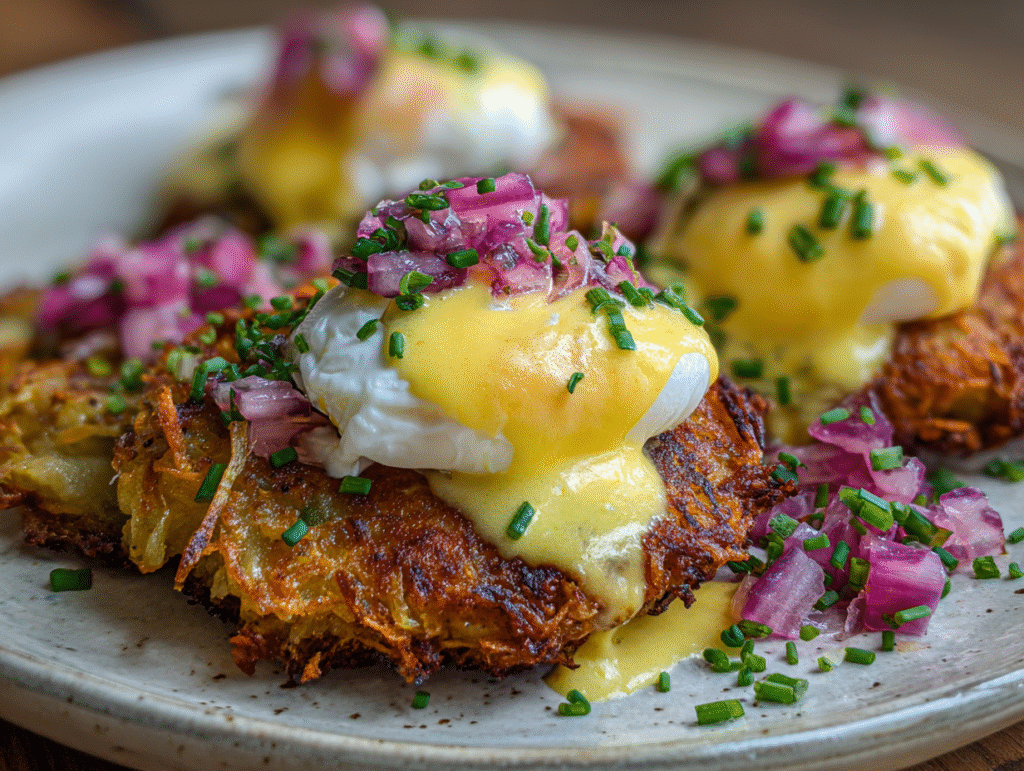
- Russet Potatoes: The foundation of the latkes. Russets are an excellent source of complex carbohydrates, providing sustained energy. A medium russet potato with skin contains about 4 grams of fiber and more potassium than a banana. The skin is particularly nutrient-dense, though we peel them here for traditional latke texture. You can learn more about the many varieties and nutritional profile of potatoes on Wikipedia.
- Matzo Meal: Adds structure and that signature crunch. Matzo meal is simply ground matzo, providing a light, crispy texture without making the latkes heavy. For a gluten-free version, you can substitute with almond flour or gluten-free breadcrumbs.
- Eggs (for latkes, poaching, and hollandaise): This recipe uses a lot of eggs, and each serves a purpose. Eggs provide high-quality complete protein, choline for brain health, and help bind the latkes, create the poached eggs, and emulsify the hollandaise. You can explore the nutritional profile of eggs on Wikipedia.
- Yellow Onion: Adds moisture and flavor to the latkes. Onions contain quercetin, a powerful antioxidant with anti-inflammatory properties.
- Cold Smoked Salmon: A luxurious protein source rich in omega-3 fatty acids, which support heart and brain health. Smoked salmon also provides high-quality protein and vitamin D. Choose wild-caught when possible for optimal nutritional profile.
- Hollandaise Sauce: The rich, buttery finish. Made from egg yolks, butter, and lemon juice, hollandaise is undeniably rich. But when made at home, you control the quality of the butter and the freshness of the eggs. A little goes a long way in terms of flavor impact.
- Butter: Provides richness and that signature hollandaise flavor. Using high-quality, unsalted butter allows you to control the salt level.
This dish is naturally high in protein and healthy fats. It is not low-carb, dairy-free, or vegan, but it can be adapted (see Notes). It is a “conscious celebration” dish—one for special mornings when you want to create something truly memorable.
Navigating the Challenges: Tips for Latke Eggs Benedict Success
This dish has several components, but with attention to a few key details, you can execute it beautifully:
For the Latkes
- Squeeze Out Excess Moisture: After grating the potatoes and onion, place them in a clean kitchen towel and squeeze firmly to remove as much liquid as possible. This is the secret to crispy latkes—excess moisture leads to soggy pancakes.
- Don’t Skip the Matzo Meal: It absorbs additional moisture and provides structure, helping the latkes hold together.
- Maintain Oil Temperature: Keep the oil at a steady medium-high heat. If it’s too cool, the latkes absorb oil and become greasy. If too hot, they burn on the outside before cooking through.
- Drain on Paper Towels: After frying, transfer latkes to a paper towel-lined plate to drain excess oil.
For the Poached Eggs
- Use Very Fresh Eggs: Fresh eggs hold their shape better when poached. The whites are thicker and stay closer to the yolk, creating a neater shape.
- Add Vinegar to the Water: A splash of white vinegar helps the egg whites coagulate faster, resulting in neater poached eggs.
- Create a Whirlpool: Stir the simmering water to create a gentle whirlpool before adding each egg. This helps the whites wrap around the yolk.
- Don’t Crowd the Pot: Poach eggs in batches if necessary. Overcrowding lowers the water temperature and makes eggs harder to manage.
For the Hollandaise
- Have Everything Ready: Hollandaise comes together quickly and doesn’t wait well. Have your melted butter ready, your egg yolks whisked, and your lemon juice measured before you start.
- Add Butter Slowly: The key to a stable emulsion is adding the melted butter very slowly, drop by drop at first, while whisking constantly.
- Keep It Warm, Not Hot: If the sauce gets too hot, the eggs will scramble. If you need to hold it, place the bowl over warm (not simmering) water.
Tips and Trends for Mindful Special Occasion Cooking
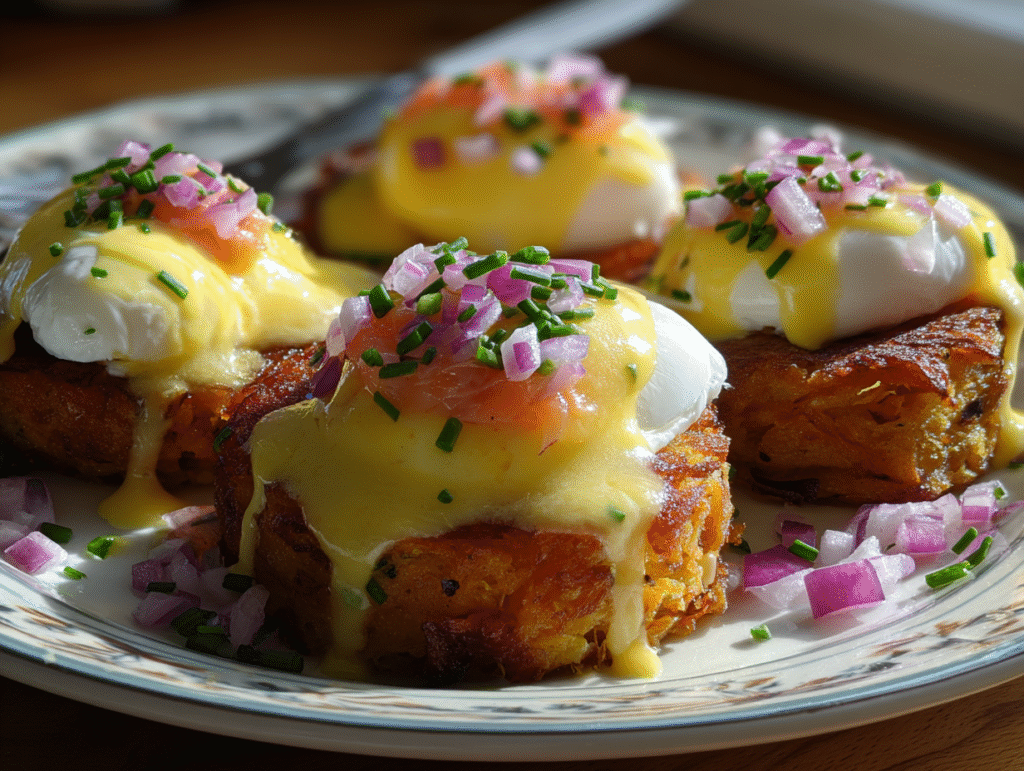
The trend toward “elevated brunch at home” continues to grow, and this Latke Eggs Benedict is a perfect example. People are increasingly seeking ways to recreate restaurant-quality experiences in their own kitchens, with complete control over ingredient quality and preparation methods.
AI-powered meal planning tools can help you tackle complex recipes like this with confidence. Apps like Yummly or Paprika allow you to save this recipe, generate shopping lists, and even set timers for each component. For a dish with multiple elements, timing is everything—use your phone’s timer feature to track latkes, poaching eggs, and hollandaise simultaneously.
Another helpful trend is the growing availability of high-quality, ethically sourced ingredients. For this recipe, seeking out wild-caught smoked salmon and pasture-raised eggs makes a meaningful difference in both flavor and nutritional profile. Understanding where your food comes from is a cornerstone of mindful eating.
Frequently Asked Questions (FAQ)
Question: Can I make the latkes ahead of time and reheat them?
Answer: Yes! Latkes can be made up to 2 hours ahead and kept warm on a baking sheet in a 200°F oven. For longer storage, cool completely, then freeze in a single layer on a baking sheet. Transfer to a freezer bag and freeze for up to 2 months. Reheat in a 375°F oven directly from frozen until hot and crispy, about 10-15 minutes.
Question: My hollandaise sauce broke. Can I fix it?
Answer: Yes, broken hollandaise can often be saved. In a clean bowl, whisk a fresh egg yolk with a teaspoon of lemon juice. Very slowly whisk the broken sauce into the fresh yolk, drop by drop at first, as if you were making the sauce from scratch. This should re-emulsify the mixture.
Question: Can I use a different type of potato?
Answer: Russet potatoes are ideal for latkes because they have high starch content and low moisture, resulting in crispy pancakes. Yukon Gold potatoes can be used but may be slightly less crisp. Waxy potatoes like red or new potatoes are not recommended—they contain too much moisture and won’t crisp properly.
Question: How do I keep poached eggs warm while I make multiple batches?
Answer: As you remove poached eggs from the water, transfer them to a bowl of ice water to stop the cooking. When ready to serve, reheat them in simmering water for 30-60 seconds. This method allows you to poach all eggs in advance and serve them hot at the same time.
Question: Can I make this dish vegetarian?
Answer: Absolutely. Omit the smoked salmon and add sautéed spinach, roasted mushrooms, or sliced avocado. A tomato slice also works beautifully. The latkes and poached egg are delicious on their own with the hollandaise.
Question: Is there a way to make the latkes without frying?
Answer: For a lighter version, you can bake the latkes. Form the patties on a parchment-lined baking sheet, brush lightly with oil, and bake at 400°F for 15-20 minutes, flipping halfway through. They won’t be quite as crispy as fried latkes, but they’re still delicious.
Conclusion
This Latke Eggs Benedict is more than a meal—it’s an experience. It’s the kind of dish you make when you want to show someone they’re special, when you’re celebrating a milestone, or when you simply want to transform an ordinary morning into an extraordinary memory. The crispy latke, the silky salmon, the perfectly poached egg, the luxurious hollandaise—each element contributes to a whole that’s truly greater than the sum of its parts.
We encourage you to make this for your next holiday brunch, anniversary breakfast, or any day that calls for celebration. Gather your ingredients, take your time, and savor every step of the process. That’s what mindful cooking is all about.
For more recipes that help you create memorable, meaningful meals with intention and balance, explore our full collection at SugarDetoxLab.com. Did you try this dish? We’d love to hear about your experience in the comments below!