


When you walk by the seafood counter, the glistening fillets on ice and the salty aroma of the sea can make anyone hungry for a seafood dinner. But here’s a surprising truth — “fresh” fish doesn’t always mean never frozen.
In fact, most of the so-called fresh seafood at your grocery store has been frozen, shipped, thawed, and then displayed again on ice. That’s right — the “fresh” fish you see might once have been frozen fish that’s been carefully thawed for display.
This doesn’t mean it’s unsafe or low quality. Actually, frozen fish often stays fresher longer and can even have better flavor retention than fish that’s never been frozen. In this complete guide, you’ll learn:
- What “fresh” and “frozen” really mean in seafood labeling
- How to identify truly fresh fish at the counter
- Why frozen fish can often be the smarter choice
- Safe storage temperatures and handling tips
- Answers to common seafood freshness questions
What Does “Fresh Fish” Really Mean?
The term “fresh” can be misleading. According to the U.S. Food and Drug Administration (FDA), “fresh fish” means fish that has never been frozen. But that doesn’t necessarily mean it was caught yesterday—it could be days old, refrigerated and transported long distances.
“Previously Frozen” Fish
Here’s the industry secret: most seafood labeled “fresh” was actually frozen at some point. This is because freezing fish at sea immediately after catching preserves texture, color, and nutrients.
So, when you see the label “previously frozen,” that’s not a bad thing. It often means the fish was frozen soon after harvest, maintaining its nutritional integrity and flavor far better than “fresh” fish left in refrigeration for days.
Quick Tip: Frozen fish that’s thawed properly and kept cold is often fresher than fish that’s been sitting unfrozen for several days.
How Long Can “Fresh” Fish Stay Fresh?
Even in perfect conditions, fresh fish only lasts 1–2 days in the fridge. Seafood spoils quickly because of its delicate protein structure and high moisture content.
If it’s not stored at the correct seafood temperature (around 32°F / 0°C), spoilage begins rapidly. In contrast, frozen fish stored at 0°F (-18°C) or lower can last for months without losing quality.
How to Tell If Fish Is Truly Fresh
You don’t need to be a chef to tell whether fish is truly fresh. Just use your eyes, nose, and touch.
1. Look Carefully
- Eyes: Clear, bright, and full — not cloudy or sunken.
- Skin: Shiny, moist, and metallic-looking.
- Gills: Vibrant red or pink, never brownish.
2. Smell
- A clean, ocean-like scent means freshness.
- A sour or overly “fishy” smell means it’s old.
3. Touch
- Firm, elastic flesh that bounces back when pressed.
- Avoid soft, mushy, or sticky textures.
Pro Tip: Always ask the counter staff when the fish was thawed if it’s “previously frozen.” Once thawed, it should be cooked within 24–48 hours.
How to Buy the Best Seafood From the Counter
Step 1: Shop at Reputable Stores
Choose markets with a high seafood turnover — meaning products don’t sit long.
Step 2: Check the Labels
- Look for “previously frozen” or “fresh never frozen.”
- Review country of origin and whether it’s wild-caught or farm-raised.
Step 3: Ask the Right Questions
Ask your fishmonger:
- “Was this fish previously frozen?”
- “When was it thawed?”
- “What’s the best way to store it?”
Step 4: Transport Properly
Bring an insulated bag or cooler with ice packs if you’re not going straight home. Seafood temperature control is critical from store to fridge.
Why Frozen Fish Is Often the Better Option
- Most frozen fish is flash-frozen at sea within hours of being caught.
- Freezing locks in flavor, moisture, and nutrients.
- It reduces food waste and transportation spoilage.
So next time you’re comparing counter fish with a frozen fillet, remember: frozen doesn’t mean lower quality—it often means smarter storage.
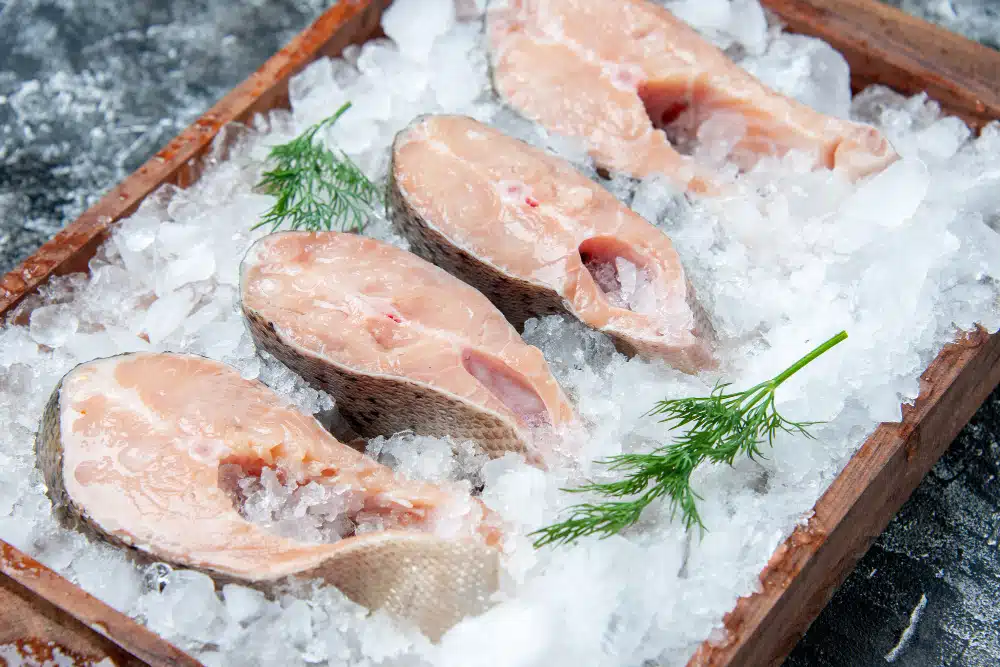
Proper Storage and Handling Tips
In the Fridge
- Keep at 32°F (0°C), ideally on ice in a shallow pan.
- Use within 1–2 days.
In the Freezer
- Store at 0°F (-18°C) or lower.
- Wrap tightly to prevent freezer burn.
- Label with the date and type of fish.
- Best used within 3–6 months for premium flavor.
Thawing Frozen Fish
- Thaw slowly in the refrigerator overnight.
- For quick thawing, place sealed fish in cold water for 30–60 minutes.
- Never thaw fish at room temperature — bacteria thrive between 40°F and 140°F.
How to Cook Fish Perfectly Every Time
Cook fish to an internal temperature of 145°F (63°C) for safety.
Quick Tips:
- Pat dry before seasoning for a crispy texture.
- Don’t overcook; fish should flake easily with a fork.
- For frozen fish, cook it directly from frozen using slightly longer times.
Cooking frozen fish directly preserves moisture and texture, especially for lean varieties like cod or tilapia.
Frozen Fish and Sustainability
Contrary to popular belief, frozen fish is often more sustainable than fresh. Here’s why:
- Less waste: Freezing extends shelf life, reducing spoilage.
- Lower carbon footprint: Easier global distribution without rush transport.
- Supports small fisheries: They can freeze their catch immediately and ship later.
Look for sustainability certifications like:
- MSC (Marine Stewardship Council)
- ASC (Aquaculture Stewardship Council)
- Best Aquaculture Practices (BAP)
Step-by-Step: How to Buy Seafood Like a Pro
- Inspect the eyes, skin, and gills.
- Smell for a clean, sea-like aroma.
- Ask if it’s been previously frozen.
- Keep seafood cold during transport.
- Cook within 1–2 days—or freeze immediately.
FAQ: Buying Seafood and Frozen Fish
1. Is frozen fish as good as fresh fish?
Yes! Frozen fish that’s flash-frozen shortly after being caught often tastes fresher and retains more nutrients than fish that’s been sitting in a refrigerator for days.
2. Can I refreeze thawed fish?
If it was thawed in the refrigerator and hasn’t been at room temperature, yes—but texture may slightly change.
3. How do I thaw frozen fish safely?
Thaw in the fridge overnight or under cold running water. Never thaw on the counter.
4. Does frozen fish have preservatives?
Most high-quality frozen fish is free from preservatives. Always check the label for additives like phosphates.
5. How long can I store frozen fish?
Most types last 3 to 6 months when sealed properly and stored below 0°F (-18°C).
6. Is it safe to cook fish directly from frozen?
Yes, but increase the cooking time by about 50%. It’s safe as long as the internal temperature reaches 145°F (63°C).
Conclusion: Fresh or Frozen — Choose Smart, Not Just “Fresh”
When it comes to buying seafood from the counter, remember this:
“Fresh” doesn’t always mean never frozen—and frozen fish isn’t inferior.
In fact, frozen fish often delivers:
- Better freshness retention
- Lower prices
- Less waste
- More consistent quality
So, the next time you’re choosing between “fresh” and “frozen,” don’t be fooled by appearances. Ask questions, check labels, and prioritize how the fish was handled—not just how it’s displayed.