
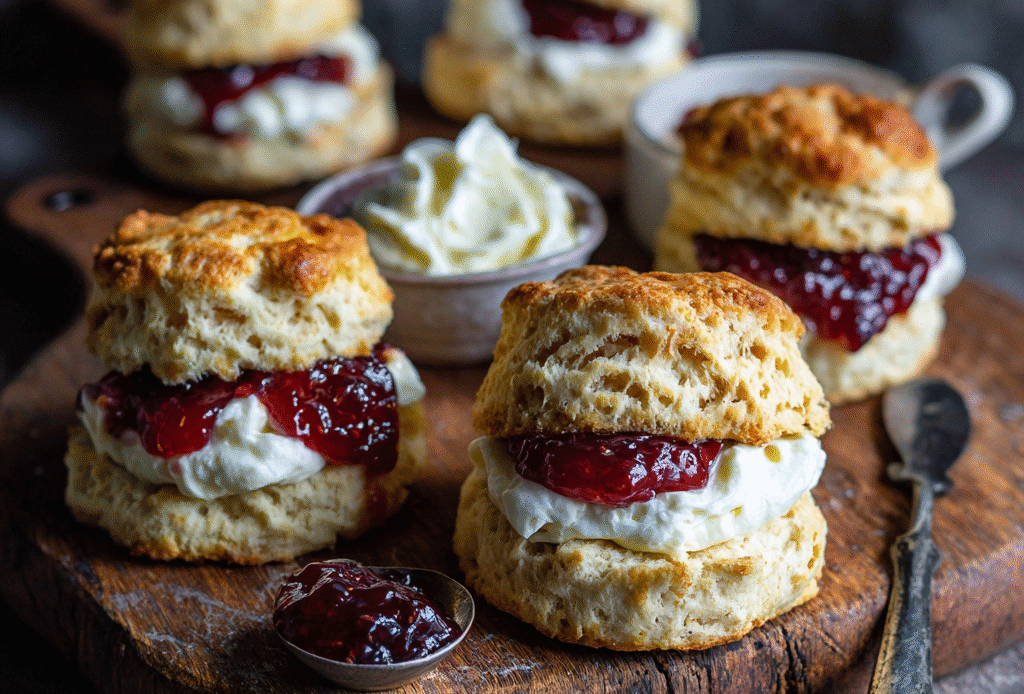
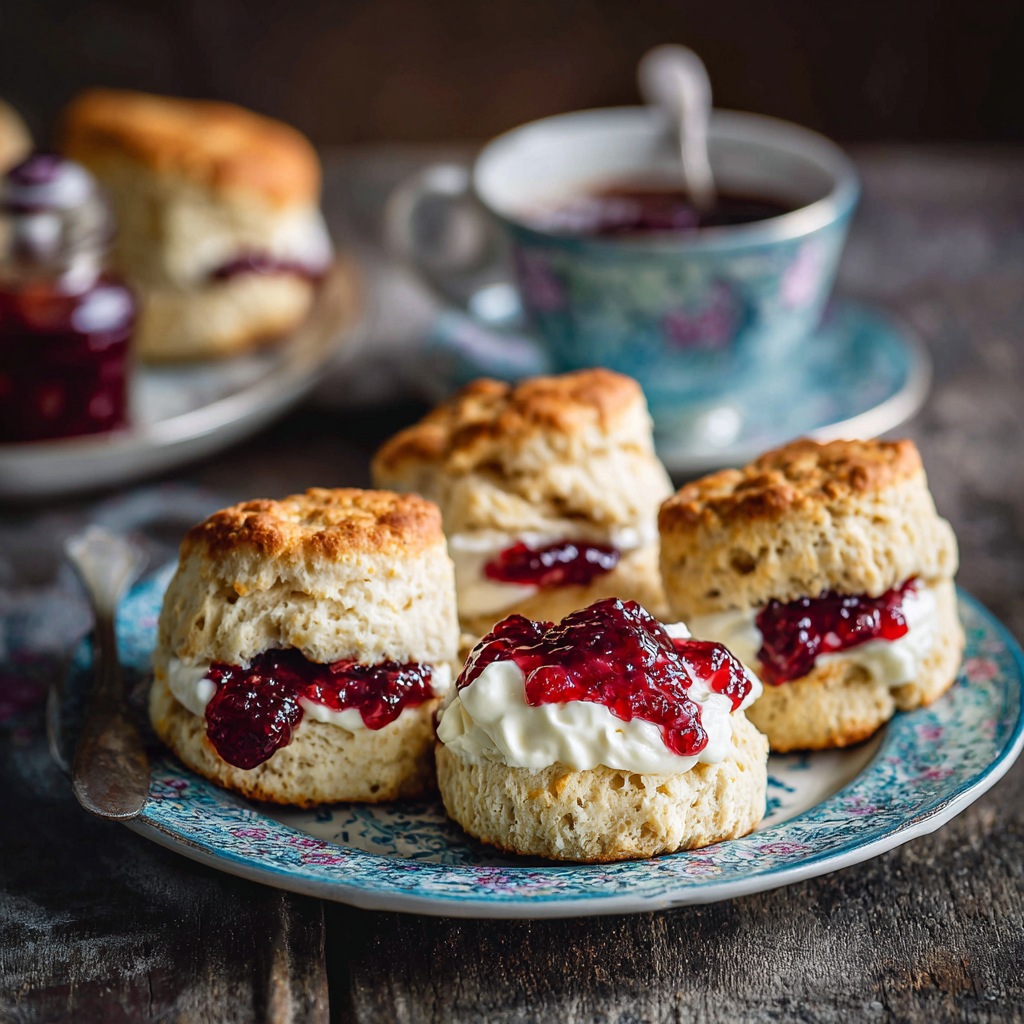
At Sugar Detox Lab, we believe that life’s simple pleasures are worth savoring—and few pleasures are as quintessentially British as a freshly baked scone served with clotted cream and jam. There’s something magical about the ritual of afternoon tea: the delicate china cups, the steaming pot of tea, and the plate of warm, buttery scones waiting to be split and slathered with creamy richness and sweet, fruity preserves. Our English Scones with Clotted Cream and Jam honor this beloved tradition with a recipe that’s simple, authentic, and absolutely delicious.
What Are English Scones with Clotted Cream and Jam and Why This Mindful Approach Matters
The tradition of cream tea—scones served with clotted cream and jam alongside a pot of tea—is deeply woven into British culture, particularly in the southwestern counties of Devon and Cornwall . While the origins of clotted cream may stretch back centuries, possibly even to Phoenician traders , the combination of scones, cream, and jam has become an enduring symbol of comfort and hospitality.
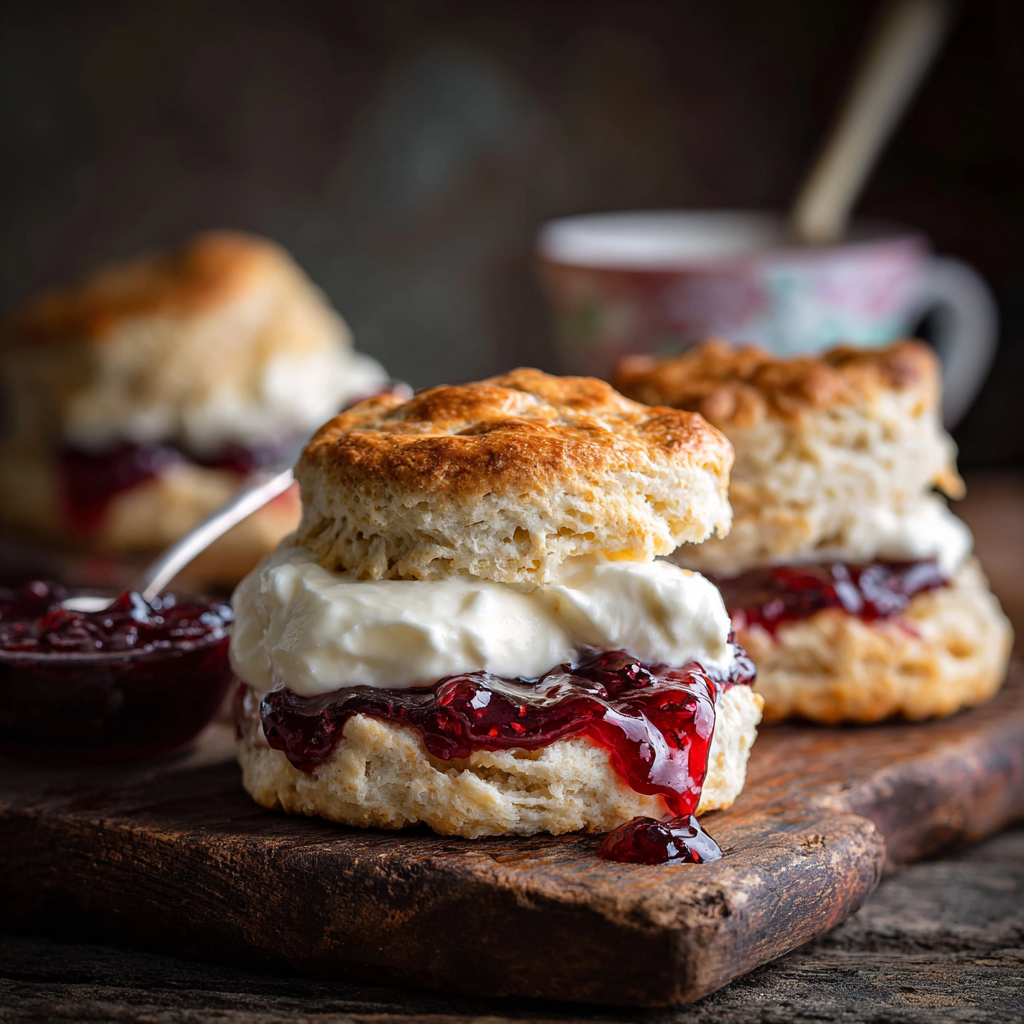
Our English Scones with Clotted Cream and Jam stay true to this heritage. The scones themselves are simple: self-raising flour, cold butter rubbed in until the mixture resembles fine crumbs, a touch of sugar, and enough milk to bring the dough together. The result is a tender, flaky interior and a golden-brown crust. Served warm, split in half, and topped with a generous dollop of clotted cream and a spoonful of good-quality strawberry or raspberry jam, they’re pure comfort.
This mindful approach matters because it celebrates a tradition that encourages slowing down and savoring the moment. Afternoon tea is, by nature, a ritual of mindfulness—a pause in the day to enjoy simple pleasures. These English Scones with Clotted Cream and Jam contain a modest amount of sugar, allowing the natural flavors of the butter, cream, and fruit preserves to shine. By making them at home, you control the quality of every ingredient, choosing real butter, fresh milk, and a jam with real fruit and less added sugar.
A Realistic Look at Ingredients and Their Place in a Balanced Life
Let’s be honest about what goes into these classic treats and how they fit into a mindful lifestyle:
- Self-Raising Flour: The foundation of the scone. Self-raising flour already contains baking powder, which gives scones their characteristic rise. Using it simplifies the recipe and ensures consistent results.
- Unsalted Butter, Chilled and Diced: The key to tender, flaky scones. Cold butter rubbed into the flour creates tiny pockets of fat that melt during baking, producing steam and creating that desirable layered texture. Using unsalted butter gives you control over the salt level. You can learn more about the production and varieties of butter on Wikipedia.
- Milk: Binds the dough and adds moisture. Whole milk creates the richest scones, but lower-fat milk works as well. A splash more may be needed if the dough seems dry.
- Sugar: A modest amount (just 2 tablespoons for the whole batch) adds a hint of sweetness without overwhelming. These scones are meant to be slightly sweet, allowing the cream and jam to contribute additional sweetness.
- Salt: A pinch enhances all the flavors and balances the sweetness.
- Clotted Cream: The luxurious, indulgent topping. Clotted cream is made by heating full-cream cow’s milk and allowing the cream to rise and form “clots” . It has a minimum fat content of 55% (averaging around 64%) and a distinctive nutty, cooked milk flavor with a rich, sweet taste . One hundred grams provides approximately 586 calories . A single scone with clotted cream and jam contains about 450 calories, with 20 grams of fat (24 grams saturated) and 12 grams of protein . It’s undeniably rich, which is why these are special-occasion treats, not everyday fare.
- Jam (Strawberry or Raspberry): The sweet, fruity counterpart. Good-quality jam adds brightness and natural fruit flavor. Look for jam with real fruit and less added sugar for a more balanced option.
This recipe is a treat—there’s no pretending otherwise. But treats have their place in a balanced life. The key is portion control, mindful enjoyment, and choosing quality ingredients. These scones are perfect for sharing, which naturally encourages smaller portions.
Navigating the Challenges: Tips for Scone Success
These scones are simple, but a few tips will ensure perfect results:
- Use Cold Butter: This is essential. Cold butter rubbed into the flour creates those coveted flaky layers. If the butter warms up, the scones will be dense rather than light.
- Handle the Dough Gently: Overworking the dough develops gluten, leading to tough scones. Mix just until the dough comes together, then pat it gently into shape. A light hand is key.
- Don’t Twist the Cutter: When cutting out scones, press straight down and lift straight up. Twisting seals the edges and prevents the scones from rising evenly.
- Place Close Together on the Baking Sheet: For softer-sided scones, place them close together so they support each other as they rise. For crisper edges, space them apart.
- Bake Until Golden: Scones are done when they’re risen and golden brown on top. A toothpick inserted into the center should come out clean.
- Serve Warm: Scones are best enjoyed warm from the oven. If making ahead, reheat gently in a low oven before serving.
- The Great Debate: Jam First or Cream First? In Cornwall, tradition dictates jam first, then a dollop of cream on top. In Devon, cream is spread first, followed by jam . The late Queen Elizabeth II reportedly favored the Cornish method . Either way is delicious—choose your own adventure.
Tips and Trends for Mindful Indulgence
The tradition of afternoon tea has seen a resurgence in recent years, with people seeking out opportunities to slow down and connect over a beautifully presented spread. These English Scones with Clotted Cream and Jam are the centerpiece of any cream tea.
Another trend is the focus on quality over quantity—choosing one perfect scone with excellent clotted cream and good jam rather than multiple mediocre treats. This aligns perfectly with a mindful approach to indulgence.
For those with dietary restrictions, there are now excellent gluten-free scone recipes and even dairy-free clotted cream alternatives made from coconut cream . The chia jam mentioned in some healthier adaptations is also a wonderful way to reduce added sugar while adding omega-3s .
AI-powered meal planning tools can help you incorporate special baking projects into your schedule. Apps like Yummly or Paprika allow you to save this recipe, generate shopping lists, and even set timers for each step.
Frequently Asked Questions (FAQ)
Question: What is the difference between clotted cream and regular cream?
Answer: Clotted cream is made by heating full-cream cow’s milk and allowing the cream to rise and form “clots” . It has a minimum fat content of 55% (averaging 64%) and a distinctive nutty, cooked milk flavor . It’s much thicker and richer than regular whipped cream or double cream.
Question: Should I put jam or cream first on my scone?
Answer: This is a matter of regional tradition and personal preference. In Cornwall, jam is spread first, then topped with a dollop of cream. In Devon, cream is spread first, followed by jam . The late Queen Elizabeth II reportedly favored the Cornish method . Try both and decide which you prefer!
Question: Can I make these scones dairy-free?
Answer: Yes! Use a plant-based butter alternative and a dairy-free milk like oat or almond milk. For the clotted cream, you can try a coconut cream version . The texture will be slightly different, but still delicious.
Question: How do I store leftover scones?
Answer: Store leftover scones in an airtight container at room temperature for up to 2 days. To refresh them, warm gently in a 350°F (180°C) oven for 5-10 minutes before serving.
Question: Can I freeze scones?
Answer: Yes! Unbaked scones freeze beautifully. Arrange them on a baking sheet and freeze until solid, then transfer to a freezer bag. Bake from frozen, adding a few extra minutes to the baking time. Baked scones can also be frozen and reheated.
Question: What’s the best jam to use?
Answer: Strawberry and raspberry are traditional, but any good-quality fruit jam works. Look for jam with real fruit and less added sugar for a more balanced flavor.
Conclusion
These English Scones with Clotted Cream and Jam are proof that the most cherished traditions are often the simplest. With their tender crumb, golden crust, and the luxurious combination of rich cream and sweet jam, they’re a celebration of slowing down and savoring life’s simple pleasures.
We encourage you to make these for your next afternoon tea, whether for a special occasion or simply to brighten an ordinary day. Serve them warm, pour yourself a cup of tea, and enjoy every single bite.
For more recipes that help you create beautiful, mindful treats with intention, explore our full collection at SugarDetoxLab.com. Did you try these scones? We’d love to hear about your experience—and whether you’re Team Jam First or Team Cream First—in the comments below!