
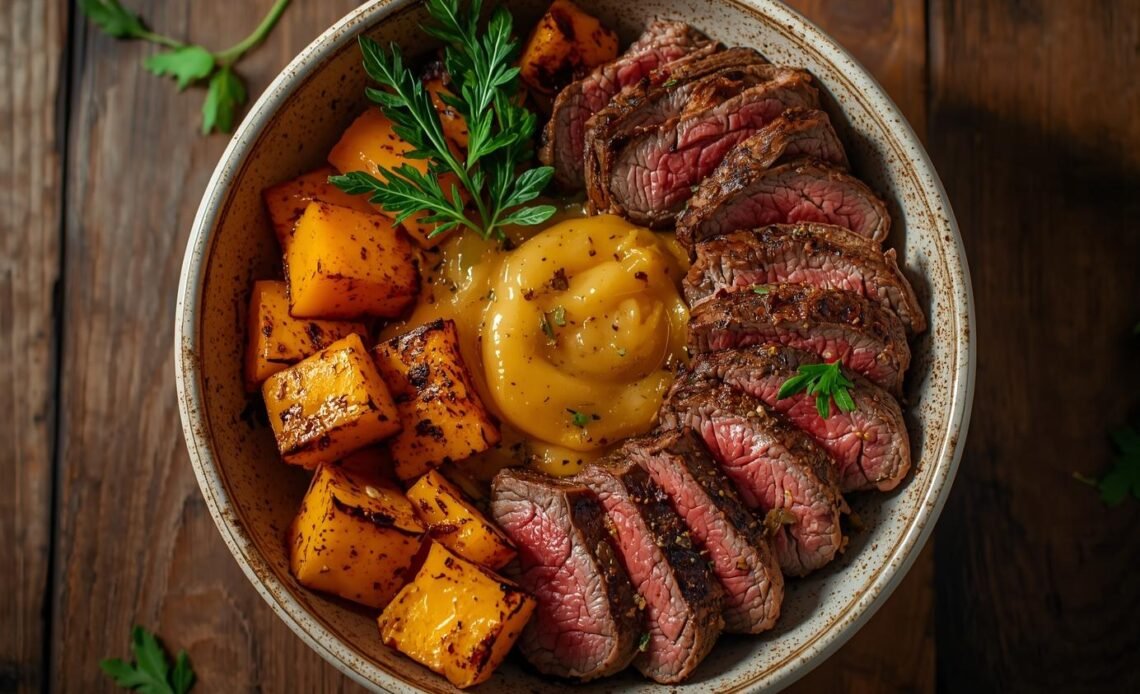
Welcome to Sugar Detox Lab, where we believe the best meals are those that are both deeply nourishing and deeply satisfying. When pursuing a lower-sugar lifestyle, it’s easy to fall into a rut of lean proteins and simple greens, missing the hearty, comforting textures and flavors that make dinner something to look forward to. The solution lies in embracing the natural sweetness and substance of whole vegetables and pairing them with quality protein. This brings us to our Butternut Squash and Garlic Herb Steak Bowls. This dish is a masterclass in balance—uniting sweet, roasted squash with savory, garlicky herbs and perfectly cooked steak in one harmonious bowl.
What Are Butternut Squash and Garlic Herb Steak Bowls and Why Do They Matter?
The concept of a “bowl” meal is a modern staple for a reason: it’s a versatile, visually appealing way to combine complementary flavors and textures. A steak bowl, in a more traditional sense, might involve rice, a sugary sauce, and perhaps some roasted vegetables. Our version makes a deliberate, health-conscious pivot by letting the vegetables share the spotlight equally with the protein.
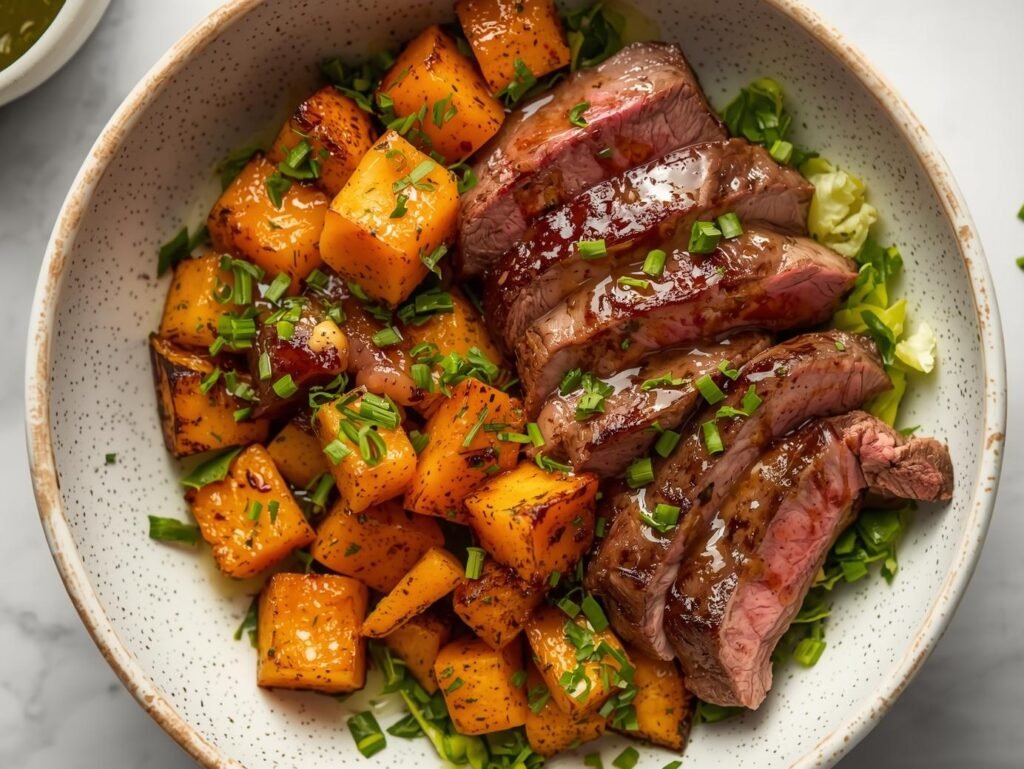
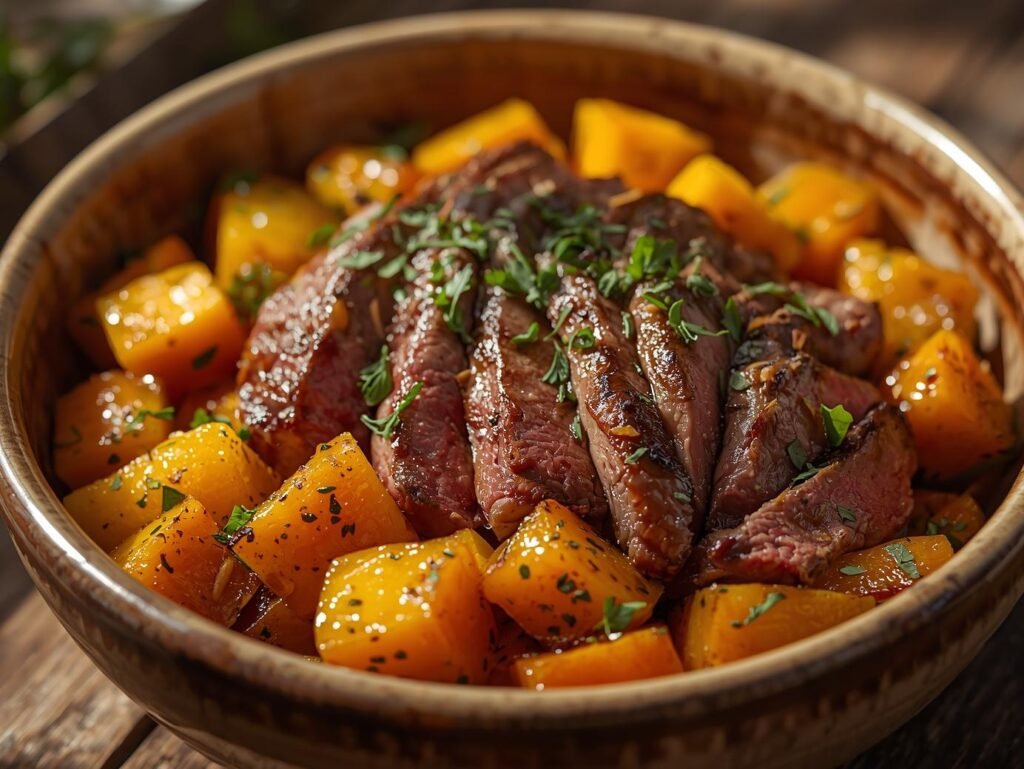
These Butternut Squash and Garlic Herb Steak Bowls are a celebration of uncomplicated, high-quality ingredients. We bypass refined grains and processed sauces, allowing the natural flavors to shine. The butternut squash, when roasted, develops a caramelized sweetness that needs no added sugar. The steak is elevated not by a heavy marinade, but by a simple yet potent coating of fresh garlic, rosemary, thyme, and good olive oil. This approach creates a meal that is inherently gluten-free, packed with fiber and vitamins from the squash, and rich in high-quality protein and iron from the steak. It’s a perfect example of how eating for your health can be the most flavorful and satisfying choice of all.
The Wholesome Health Benefits in Your Bowl
This bowl is a nutritional powerhouse, offering benefits with every colorful component:
- Sirloin or Ribeye Steak: An excellent source of high-quality, complete protein essential for muscle repair and satiety. It’s also rich in highly bioavailable iron, zinc, and B vitamins, particularly B12. These nutrients are crucial for energy metabolism and cognitive function.
- Butternut Squash: The vibrant orange flesh is a tell-tale sign of its high beta-carotene content, which the body converts to vitamin A. This vitamin is vital for immune function and vision. Squash is also a great source of fiber, which supports digestive health and helps moderate the release of its natural sugars into the bloodstream, contributing to a favorable glycemic load.
- Fresh Garlic & Herbs: More than just flavor agents. Garlic contains allicin, a compound studied for its potential cardiovascular and immune-supporting properties. Fresh rosemary and thyme are not only aromatic but also provide antioxidants and have been used in traditional medicine for their anti-inflammatory properties.
- Extra Virgin Olive Oil: A cornerstone of the Mediterranean diet, this oil is rich in monounsaturated fats and antioxidants. It aids in the absorption of the fat-soluble vitamins (like vitamin A) in the squash and adds heart-healthy benefits to the dish.
These Butternut Squash and Garlic Herb Steak Bowls fit beautifully into several mindful eating frameworks. They are naturally paleo, gluten-free, and dairy-free. For a strict keto adaptation, you could reduce the portion of squash slightly and add more non-starchy vegetables like zucchini or asparagus. The dish is completely free of added sugars, relying instead on the vegetable’s natural sweetness, making it a perfect fit for a clean, sugar-conscious lifestyle.
Navigating Challenges and Practical Tips
To ensure your bowls are perfect every time, here are some key insights:
- Prepping the Butternut Squash: This is often the biggest hurdle. To save time, look for pre-cubed fresh butternut squash in the produce section of your grocery store. If prepping yourself, use a sharp, sturdy chef’s knife: slice off the top and bottom, peel it with a vegetable peeler, cut it in half crosswise at the “neck,” then halve the bulbous end to scoop out the seeds before cubing.
- Achieving Perfectly Cooked Steak: The key is bringing the steak to room temperature for 20-30 minutes before cooking and patting it extremely dry. A hot skillet is essential for a good sear that locks in juices. Let the steak rest for 5-10 minutes after cooking before slicing; this allows the juices to redistribute, ensuring every bite is tender.
- Balancing Cook Times: Since the squash roasts for 25-30 minutes, use that time to prepare your herbs, garlic, and bring your steak to temperature. Start cooking the steak when the squash has about 10 minutes left. This synchronization makes for efficient cooking and everything finishing warm.
- Herb Substitutions: If you don’t have fresh rosemary and thyme, you can use 1 teaspoon each of the dried versions. Add them to the olive oil and garlic for the steak rub. The flavor will be more concentrated but still delicious.
Tips and Trends for Smart, Healthy Cooking
Bowls like this one exemplify the trend towards “macro-balanced” and “root-to-stem” eating—meals consciously built with protein, healthy fats, and fibrous vegetables, while utilizing all parts of an ingredient (like saving squash seeds for roasting). Leverage meal-planning apps that allow you to filter for “paleo” or “gluten-free” recipes to easily integrate these bowls into your week. For an extra efficiency boost, roast a double batch of squash to have on hand for quick lunches. The focus on fresh herbs and high-quality fats aligns with a growing preference for food that is both medicine and a pleasure.
Frequently Asked Questions
Question: Can I use a different cut of steak, like flank or skirt steak?
Answer: Absolutely. Flank or skirt steak are fantastic, flavorful options. They are thinner cuts, so reduce the cooking time to about 3-4 minutes per side for medium-rare. Most importantly, always slice these cuts thinly against the grain to ensure tenderness.
Question: My butternut squash is roasting but not getting caramelized. What can I do?
Answer: Caramelization requires space and high heat. Ensure your cubes are in a single layer with space between them on the baking sheet—overcrowding causes them to steam. If needed, increase the oven temperature to 425°F for the last 10 minutes of cooking. Also, make sure they are coated adequately in oil.
Question: Is it necessary to let the steak rest? What happens if I skip it?
Answer: Resting is highly recommended and makes a significant difference. When steak cooks, its juices are pushed to the center. Slicing immediately causes those flavorful juices to spill out onto the cutting board, leaving the meat drier. Resting allows the juices to redistribute throughout the entire steak, resulting in a juicier, more tender bite.
Question: Can I make this recipe in one pan?
Answer: You can create a one-pan version by using a very large, oven-safe skillet. Sear the steak first, set it aside, then toss the squash in the same skillet with the herb-infused drippings and roast it in the oven. Add the steak back to warm through at the end.
Conclusion
These Butternut Squash and Garlic Herb Steak Bowls are a testament to the power of simplicity. They demonstrate that with a few excellent ingredients and straightforward techniques, you can create a meal that is as good for your body as it is for your soul. We hope this recipe becomes a reliable, satisfying staple that brings both comfort and vibrant health to your table.
Ready to explore more whole-food, sugar-free recipes that celebrate simple ingredients? Your next delicious creation awaits in our full collection at sugardetoxlab.com. Share your bowl creations with us in the comments—we love seeing how you make these recipes your own!