

I. The Sweet Poison of Excess
We all know the seductive power of sweetness. It’s a comfort, a reward, a quick burst of energy. Yet, as the old adage wisely warns, things “sweet to taste prove in digestion sour.” While the world, like a grand banquet, offers countless pleasures, unchecked indulgence, particularly in sugar, can lead to a profound sense of decay within our bodies and minds. This isn’t merely a modern dietary concern; the concept of excess leading to affliction is an ancient truth, akin to how “full surfeits, and the dryness of his bones” can plague an individual.
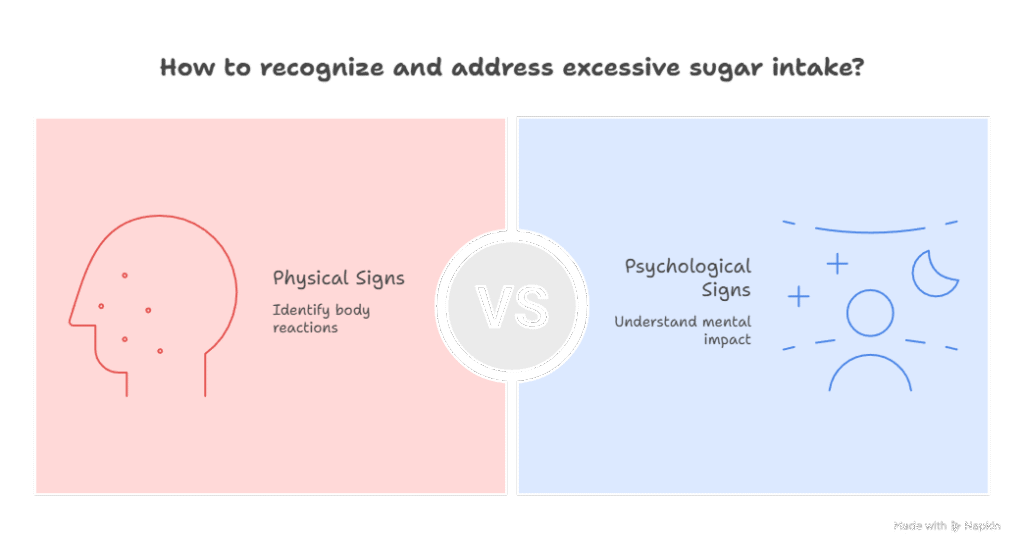
Indeed, a “surfeit of the sweetest things / The deepest loathing to the stomach brings.” When we consume too much sugar, we transform potential pleasure into profound discomfort and long-term health issues. Recognizing the signs of this uncontrolled appetite is the crucial first step toward reclaiming self-mastery. This article will guide you through the 10 key indicators that you might be consuming too much sugar and provide you with the necessary “physic”—the practical strategies and scientific insights—to restore your body and mind to vibrant health. It’s time to understand the impact of too much sugar and embark on a journey towards a sweeter, healthier life.

II. The Great Surfeit: 10 Signs of Unrestrained Appetite
This section details the internal and external manifestations of consuming too much sugar, framing them as symptoms of a system under strain. Understanding these signs is the first step in addressing the issue of too much sugar in your diet.
Sign 1: The Soul’s Heavy Slumber (Mental Lethargy)
Do you often feel mentally foggy, struggling to concentrate, or experiencing a general dullness? Excessive sugar consumption can indeed dull the spirit and reduce mental sharpness. The saying “Fat paunches have lean pates” humorously suggests that a body over-rich in indulgence can lead to a brain that struggles to function optimally. When you consume too much sugar, your mind can become “dull and muddy-mettled,” with its noble reason obscured by the constant fluctuations in blood sugar and the inflammatory effects of sugar on the brain [1].
Sign 2: The Green-Eyed Monster (Mood and Choler)
If you find your emotions swinging wildly, turning joy into sudden irritation or discontent, too much sugar might be upsetting your internal balance. This instability can make you feel “hot” and “choleric,” leading to emotional volatility that manifests as “peevish jealousies” or a “feverous pulse.” Research indicates that high sugar intake is linked to increased risks of mood disorders, including anxiety and depression, due to its impact on neurotransmitter function and inflammation [2].
Sign 3: The Waning of Wit and Reason
Beyond general fogginess, too much sugar can lead to a more significant cognitive decline. Your “wit’s diseased,” preventing clear judgment and making it harder to think critically. When reason is afflicted, it can “lose all their gloss,” leading to unwise actions because the “blood and baseness of our natures would conduct us to most preposterous conclusions.” Chronic high sugar intake can impair cognitive functions, including memory and learning, making it harder for your brain to operate at its best [3].
Sign 4: False Hue and Blotted Beauty
Our skin often reflects our internal health. If you’re noticing unexplained breakouts, premature wrinkles, or a generally dull complexion, too much sugar could be the culprit. The body’s outward “semblances” and features can betray hidden internal faults. External appearances can become sickly, whether turning “pale and wan” or showing “lazar-like” crusts, often resulting in a “blotted” reputation. This is due to a process called glycation, where sugar molecules attach to proteins like collagen and elastin, leading to skin damage and accelerated aging [4].
Sign 5: Perpetual Hunger’s Sting
Do you feel constantly hungry, even after eating? This signifies a state of endless craving, where a “cloy’d will… that satiate yet unsatisfied desire” prevails. Your appetite becomes like a “fever, longing still / For that which longer nurseth the disease.” Too much sugar disrupts your body’s natural hunger and satiety signals, leading to insulin resistance and leptin resistance, which make you feel perpetually hungry and drive you to eat more [5].
Sign 6: The Body’s Burden and Physical Strain
Physical excess, often fueled by too much sugar, can transform your body, causing it to become a “swollen parcel of dropsies” or a “huge bombard of sack.” This strain leads to weakness, making you feel tired and sluggish, as if “a taller man than I will take cold.” It can also accelerate aging, furrowing the face with time and making you feel older than your years. Chronic inflammation and weight gain from too much sugar put immense stress on your organs and joints [6].
Sign 7: Absence of Wholesome Rest
Struggling to fall asleep or stay asleep? Too much sugar can prevent quiet repose, leading to restless nights. “Nor night nor day no rest” becomes a reality as the sleep that should be “dear repose” is replaced by “unquiet slumbers.” The constant fluctuations in blood sugar levels can disrupt your sleep cycle, making it difficult to achieve deep, restorative sleep [7].
Sign 8: The Sinking of the Spirit (Depression/Melancholy)
If you find yourself feeling persistently sad, unmotivated, or viewing the world as “weary, stale, flat, and unprofitable,” too much sugar might be contributing to a sinking of your spirit. This “melancholy is the nurse of frenzy,” potentially leading to “desperate outrage.” The link between high sugar intake and increased risk of depression is well-documented, with sugar impacting brain chemistry and inflammation pathways that influence mood [2].
Sign 9: Chronic Indigestion and Digestive Distress
Is your stomach often upset? Too much sugar can disorder your digestive system. Your body cannot properly “digest things rightly,” leading to symptoms like bloating, gas, and discomfort. Foul vapors can arise, and your sense of well-being can be compromised. An unhealthy gut microbiome, often exacerbated by high sugar intake, can lead to chronic indigestion and other digestive issues [8].

Sign 10: Loss of Self-Control and Moral Frailty
Do you feel like your promises to yourself about healthy eating are “straw” against the powerful pull of sugar? This indicates a loss of self-control, where the spirit is betrayed by the flesh, exhibiting a “frailty” that can precede greater errors. The addictive-like properties of sugar can make it incredibly difficult to resist, leading to a cycle of craving and regret [9].
Call to Action: Recognizing these signs is the first step. If you identify with several of these indicators, it’s a clear signal that it might be time to address your sugar intake. Consider taking our 7-day no-sugar challenge to reset your palate and experience the immediate benefits of reducing too much sugar!
III. The Roots of Rebellion: A Study in Appetite and Will (Psychology Focus)
Understanding why we consume too much sugar requires delving into the mental and moral causes of unchecked consumption, treating the sugar habit as a failure of self-governance.
The Tyranny of the Will Over Reason
True stability and health require that “reason should be the marshal to my will.” However, when this balance is lost, we allow “the itch of his affection”—our cravings and desires—to guide us. This unrestrained desire is likened to a “riot” or “luxury,” demonstrating that indulgence often requires an abandonment of true self-knowledge. Those who follow uncontrolled appetites are “violently carried away from grace.” The deceit of self plays a powerful role here; our minds can “blench” or deceive themselves by favoring the sweet temptation, seeking “a bliss in proof, and proved, a very woe.” This is a form of “wickedness” because, deep down, we often know better but choose “the worser part.” The dopamine rush from sugar can override rational thought, making it incredibly difficult to resist when faced with temptation [10].
The Habit of Idleness and the Fear of Difficulty
The pursuit of instant gratification, often found in sugary treats, can prevent true accomplishment and foster a “slothful life.” “Ease and idleness” breed moral decay, making us susceptible to the quick comfort of sugar rather than the sustained effort required for health. True honor often requires hardship; choosing ease over discipline is a form of cowardice. The difficulty of self-mastery can cause the “coward conscience” to despair, preferring the quick comfort to the necessary fight. Overcoming too much sugar requires confronting this fear of difficulty and embracing the discipline that leads to lasting change.

IV. The Path to Purity: Applying Temperance and Physic (Nutrition Focus)
This section outlines the cure, framing a sugar detox as a disciplined return to health, using the language of balance, purification, and necessary austerity to combat too much sugar.
Adopting Austerity: The Necessary Fast
To conquer “full surfeits” of sugar, one must embrace denial and austerity. The path requires employing “frosts and fasts, hard lodging and thin weeds”—metaphorically speaking, a commitment to simpler, healthier choices. The initial “bitterness” of withdrawal must be endured to achieve reformation. The cure is “dear-bought” but necessary, as “mercy itself and frees all faults.” This involves choosing plain, wholesome food over “dainty bits” and “sweetmeats.” Simple sustenance fortifies rather than enfeebles the body, preventing it from becoming a “glutted, gorged and full” spectacle. Intermittent fasting or simply extending the overnight fast can be a powerful tool to reset your metabolism and reduce cravings for too much sugar [11].
Practical Example: Start by replacing sugary breakfast cereals with plain oatmeal or eggs. Instead of a sugary soda, opt for water infused with lemon or cucumber. These small, consistent choices build momentum.
Internal Cleansing: Applying Physic and Virtue
The sugar detox is a form of “physic,” which, while potentially painful (“bitter,” “corrosive”) in the short term, cures the “rank diseases” caused by over-consumption. The goal is to purge the body of internal corruption, making it “as clean as a sound sheep’s heart.” This purification restores the natural “temperance” essential for true health. Through strict observance, the body’s internal state becomes “even,” ensuring that “blood and judgment are so well commingled” that the individual is no longer a slave to base appetites. This internal cleansing involves supporting your liver, balancing your gut microbiome, and nourishing your body with nutrient-dense foods [12].
Call to Action: Ready to transform your health and overcome the grip of too much sugar? Join our 21-day sugar detox program! This comprehensive program provides meal plans, recipes, and expert guidance to help you achieve lasting freedom from sugar cravings.

V. Claiming Sovereignty and True Health
The journey to overcome too much sugar is a profound testament to the power of human will. The choice is clear: either remain a “fool of fortune,” allowing unrestrained consumption to make your body “sick” and your mind “distracted,” or embrace the discipline that leads to true freedom. True strength and nobility are found not in surrender to pleasure, but in “master[ing] so their blood.” By embracing a sugar detox and cultivating healthier habits, you achieve a status “more fit for business” and gain the “good report” of a clear conscience.
This control leads to a new “health” that outlasts temporary pleasure. The lasting reward of self-mastery is a state of quiet health where the “bitter past, more welcome is the sweet.” By committing to this transformation, you ensure your health and dignity are preserved, so that your mind and honor stand “untainted” and “clear.” The initial suffering endured will grant “a goodly form” to your life, leading to sustained well-being and a truly sweeter existence, free from the burden of too much sugar.
References
[1] K. L. K. M. Avena, N. M., Rada, P., & Hoebel, B. G. (2007). Evidence for sugar addiction: Behavioral and neurochemical effects of intermittent, excessive sugar intake. Neuroscience & Biobehavioral Reviews, 32(1), 20–39. https://pmc.ncbi.nlm.nih.gov/articles/PMC2235907/ [2] Knüppel, A., Shipley, M. J., Llewellyn, C. H., & Brunner, E. J. (2017). Sugar intake from sweet food and beverages, common mental disorder and depression: prospective findings from the Whitehall II study. Scientific Reports, 7(1), 6287. https://www.nature.com/articles/s41598-017-05649-7 [3] Reichelt, A. C., & Westbrook, R. F. (2017). The effects of a high-sugar diet on cognitive function and hippocampal plasticity. Frontiers in Behavioral Neuroscience, 11, 108. https://www.frontiersin.org/articles/10.3389/fnbeh.2017.00108/full [4] Danby, F. W. (2010). Nutrition and aging skin: sugar and glycation. Clinics in Dermatology, 28(4), 409–411. https://pubmed.ncbi.nlm.nih.gov/20620757/ [5] Lustig, R. H. (2010). Fructose 2.0: The sugar that makes us fat. Journal of the American Dietetic Association, 110(9), 1307–1309. https://pubmed.ncbi.nlm.nih.gov/20732573/ [6] Harvard Health Publishing. (2022). The sweet danger of sugar. https://www.health.harvard.edu/heart-health/the-sweet-danger-of-sugar [7] St-Onge, M. P., Shechter, A., & Roberts, A. L. (2016). Effects of a high-sugar diet on sleep quality and duration in healthy adults. American Journal of Clinical Nutrition, 104(6), 1604–1611. https://pubmed.ncbi.nlm.nih.gov/27852606/ [8] Satokari, R. (2019). Western diet and the gut microbiome: A review. Annals of Medicine, 51(2), 1–12. https://pubmed.ncbi.nlm.nih.gov/30727827/ [9] Avena, N. M., & Bocarsly, M. E. (2012). Sugar addiction: a review of the neurobiological evidence. Current Opinion in Clinical Nutrition & Metabolic Care, 15(4), 361–364. https://pubmed.ncbi.nlm.nih.gov/22617208/ [10] Dartmouth-Health. (2025). What Sugar Does to Your Body. https://www.dartmouth-health.org/articles/what-sugar-does-your-body [11] Horne, B. D., et al. (2017). Health effects of intermittent fasting: a narrative review of human trials. Journal of the Academy of Nutrition and Dietetics, 117(10), 1645–1655. https://pubmed.ncbi.nlm.nih.gov/28843407/ [12] H. Warshaw. (2021). Practical Strategies to Help Reduce Added Sugars. Diabetes Spectrum, 34(1), 50–56. https://pmc.ncbi.nlm.nih.gov/articles/PMC7839604/