
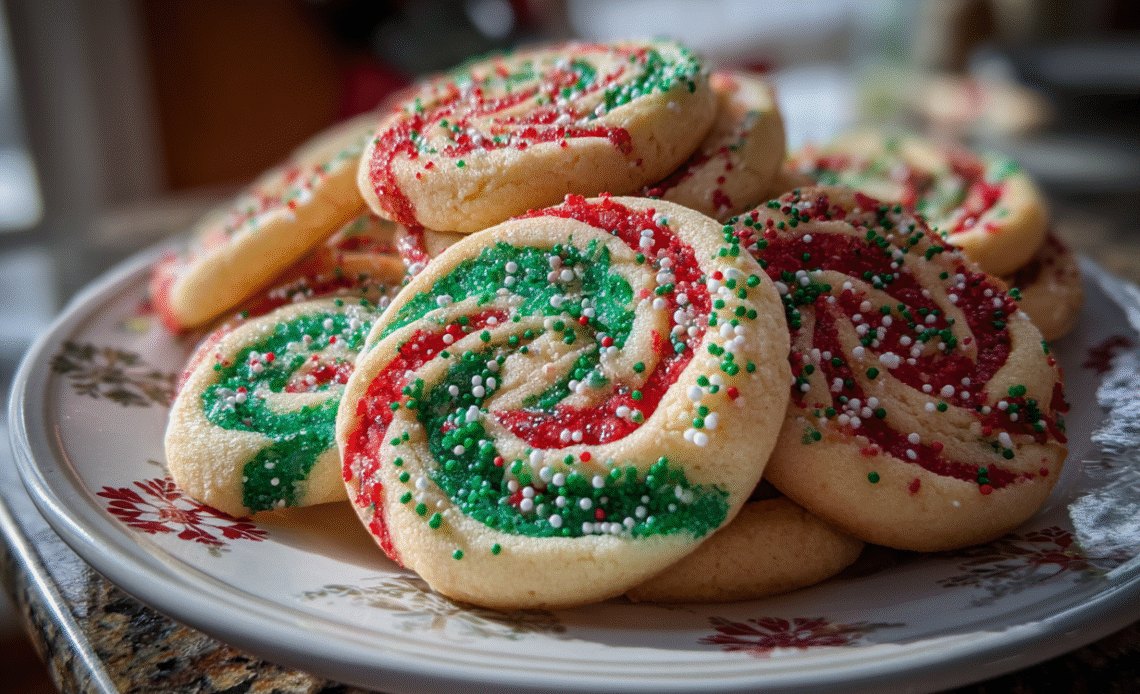
The holiday season is a feast for the eyes as much as the palate. Yet, achieving that picture-perfect, professional-looking cookie often feels reserved for expert bakers with specialized tools. At Sugar Detox Lab, we believe that creating stunning, celebratory treats should be an accessible joy, not a stressful endeavor. Enter our Swirled Christmas Cookies—a recipe that demystifies the art of cookie decoration, turning simple dough and a handful of sprinkles into a breathtaking, kaleidoscopic display of holiday cheer. These cookies prove that mindfulness in baking can be both playful and beautiful, resulting in a treat that’s as fun to make as it is to eat.
Imagine a slice of cookie dough that looks like a vibrant peppermint or a glittering holiday ornament. Now, picture that slice baking into a tender, buttery cookie with a subtle almond aroma, its beautiful swirls perfectly preserved. That’s the magic of these Swirled Christmas Cookies. Unlike icing-heavy cookies, the color and decoration are baked right in, making them naturally eye-catching and perfect for handling and gifting. This recipe is an invitation to engage in a creative, hands-on process that feels more like a festive craft project than a chore.
What Are Swirled Christmas Cookies and Why Do They Matter?
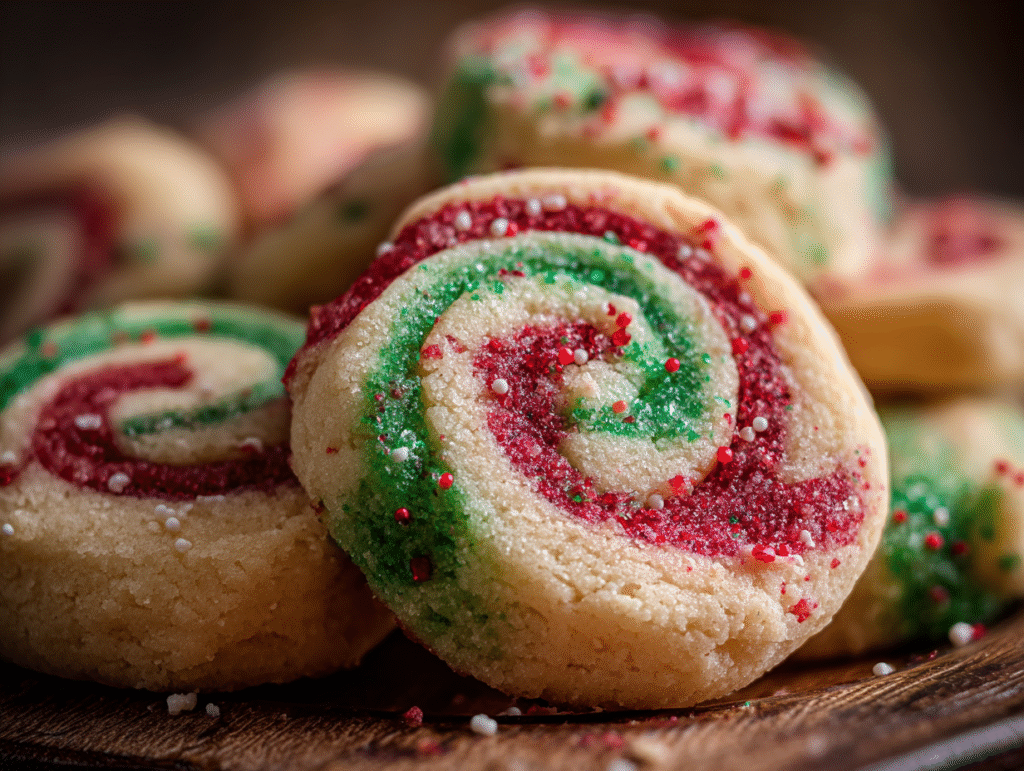
Swirled cookies, also known as pinwheel or spiral cookies, are created by rolling and layering different colors of dough into a log, then slicing it to reveal a stunning pattern. They are a classic technique that never fails to impress.
This Swirled Christmas Cookies recipe matters because it champions creative accessibility. While the result looks intricate, the technique is wonderfully simple and forgiving—a perfect project for bakers of all levels, including families with children. We use a straightforward sugar cookie dough as our canvas, elevated with a touch of almond extract for a sophisticated, bakery-style flavor that sets it apart from standard vanilla. The vibrant colors come from gel food coloring, and the festive sparkle from nonpareil sprinkles rolled right into the dough. This approach, in contrast to more complex Christmas Present Brownies or Peppermint Meltaways, focuses on visual artistry through technique rather than elaborate ingredients or decorations.
A Mindful Look at the Ingredients for Art and Flavor
Let’s appreciate the components that make these beautiful cookies possible, both in terms of structure and sensory appeal.
- The Flavor Canvas: Butter, Sugar, and Almond: The base is a classic, tender sugar cookie. The butter provides richness and that melt-in-your-mouth quality, while the combination of almond and vanilla extract creates a warm, complex flavor profile that feels special. Pure vanilla extract, derived from the vanilla orchid, is prized for its rich, aromatic compounds.
- The Structural Secret: Cornstarch: This is a small ingredient with a big role. Adding cornstarch to cookie dough is a baker’s trick for creating an extra-soft, tender texture. It “softens” the protein in the flour, preventing the cookies from becoming tough and ensuring they stay delicately crumbly.
- The Visual Joy: Gel Food Coloring and Sprinkles: The festive transformation happens here. Gel food coloring is preferred over liquid because it provides vibrant color without altering the dough’s consistency. The sprinkles (nonpareils are best as they don’t bleed color) add texture and a delightful crunch. This visual element is key—the joy of seeing the beautiful swirls satisfies our desire for celebration, making the cookie a complete festive experience.
- Understanding the Sweetness: The granulated sugar provides sweetness and structure. Being mindful that this is a source of simple carbohydrates allows us to enjoy these beautiful cookies as a special part of our holiday celebrations.
This recipe contains gluten, dairy, and refined sugars. It is not keto, paleo, or vegan as written. However, the Notes section provides clear adaptations for various dietary paths.
Navigating the Challenges of the Perfect Swirl
The technique is simple, but a few key steps will ensure your Swirled Christmas Cookies have crisp, beautiful patterns.
- The Dough Consistency: Firm and Rollable: If your dough is too soft or sticky, it will be impossible to roll out and layer neatly. The Fix: After mixing, the dough must be divided and chilled. Wrap each portion in plastic and refrigerate for at least 1-2 hours. This firms up the butter, making the dough easy to handle.
- The Color Swirl: Achieving Bold Layers: The goal is distinct layers of color, not a muddy blend. The Fix: Use gel food coloring for intensity. When rolling out the dough, use a light dusting of flour to prevent sticking, but don’t over-flour. When rolling the layered dough into a log, roll tightly but gently to avoid squeezing the colors together.
- The Clean Slice: A Sharp, Cold Log: Slicing a too-soft log will smash the beautiful swirl. The Fix: After forming the swirled log, wrap it tightly and freeze it for at least 1-2 hours until very firm. Use a sharp, serrated knife and a gentle sawing motion to slice clean rounds without pressing down.
Tips and Trends for Creative Holiday Baking
These Swirled Christmas Cookies are part of the “cookie as craft” trend, where the process is a big part of the holiday fun. They are a fantastic make-ahead option. To keep your holiday season balanced, consider using an AI meal planner to organize simple, nourishing weeknight dinners, freeing up your time and energy for creative baking sessions.
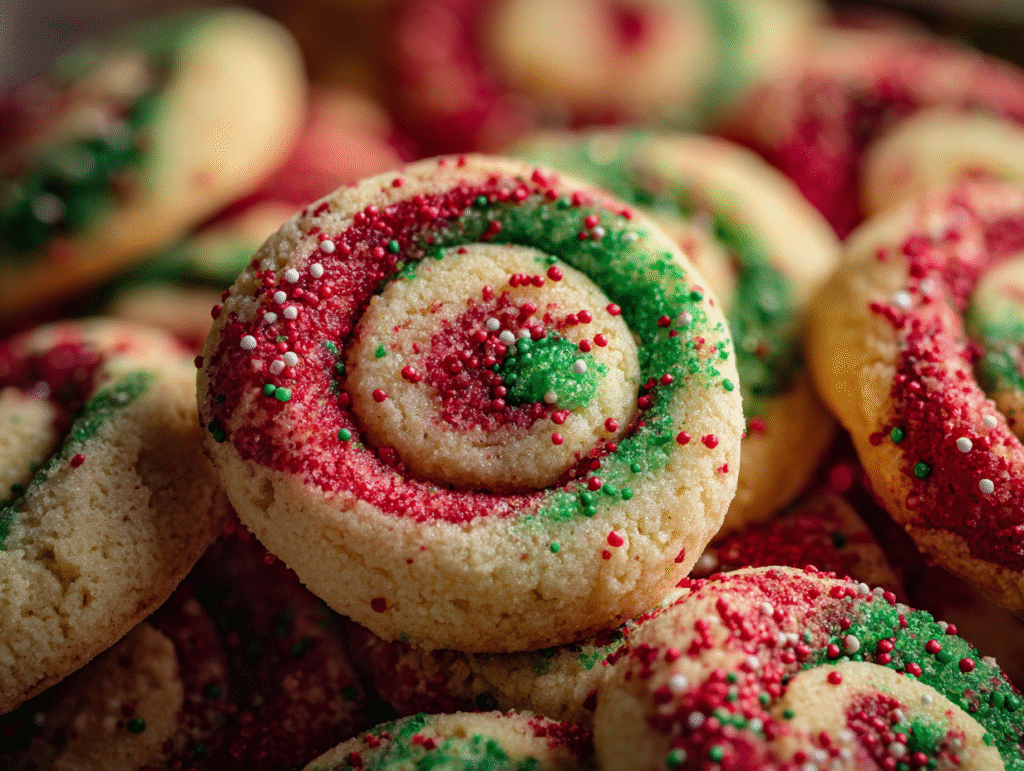
Experiment with different patterns! Instead of a three-color spiral, try making a checkerboard pattern by cutting dough squares, or create a marbled effect by roughly combining chunks of colored dough before rolling.
Frequently Asked Questions
Question: Can I use liquid food coloring instead of gel?
Answer: It’s not recommended. Liquid food coloring adds too much moisture to the dough, which can make it sticky and difficult to work with, and the colors will be much less vibrant. Gel or paste coloring is essential for this recipe.
Question: My dough cracked when I rolled it into the log. Is it ruined?
Answer: Not at all! Small cracks are normal, especially if the dough is a bit cold. Simply press them together as you roll. The slices will still look beautiful. If it’s cracking a lot, let the dough sit at room temperature for 5-10 minutes to become more pliable.
Question: Can I make these without the sprinkles?
Answer: Absolutely. The sprinkles add festive texture, but the cookies will still have beautiful red, white, and green swirls without them. You could also roll the finished log in coarse sugar for a different kind of sparkle.
Question: Why did my swirls smear or blend together when I sliced them?
Answer: This usually means the dough log wasn’t cold enough when sliced. The log must be very firm from the freezer to get a clean cut. Ensure you freeze it for the full time, and use a sharp, serrated knife with a sawing motion—don’t press straight down.
Conclusion
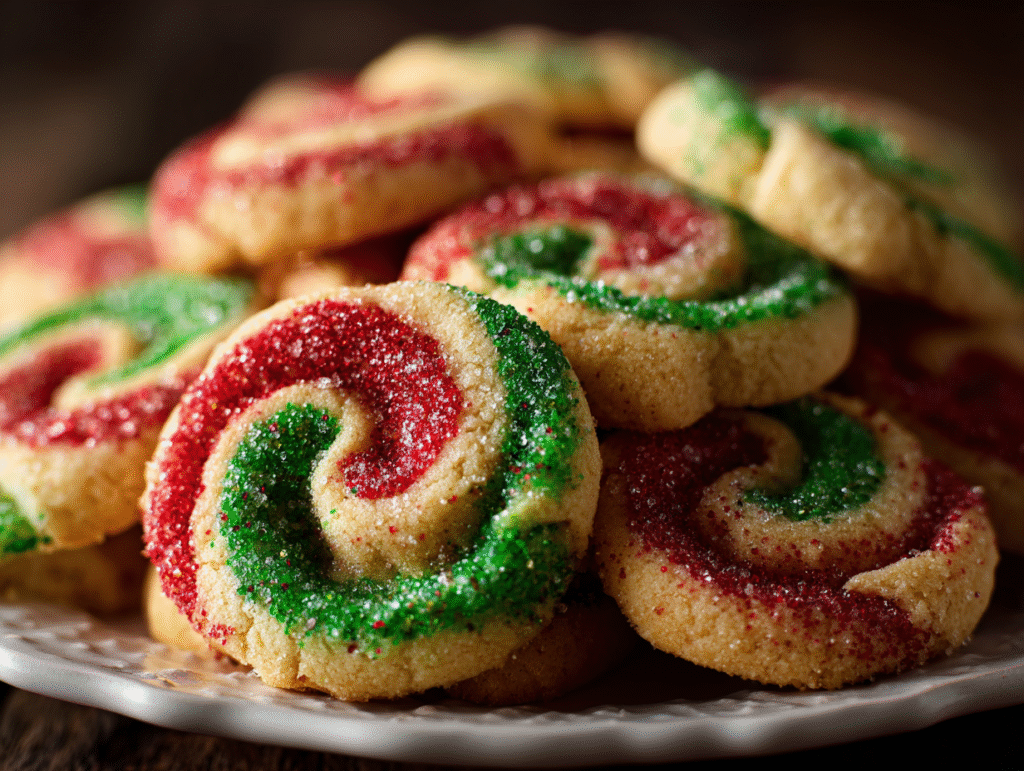
These Swirled Christmas Cookies are a celebration of creativity, simplicity, and pure holiday joy. They prove that with a little technique and a lot of heart, you can create edible masterpieces that delight everyone who sees—and tastes—them.
We encourage you to embrace the fun, hands-on process. Gather your family, choose your colors, and create a batch of these stunning cookies that are sure to become a new holiday tradition. For more recipes that help you celebrate the season with balance, beauty, and a mindful approach to baking, explore our full collection at Sugar Detox Lab. Subscribe to our newsletter for inspiration that supports a sweeter, healthier, and more creative lifestyle.