
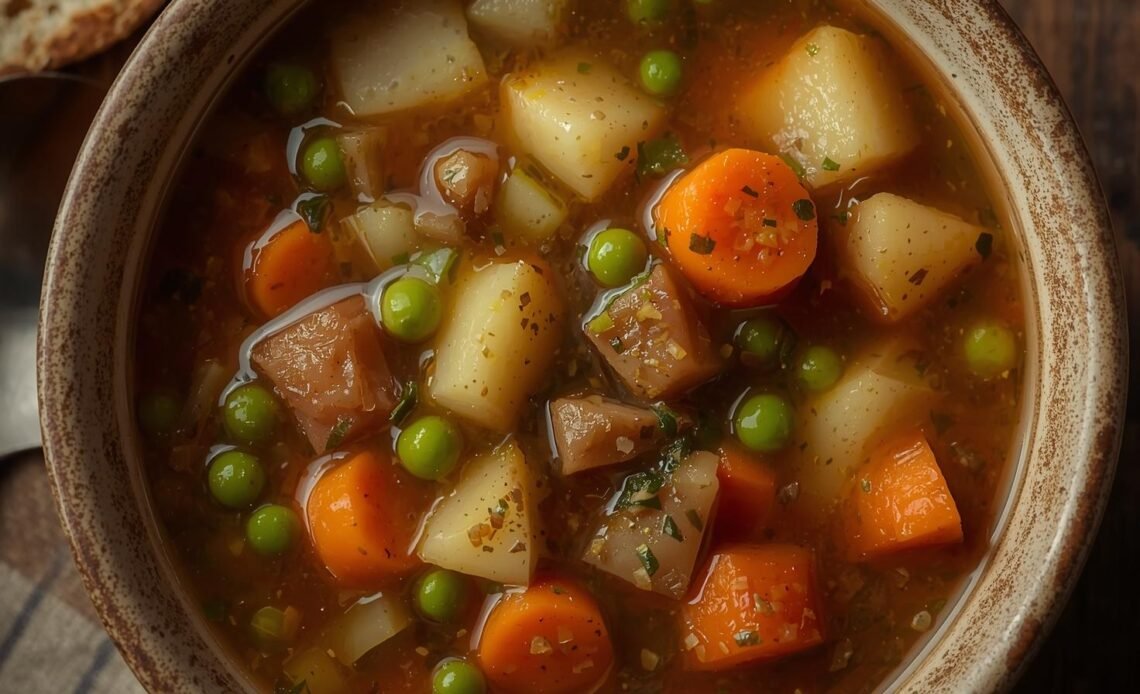
There are few dishes as universally comforting and nourishing as a warm bowl of vegetable soup. It’s the meal we turn to when we need something gentle yet satisfying, when we’re feeling under the weather, or when we simply want to fill our bodies with the goodness of vegetables. However, not all vegetable soups are created equal. Store-bought versions and some recipes can be surprisingly high in sodium, contain hidden sugars, or lack the vibrant freshness that makes this dish so special. What if you could create a classic vegetable soup that’s not only deeply comforting but also perfectly aligned with your sugar-free, health-conscious lifestyle? Welcome to our nourishing version that celebrates vegetables in their purest form.
This dish represents the very essence of wholesome eating. Our classic vegetable soup is designed to be your go-to for a light lunch, a starter, or a simple dinner when you want something that feels both cleansing and satisfying. It’s a perfect example of how simple ingredients can come together to create something greater than the sum of their parts. Let’s explore how this timeless dish can become a cornerstone of your healthy eating routine.
What Is Classic Vegetable Soup and Why Does This Version Matter?
Vegetable soup exists in countless variations across cultures, each with its own character and ingredient combinations. The basic concept involves vegetables cooked in a liquid, but traditional versions can sometimes rely on excessive salt for flavor, high-sodium stock cubes, or even add a pinch of sugar to balance acidity. Some recipes might use cream or butter for richness, while others could include processed ingredients that undermine the nutritional value.
Our version of classic vegetable soup matters because it goes back to the fundamentals of what makes this dish so wonderful—the natural flavors of fresh vegetables. We use reduced-salt vegetable stock as our base, allowing the true tastes of the vegetables to shine through without being overwhelmed by sodium. The addition of tomato purée and chopped tomatoes provides natural umami and slight acidity without any need for added sugar. The small amount of pasta adds substance, making it more satisfying while still keeping the focus on the vegetables. This approach creates a classic vegetable soup that is clean, vibrant, and genuinely good for you.
The Vibrant Health Benefits of This Vegetable-Packed Soup
This soup is a nutritional powerhouse that demonstrates how simple ingredients can provide profound health benefits.
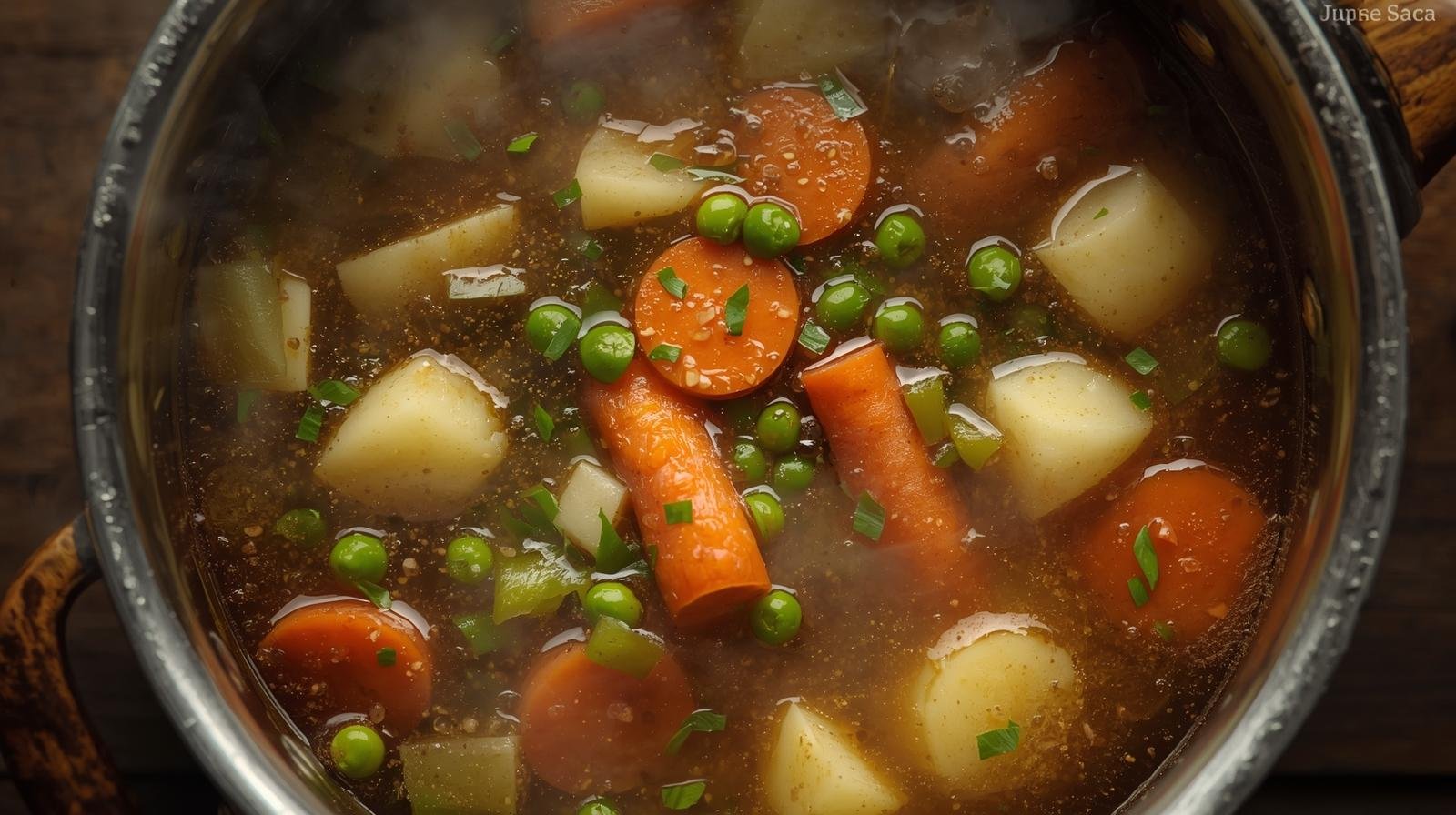
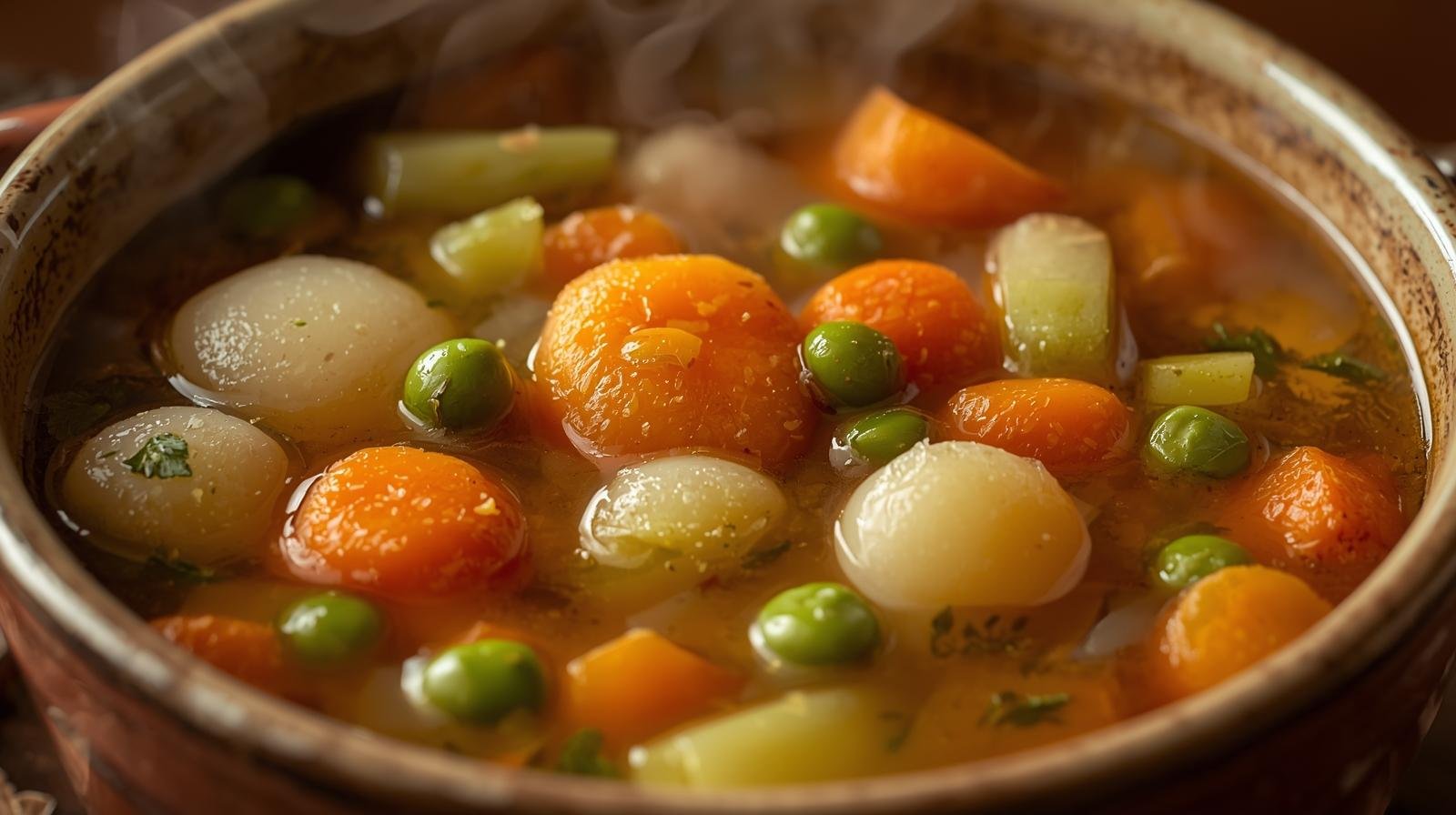
- Fiber and Vitamins from the Vegetable Medley: The combination of onions, carrots, leek, celery, and peas creates a fiber-rich base that supports digestive health. Each vegetable brings its own unique nutritional profile: carrots are famous for their beta-carotene (which converts to vitamin A), leeks provide prebiotics that feed beneficial gut bacteria, and celery offers vitamin K and potassium. This diverse mix ensures you’re getting a wide spectrum of vitamins and minerals.
- Lycopene and Antioxidants from Tomatoes: Whether using chopped tomatoes or passata, you’re adding a significant source of lycopene, an antioxidant that has been studied for its potential role in supporting heart health. Cooking tomatoes actually makes the lycopene more available for your body to use. They also provide vitamin C and potassium.
- Sustained Energy from Pasta: The small amount of pasta adds complex carbohydrates that provide sustained energy. When combined with the fiber from the vegetables, it creates a balanced meal that will keep you satisfied without causing blood sugar spikes. The concept of the Glycemic Index is relevant here—the high fiber content from all the vegetables helps moderate the blood sugar response to the pasta.
- Herbal Benefits and Flavor: The dried mixed herbs do more than just add flavor—many herbs contain antioxidants and anti-inflammatory compounds. They allow us to build depth of flavor without relying on excessive salt.
This classic vegetable soup is naturally vegan, making it suitable for a wide range of dietary preferences. It is also naturally low in fat and high in fiber. While not suitable for keto or paleo diets due to the pasta and legumes (peas), it fits beautifully into Mediterranean, plant-based, and general wellness-focused eating patterns.
Addressing Potential Challenges and Easy Solutions
Creating the perfect vegetable soup is straightforward, but these tips will ensure the best results every time.
- Challenge: Overcooked Vegetables. Vegetables can become mushy and lose their nutritional value if cooked too long.
- Solution: Add vegetables in stages according to their cooking times. The harder vegetables like carrots and celery go in first, while more delicate vegetables like peas and sugar snap peas are added toward the end to preserve their texture and nutrients.
- Challenge: Bland Flavor. Without excessive salt or processed flavor enhancers, soup can sometimes taste flat.
- Solution: Building layers of flavor is key. Sautéing the initial vegetables until they just begin to caramelize creates a flavor foundation. Using quality tomato purée and allowing the soup to simmer gently (not boil) helps develop depth. The black pepper and herbs at the end also brighten everything up.
- Challenge: The Pasta Becoming Mushy.
- Solution: Cook the pasta in the soup for just the time recommended on the package. Remember that it will continue to soften slightly in the hot liquid even after cooking, so it’s better to slightly undercook it. Alternatively, you can cook the pasta separately and add it to each bowl when serving.
Tips and Trends for Modern Healthy Cooking
This classic vegetable soup aligns perfectly with the “plant-forward” eating trend, emphasizing vegetables as the star of the meal. AI-based meal planning apps can suggest this recipe when it detects you have vegetables that need using, helping to reduce food waste. The growing interest in “clean label” cooking—using simple, recognizable ingredients—makes this recipe particularly relevant. A good quality heavy-bottomed pot is the key tool for this recipe, ensuring even cooking and preventing the vegetables from sticking or burning.
Frequently Asked Questions (FAQ)
Question: Can I make this classic vegetable soup in a slow cooker?
Answer: Absolutely. Sauté the initial vegetables first for best flavor, then transfer everything except the pasta and quick-cooking vegetables (peas, sugar snap peas) to the slow cooker. Cook on low for 6-8 hours, adding the pasta and delicate vegetables in the last 30 minutes of cooking.
Question: My soup is too thin. How can I thicken it?
Answer: You can mash some of the vegetables against the side of the pot with a spoon, or blend a portion of the soup and stir it back in. Alternatively, let it simmer uncovered for a bit longer to reduce and concentrate.
Question: Can I freeze this classic vegetable soup?
Answer: Yes, but for best texture, freeze it without the pasta as pasta can become mushy upon thawing. Add freshly cooked pasta when you reheat and serve. The soup base freezes beautifully for up to 3 months.
Question: Is this soup suitable for weight loss?
Answer: Yes, this soup is excellent for weight management. It’s low in calories but high in fiber and volume, which helps you feel full and satisfied. The vegetable-rich composition provides essential nutrients while being naturally low in energy density.
Conclusion
This healthy classic vegetable soup is more than just a recipe—it’s a celebration of how simple, whole ingredients can come together to create something that nourishes both body and soul. It demonstrates that you don’t need complicated techniques or exotic ingredients to create meals that are both delicious and wonderfully good for you. We encourage you to try this comforting, vibrant soup and experience the profound satisfaction that comes from eating food that truly loves you back.
What are your favorite vegetable combinations for soup? Share your ideas in the comments below, and for more sugar-free, plant-based recipes to support your wellness journey, be sure to explore sugardetoxlab.com.