
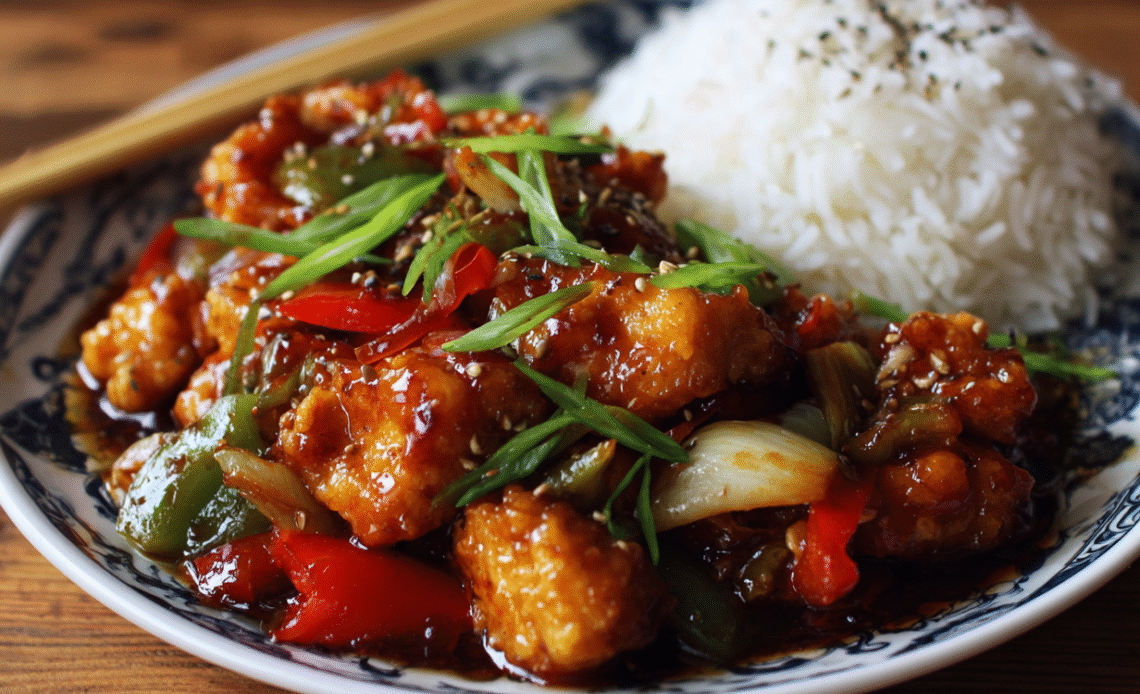
There’s something universally appealing about the vibrant, tangy, and sweet flavors of a good sweet and sour chicken recipe. It’s a dish that conjures images of festive family dinners and the satisfying experience of takeout night. However, if you’ve ever looked at the nutritional information of restaurant versions, you know the truth: they’re often loaded with added sugars, deep-fried chicken, and syrupy sauces that can derail your health goals. What if you could recreate that iconic flavor in a wholesome, nourishing meal that aligns with your sugar-free lifestyle? Welcome to our reinvented sweet and sour chicken recipe—a recipe that delivers all the excitement of the original while being genuinely good for you.
This dish is proof that you don’t need to sacrifice flavor for health. Our version of sweet and sour chicken recipe captures the essential balance of flavors that makes this dish so beloved, but through smart, natural ingredient choices. It’s a colorful, vegetable-packed stir-fry that comes together quickly, making it perfect for a weeknight dinner that feels special without the guilt. Let’s explore how to create a takeout classic that supports your well-being.
What Is Sweet and Sour Chicken Recipe and Why Does This Version Matter?
Traditional sweet and sour chicken recipe is a Cantonese dish that typically features batter-fried chicken pieces tossed in a bright red sauce. The sauce gets its signature taste from a high ratio of sugar to vinegar, often using copious amounts of refined sugar or corn syrup. The chicken is usually deep-fried, adding significant empty calories and unhealthy fats. While delicious, this preparation transforms potentially healthy ingredients into a nutritional challenge.
Our version of sweet and sour chicken recipe matters because it goes back to the fundamental principles of balanced cooking while honoring a sugar-free approach. The “sweet” in our sauce comes purely from the natural juices of pineapple, eliminating the need for any added sugar. The “sour” component is achieved through the natural acidity of tomatoes and a touch of vinegar in the tomato purée. Instead of deep-frying, we quickly stir-fry the chicken with minimal oil, preserving its lean protein quality. By packing the dish with fresh vegetables like peppers, celery, and onions, we increase the fiber and nutrient content dramatically.
The Impressive Health Benefits of This Sweet and Sour Chicken Recipe
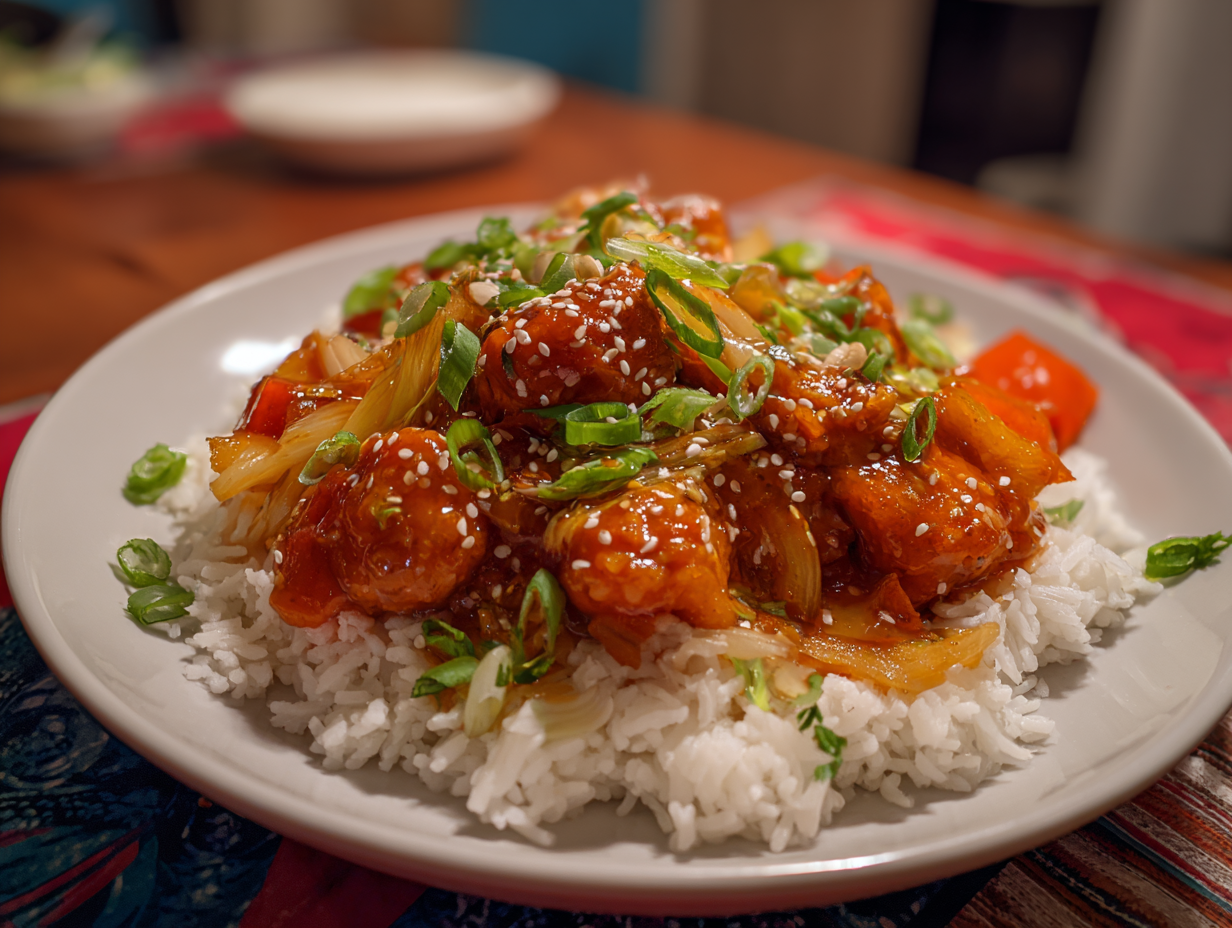
This reinvented classic isn’t just about what’s been removed—it’s about the nutritional power of what’s been included.
- Lean Protein from Chicken: Whether you choose breast or thigh meat, chicken provides high-quality, complete protein essential for muscle repair, immune function, and satiety. Using skinless chicken significantly reduces the saturated fat content, making it a heart-healthy choice.
- Natural Sweetness and Enzymes from Pineapple: Using pineapple packed in its own juice rather than syrup is the key to our sugar-free sauce. Beyond providing natural sweetness, pineapple contains bromelain, an enzyme with noted anti-inflammatory and digestive properties. The fruit also contributes vitamin C and manganese.
- Fiber and Nutrients from Vegetables: The colorful array of peppers, onions, celery, and tomatoes turns this dish into a vegetable powerhouse. These ingredients provide essential dietary fiber, which supports digestive health and helps regulate blood sugar levels—a crucial consideration for anyone on a sugar detox. They’re also rich in various vitamins, minerals, and antioxidants.
- Complex Carbohydrates from Brown Rice: Serving this dish with brown rice instead of white provides more fiber, vitamins, and minerals. The complex carbohydrates in brown rice offer sustained energy release, complementing the protein and fiber in the main dish to create a balanced meal.
This sweet and sour chicken recipe is naturally free from added sugars, making it perfect for a clean-eating plan. It’s also gluten-free if you use tamari instead of soy sauce. While not suitable for keto or paleo diets due to the pineapple and rice, it fits beautifully into Mediterranean, balanced, and diabetes-friendly eating patterns when portioned appropriately.
Addressing Potential Challenges and Easy Solutions
Creating restaurant-quality stir-fry at home is easy with these simple tips for success.
- Challenge: Soggy Vegetables. Overcooked vegetables can ruin the texture of your stir-fry.
- Solution: Cook vegetables quickly over high heat and don’t overcrowd the pan. Work in batches if necessary. Add them in order of cooking time—onions and celery first, then peppers, with tomatoes added at the very end just to warm through.
- Challenge: Watery Sauce. The sauce might not thicken properly or could become too thin.
- Solution: The cornflour slurry is crucial here. Make sure to mix it with cold liquid before adding it to the hot pan. Also, ensure you’re bringing the sauce to a full boil after adding the cornflour mixture, as this is necessary for proper thickening.
- Challenge: Tough Chicken.
- Solution: Cut the chicken into uniform pieces to ensure even cooking. Don’t overcrowd the pan when stir-frying, as this will steam the chicken rather than sear it. Cook just until the chicken is no longer pink inside to maintain tenderness.
Tips and Trends for Modern Healthy Cooking
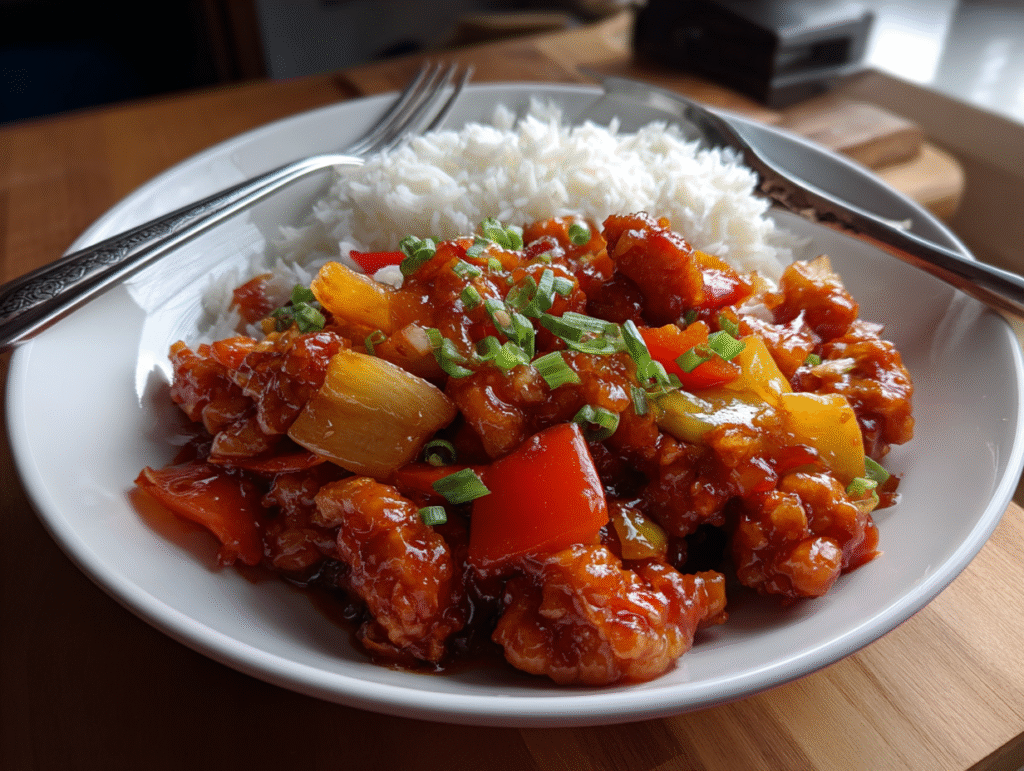
This healthy sweet and sour chicken recipe aligns perfectly with the “clean eating” trend, focusing on whole, recognizable ingredients. AI-based meal planning apps can easily incorporate this into your weekly rotation, suggesting it for busy nights when you want something quick and flavorful. The growing interest in “bowl meals” makes this dish particularly relevant—simply serve the sweet and sour chicken recipe over rice with extra vegetables for a complete, Instagram-worthy meal. A good quality wok or large non-stick frying pan is the perfect tool for this recipe, allowing for quick, high-heat cooking that seals in flavors.
Frequently Asked Questions (FAQ): Sweet and Sour Chicken Recipe
Question: Can I use fresh pineapple instead of tinned?
Answer: Absolutely! Use about 1½ cups of fresh pineapple chunks. For the juice, blend a few pieces with 150ml of water and strain, or use 150ml of 100% pineapple juice with no added sugar.
Question: My sauce isn’t thickening. What can I do?
Answer: Ensure you brought the sauce to a full boil after adding the cornflour mixture. If it’s still thin, mix another teaspoon of cornflour with a tablespoon of cold water and stir it into the simmering sauce.
Question: Can I make this dish ahead of time?
Answer: You can prepare the sauce mixture and chop all vegetables ahead of time, but for the best texture, cook the stir-fry just before serving. Leftovers reheat well but the vegetables will soften.
Question: Is this sweet and sour chicken recipe suitable for freezing?
Answer: Yes, it freezes quite well for up to 3 months. Thaw completely in the refrigerator before reheating gently on the stove or in the microwave, adding a little water if needed to refresh the sauce.
Conclusion
This reinvented sweet and sour chicken recipe is more than just a recipe—it’s proof that you can enjoy your favorite flavors while nourishing your body with wholesome ingredients. It demonstrates how simple swaps and cooking techniques can transform a typically indulgent dish into a weeknight staple you can feel good about serving. We encourage you to try this vibrant, flavorful recipe, enjoy the process of creating healthier versions of your favorites, and discover how satisfying clean eating can be.
What’s your favorite takeout dish to recreate at home? Share your ideas in the comments below, and for more sugar-free, flavor-packed recipes to support your wellness journey, be sure to explore sugardetoxlab.com.