

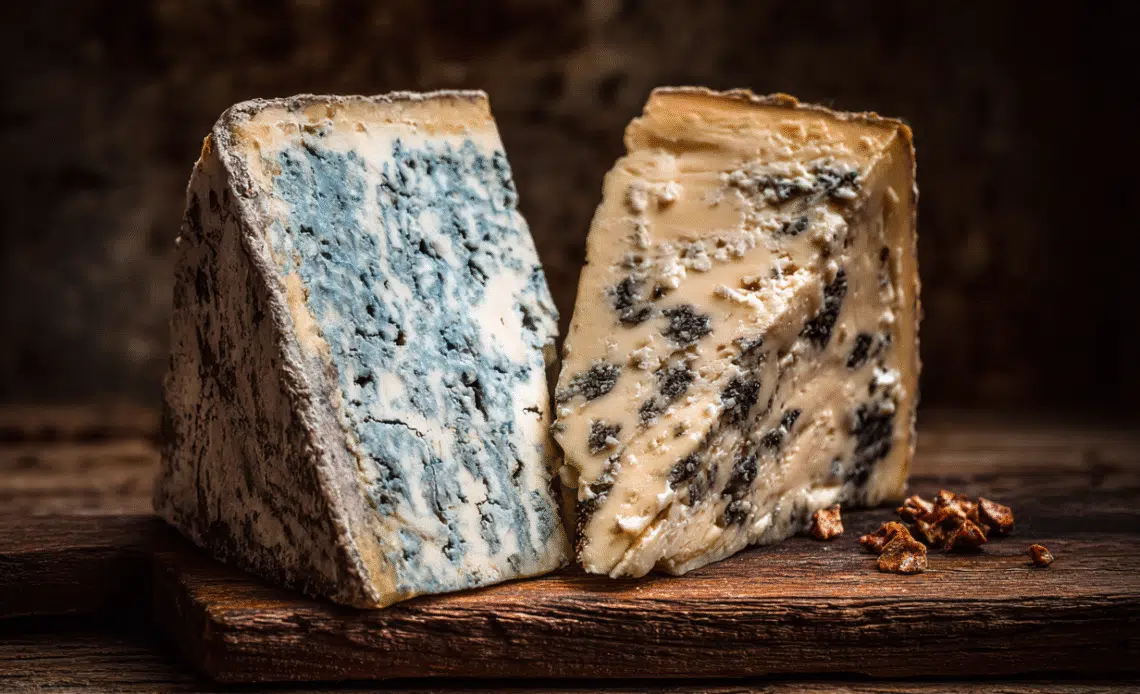
If you’ve ever stood in front of a cheese counter wondering whether Gorgonzola and Blue Cheese are the same, you’re not alone. Both are rich, tangy, and streaked with blue mold—but their origins and flavors differ. Gorgonzola, in particular, is an Italian blue cheese celebrated for its creamy texture and balanced flavor. Understanding the difference between Blue Cheese and Gorgonzola helps you choose the perfect cheese for any dish.
In this article, we’ll explore what makes each cheese unique, how they’re made, and how to use them in everyday recipes. By the end, you’ll know exactly what sets Italian blue cheese apart from its international cousins.
What Is Blue Cheese?
Blue Cheese is a broad category of cheeses infused with Penicillium mold, which gives them their blue or green veins. This mold imparts a distinct tang and complex aroma that cheese lovers crave.
Popular Types of Blue Cheese
- Roquefort (France): Made from sheep’s milk, crumbly, and sharp.
- Stilton (England): Creamy and dense with a mild tang.
- Danish Blue (Denmark): Soft, buttery, and moderately strong.
- Gorgonzola (Italy): A rich, creamy Italian blue cheese known worldwide for its smoothness and depth.
So while Gorgonzola belongs to the blue cheese family, it stands out for being a classic Italian blue cheese with centuries of tradition behind it.
What Is Gorgonzola?
Gorgonzola is an Italian blue cheese made from cow’s milk and aged in specific conditions to develop its characteristic flavor and blue-green veining. Originating from Lombardy and Piedmont, Gorgonzola is one of the oldest cheeses in Europe, dating back over a thousand years.
There are two main varieties:
- Gorgonzola Dolce (Sweet): Soft, creamy, and mild — ideal for sauces and spreading.
- Gorgonzola Piccante (Sharp): Firmer, aged longer, and with a more pungent, spicy flavor.
Both types reflect the artistry of Gorgonzola cheese craftsmanship, combining creaminess with just the right level of sharpness.
How These Cheeses Are Made
Both Blue Cheese and Gorgonzola cheese Gorgonzola follow a similar fermentation and aging process but differ in milk source and aging duration.
Step-by-Step Production Process
1. Milk Selection
Blue Cheeses can use various milks, but Italian cheese Gorgonzola always uses pasteurized cow’s milk.
2. Cultures and Mold Addition
The mold Penicillium roqueforti is added to the milk, giving Italian cheese its signature veins.
3. Curd Formation
Rennet is added to solidify the milk, forming curds that are later cut and drained.
4. Piercing for Airflow
Cheese wheels are pierced with steel needles to allow oxygen inside, activating mold growth. This is how the blue veins spread evenly through the Gorgonzola.
5. Aging
- Blue Cheese: 2–6 months, depending on variety
- Gorgonzola Dolce: 1–2 months
- Gorgonzola Piccante: 3–6 months
The shorter aging time gives Italian blue cheese Gorgonzola Dolce its soft, buttery consistency, while longer aging intensifies its flavor.
Flavor Comparison: Blue Cheese vs. Italian Blue Cheese Gorgonzola
Blue Cheese
- Tangy, salty, and pungent
- Often stronger and more crumbly
- Aroma can be sharp or smoky
Italian Blue Cheese (Gorgonzola)
- Dolce: Creamy, sweet, and mild
- Piccante: Firm, bold, and peppery
- Perfect balance of creaminess and tang
If you’re new to blue cheeses, Italian blue cheese Gorgonzola Dolce is a great place to start — it’s rich but approachable.
Texture and Appearance
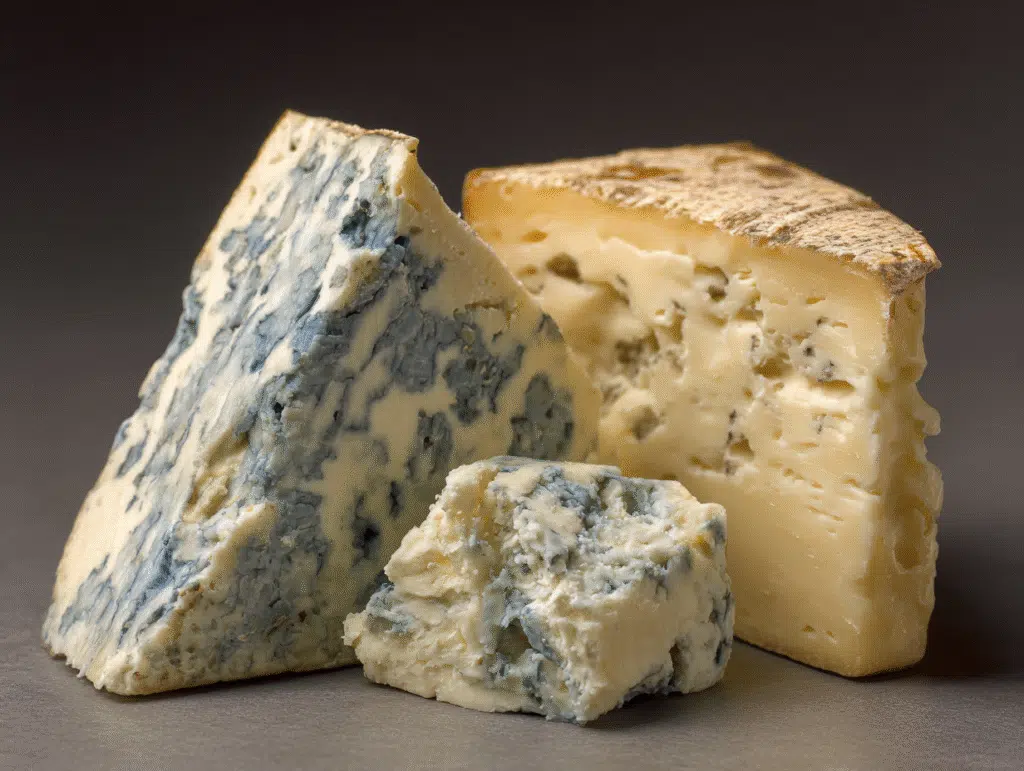
While Blue Cheeses vary in firmness and color, Gorgonzola cheese tends to be creamy and pale yellow with delicate blue-green marbling. Its soft, spreadable consistency makes it ideal for melting into pasta, risotto, or on top of steak.
How to Use Blue Cheese and Italian Blue Cheese in Cooking
Both types of cheese can elevate your cooking, but their flavors lend themselves to different recipes.
Best Ways to Use Blue Cheese
- Crumbled over salads or roasted vegetables
- Blended into blue cheese dressing
- Melted on burgers, steak, or baked potatoes
- Used as a topping for flatbreads or dips
Best Ways to Use Italian Blue Cheese (Gorgonzola)
- Stir into pasta sauces or risotto for creaminess
- Spread on warm crostini with honey or figs
- Melt into soups or creamy polenta
- Add to pizza or stuffed mushrooms
Tip: Pair Italian blue cheese with sweet elements like pears or honey to balance its savory richness.
Step-by-Step: How to Store Italian Blue Cheese and Other Blue Cheeses
1. Wrap Properly
Wrap your cheese in wax or parchment paper first, then loosely in foil. This prevents excess moisture and keeps your Italian blue cheese fresh.
2. Refrigerate
Store in the vegetable drawer or cheese compartment where temperatures are stable. Keep Italian cheese away from strong-smelling foods.
3. Watch for Spoilage
If the mold turns pink or the cheese develops a sour odor, it’s time to toss it.
4. Freezing
Italian blue cheese can be frozen for up to three months. Thaw it in the refrigerator overnight for best results.
Pairing Guide: What to Serve with Italian Blue Cheese
Perfect Pairings for Blue Cheese
- Fruits: Pears, apples, figs
- Drinks: Port wine, stout, or Cabernet Sauvignon
- Nuts: Walnuts or almonds
Perfect Pairings
- Fruits: Grapes, dates, or dried apricots
- Drinks: Prosecco, Moscato, or Chianti
- Accompaniments: Honey, crusty bread, or balsamic glaze
The sweetness of fruits or wine complements the tangy creaminess of Italian cheese perfectly.
Frequently Asked Questions (FAQ)
1. Is Gorgonzola the same as Blue Cheese?
Not exactly. Gorgonzola is an Italian blue cheese, while Blue Cheese refers to the entire category of mold-ripened cheeses from various regions.
2. What makes Italian Blue Cheese different from Roquefort or Stilton?
Italian blue cheese Gorgonzola is milder, creamier, and made exclusively from cow’s milk, whereas Roquefort uses sheep’s milk and Stilton is firmer and more crumbly.
3. Can you cook with Italian Blue Cheese?
Absolutely. Italian cheese melts beautifully into sauces, soups, and risottos, adding depth and richness.
4. How long does Italian Blue Cheese last in the fridge?
Once opened, Italian blue cheese typically lasts 2–3 weeks when stored properly.
5. Is Italian Blue Cheese healthy?
In moderation, yes. Italian blue cheese is rich in calcium, protein, and probiotics, though it’s best enjoyed as part of a balanced diet.
Final Thoughts
When it comes to Blue Cheese vs. Gorgonzola, the right choice depends on your taste and recipe:
- Choose Italian blue cheese Gorgonzola Dolce for smooth, creamy sauces or spreads.
- Choose Italian blue cheese Gorgonzola Piccante for robust, tangy dishes.
- Choose traditional Blue Cheese for strong, salty flavors in salads or steaks.
Whether you prefer sharp or subtle, both offer a world of culinary possibilities.