

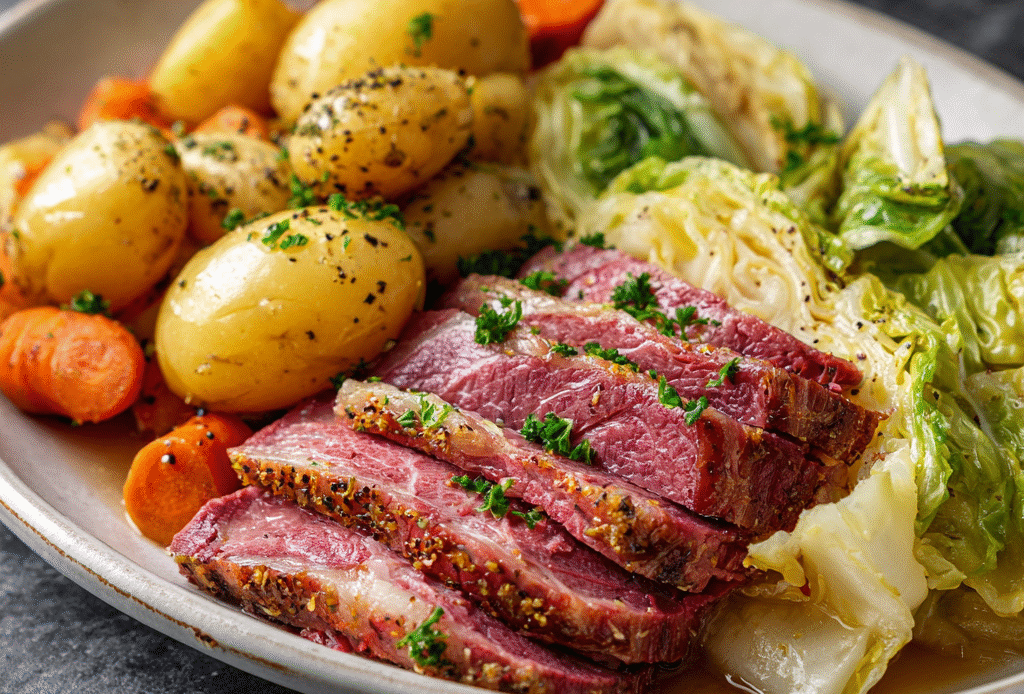
At Sugar Detox Lab, we believe that traditional comfort foods can be enjoyed with intention and care. St. Patrick’s Day often brings to mind images of corned beef and cabbage—a hearty, satisfying dish that fills the kitchen with warmth and the promise of a good meal. But classic versions can be heavy on salt and lack the nuance of well-chosen ingredients. Our Corned Beef and Cabbage recipe honors this beloved dish while elevating it with quality cuts, controlled seasoning, and a focus on vibrant, perfectly cooked vegetables.
What Is Corned Beef and Cabbage Recipe and Why This Mindful Approach Matters
The classic “corned beef and cabbage” has roots in Irish-American cuisine, where Irish immigrants adapted their traditional bacon and cabbage using the more affordable corned beef available in their new homeland. The “corn” refers to the large grains of salt used to cure the beef. Traditional recipes often rely on heavily salted corned beef and boiling everything together until the vegetables become mushy.
Our mindful version makes three key improvements:
- Quality Meat – A well-marbled corned beef (like wagyu) provides superior flavor and tenderness without added fat.
- Controlled Sodium – We use unsalted beef broth and rinse the corned beef if needed, then balance with aromatic vegetables, fresh herbs, and whole spices instead of relying on salt.
- Vegetable Integrity – Carrots and cabbage are added at the right time and braised gently so they remain vibrant and flavorful rather than disintegrating.
By treating each ingredient with care, we turn a simple one-pot meal into a feast that nourishes both body and spirit.
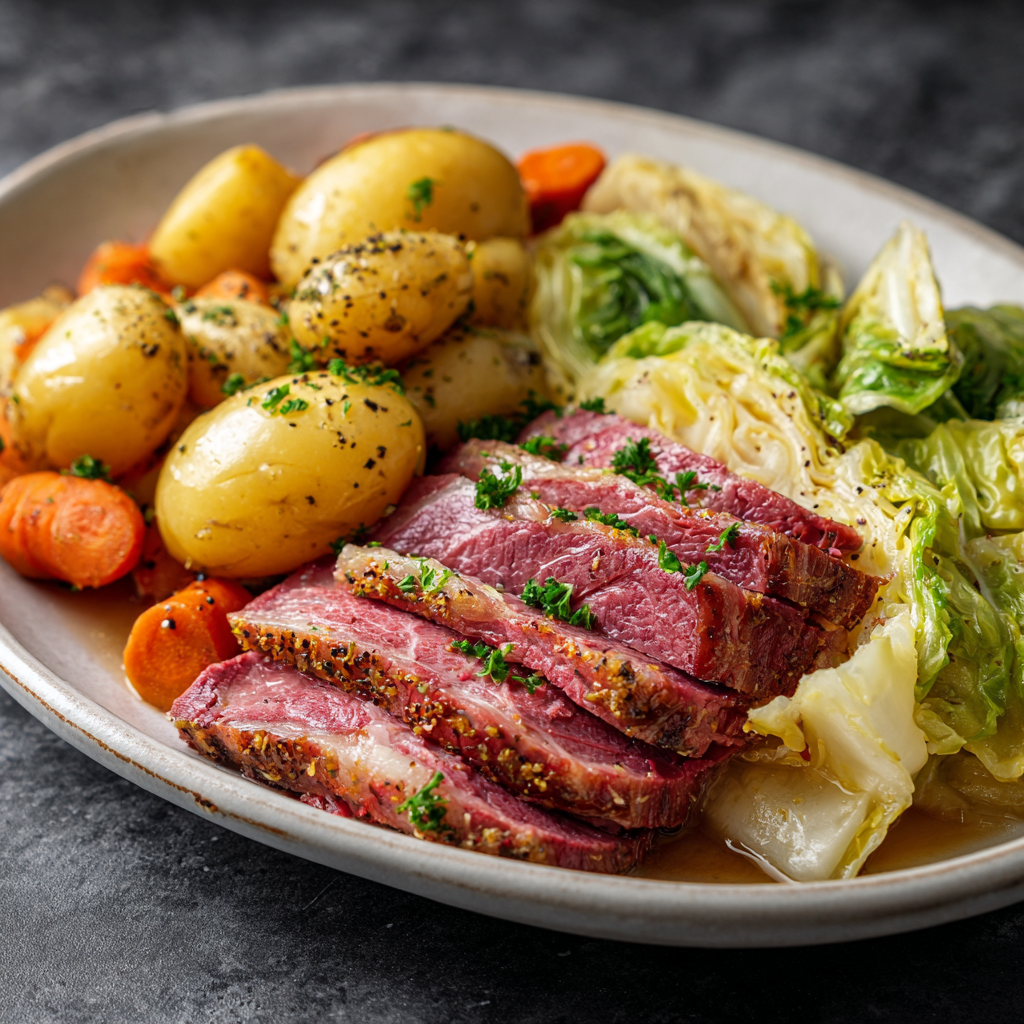
Health Benefits of Mindful Corned Beef and Cabbage Recipe
While corned beef is often seen as a splurge, it can be part of a balanced diet when chosen wisely and paired with nutrient-dense vegetables. Here’s what this dish offers:
- High-Quality Protein – Beef is a complete protein, essential for muscle repair and satiety. Wagyu corned beef offers a higher proportion of monounsaturated fats, which are beneficial for heart health.
- Cabbage – This cruciferous vegetable is packed with vitamin C, vitamin K, and fiber. It contains glucosinolates, compounds that support the body’s natural detoxification processes. You can learn more about the nutritional profile of cabbage on Wikipedia.
- Carrots – Rich in beta-carotene (converted to vitamin A), fiber, and antioxidants.
- Aromatic Herbs and Spices – Thyme, bay leaves, peppercorns, and celery seeds add flavor without extra calories or sodium, and offer anti-inflammatory properties.
This Comforting Corned Beef and Cabbage Recipe dish is naturally low in carbohydrates and sugar, making it suitable for keto, paleo, and other low-carb lifestyles. (If you’re strict about carbs, simply skip the roasted potatoes or serve the corned beef and vegetables over cauliflower mash.)
Navigating the Challenges: Tips for Corned Beef and Cabbage Recipe Success
A few simple techniques ensure your corned beef turns out tender and your vegetables perfectly cooked:
- Choose Quality Corned Beef – Look for a well-marbled piece. If you can find wagyu corned beef (Snake River Farms is excellent), the extra fat will keep the meat moist during the long braise.
- Rinse (or Soak) for Less Salt – Many corned beef packages come with a spice packet and are quite salty. Rinse the meat thoroughly under cold water, and if you prefer, soak it in cold water for 30–60 minutes to draw out excess salt.
- Use Unsalted Broth – Controlling the salt from the start allows you to build flavor with aromatics rather than relying on a salty liquid.
- Add Vegetables at the Right Time – Carrots can go in early; they take about 45 minutes to become tender. Cabbage wedges need only about 20–30 minutes, so add them later to preserve texture and color.
- Let the Meat Rest – After cooking, let the corned beef rest for 10–15 minutes before slicing. This allows the juices to redistribute, keeping each slice moist.
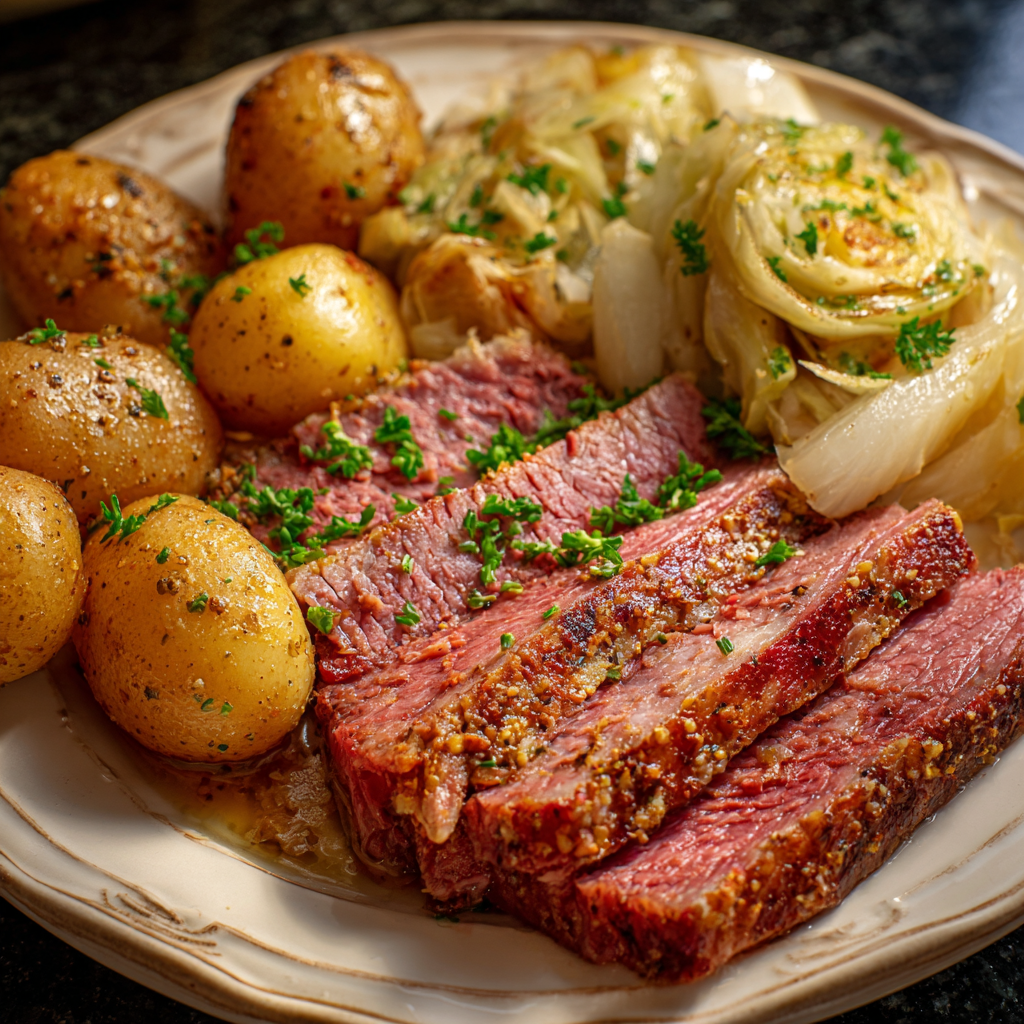
Tips and Trends for Mindful Meal Planning
The trend toward “quality over quantity” in cooking is a perfect fit for this dish. Choosing a high-quality corned beef, like wagyu, reduces the need for heavy salting and delivers richer flavor with less processed fat. AI-based meal planning tools can help you schedule the long cook time and coordinate side dishes. Apps like Yummly or Paprika let you save this recipe, generate shopping lists, and even suggest wine pairings.
If you’re watching your sugar intake, you’ll appreciate that this recipe contains no added sugar—the sweetness comes from carrots and the natural flavor of the meat. For a complete “clean” meal, serve with roasted potatoes tossed in olive oil and fresh herbs.
Frequently Asked Questions (FAQ): Comforting Corned Beef and Cabbage Recipe
Question: Can I use a slow cooker for this recipe?
Answer: Yes! Sear the corned beef in a skillet, then transfer to a slow cooker with the broth, mustard, garlic, onion, peppercorns, thyme, bay leaves, and celery seed. Cook on low for 8–10 hours. Add carrots during the last 2 hours and cabbage during the last hour.
Question: How do I prevent the cabbage from becoming mushy?
Answer: Cut the cabbage into thick wedges, leaving the core intact so they hold together. Add them only during the last 20 minutes of cooking, and check for tenderness—they should be just fork-tender, not falling apart.
Question: Is corned beef keto-friendly?
Answer: Yes, corned beef is naturally low in carbohydrates. However, be mindful of the sodium content and choose a high-quality brand without added sugar. The vegetables (carrots and cabbage) are also keto-friendly in moderation, especially if you limit carrots or swap for more cabbage.
Question: Can I freeze leftovers?
Answer: Absolutely. Slice the corned beef and store in an airtight container with some of the cooking liquid for up to 3 months. Thaw in the refrigerator overnight and reheat gently on the stovetop or in the microwave.
Question: What’s the best way to slice corned beef?
Answer: Always slice against the grain. Look for the lines of muscle fibers running through the meat; cut perpendicular to those lines. This ensures the slices are tender, not stringy.
Question: How do I make horseradish sauce from scratch?
Answer: Combine ½ cup sour cream (or Greek yogurt), 2–3 tbsp prepared horseradish, 1 tsp Dijon mustard, a squeeze of lemon juice, and a pinch of salt. Adjust to taste. For a lighter version, use plain yogurt.
Conclusion
This Corned Beef and Cabbage recipe brings together the nostalgia of a classic Irish-American meal with a mindful approach to ingredients and preparation. By choosing a high-quality corned beef, controlling the salt with unsalted broth, and cooking the vegetables to perfection, you create a dish that’s as nourishing as it is comforting. Whether you’re celebrating St. Patrick’s Day or simply craving a cozy dinner, this meal is sure to become a favorite.
We’d love to see your take—share your results and any creative twists in the comments below. And for more recipes that blend tradition with health-conscious cooking, explore the full collection at SugarDetoxLab.com.