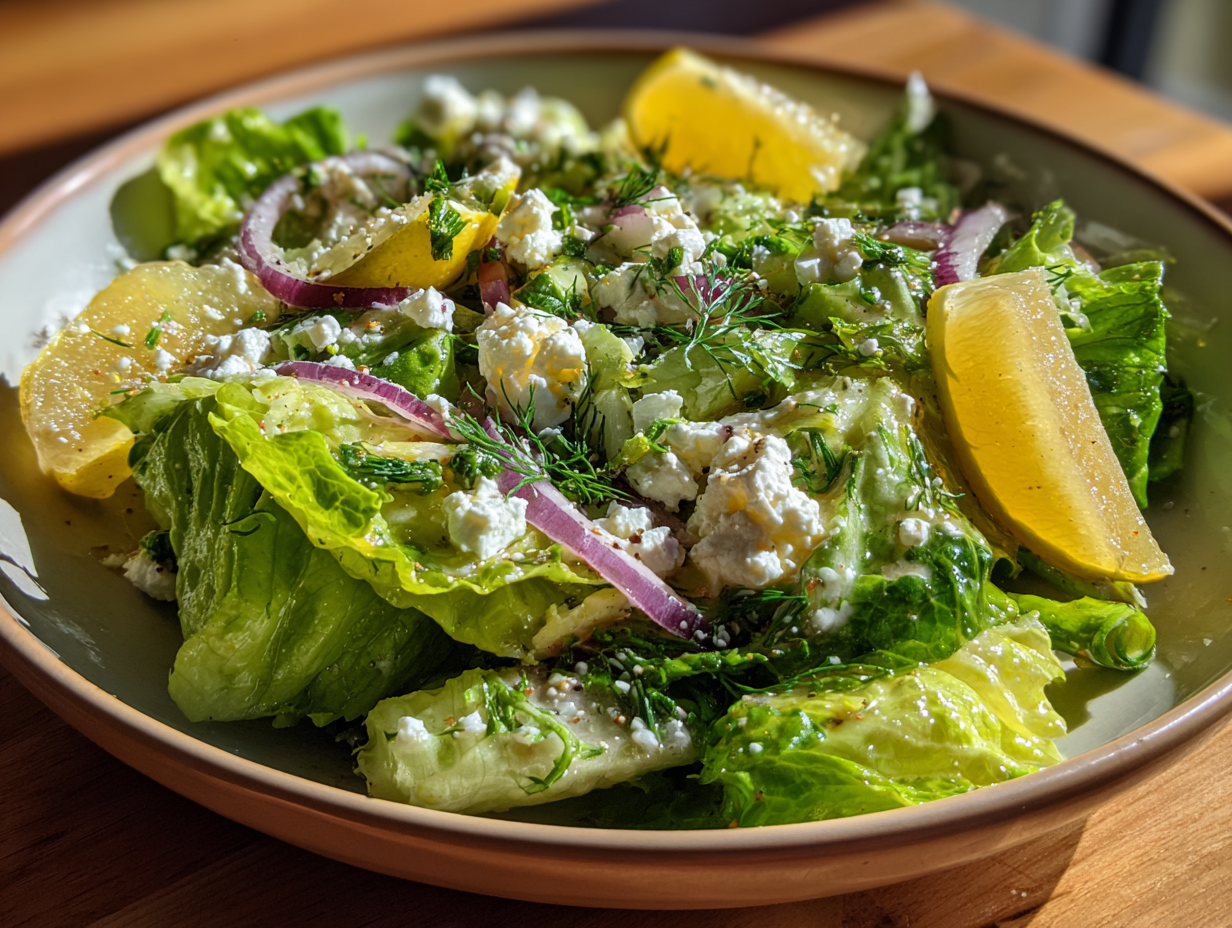

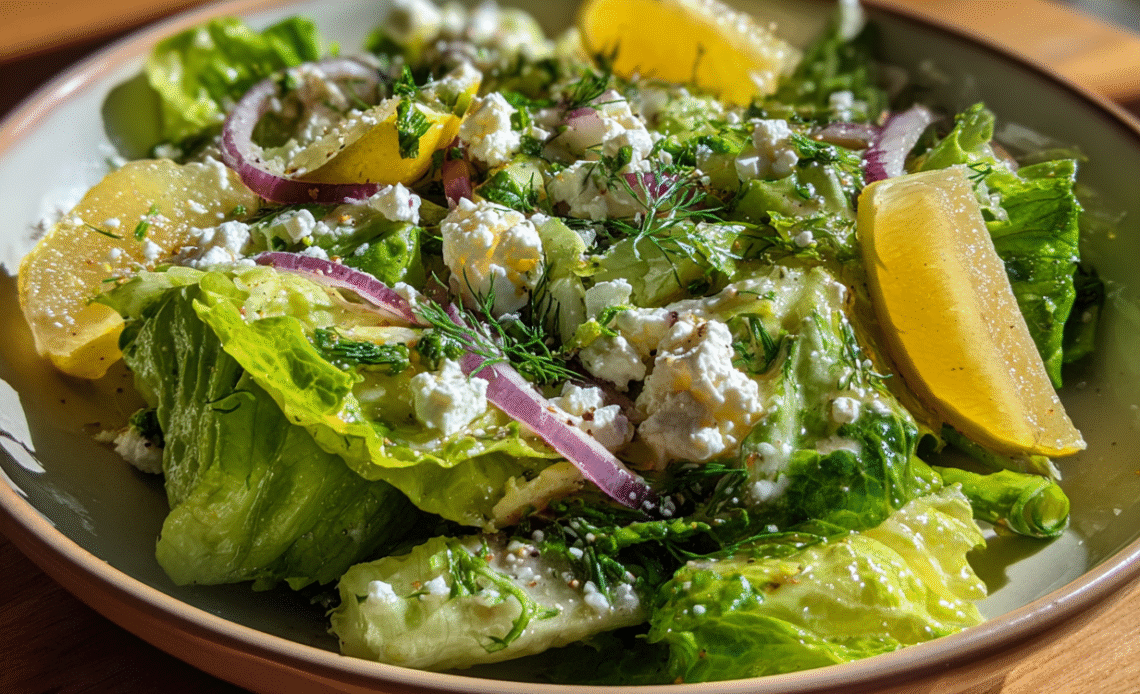
At Sugar Detox Lab, we believe that the most memorable meals often come from the simplest traditions. Greek cuisine has long understood this truth—building dishes around a few high-quality ingredients that shine on their own. Maroulosalata, the classic Greek lettuce salad, is a perfect example. With just a handful of fresh ingredients and a bright, simple dressing, it transforms humble romaine lettuce into something truly special. Our Maroulosalata (Greek Lettuce Salad) combines crisp romaine, fresh dill, pungent green onions, and creamy feta, all tossed in a light lemon and olive oil dressing. It’s refreshing, vibrant, and comes together in minutes. Best of all, it’s naturally low in added sugar and packed with nutrients—a perfect addition to any meal.
What Is Maroulosalata (Greek Lettuce Salad) and Why This Mindful Approach Matters
Traditional Greek salad, or horiatiki, is famous worldwide for its chunky tomatoes, cucumbers, onions, olives, and feta. But maroulosalata is a different, equally beloved Greek classic—a simple lettuce salad that appears on taverna tables and family dinners throughout Greece.
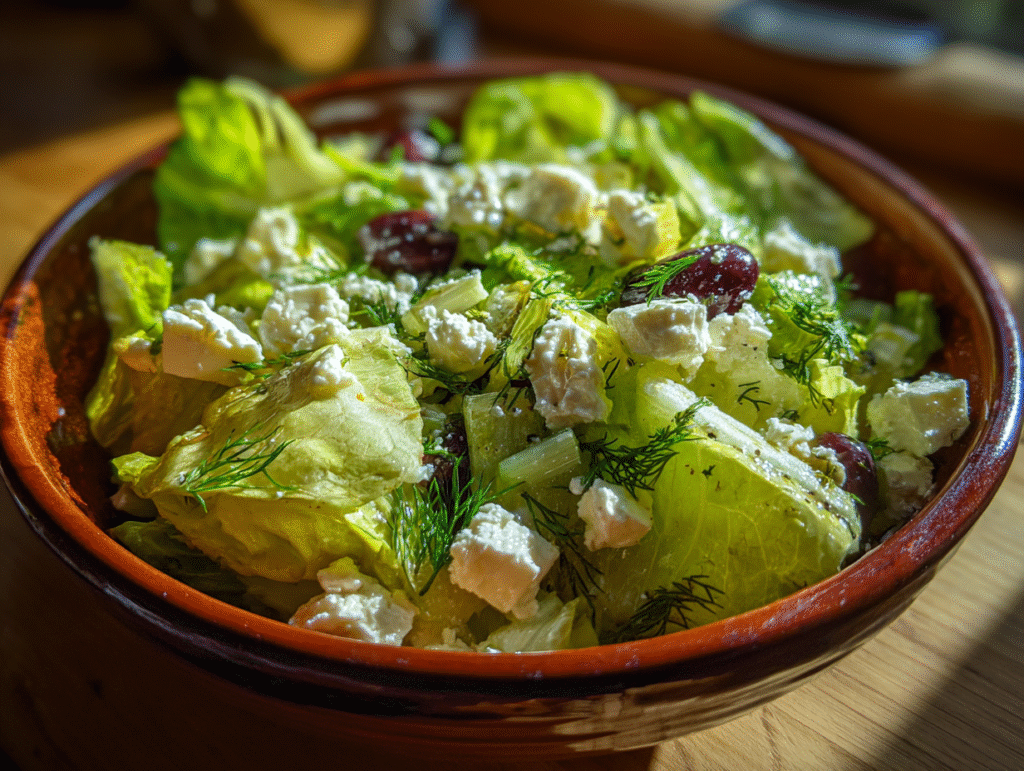
Our Maroulosalata (Greek Lettuce Salad) honors this tradition with authenticity and intention. Crisp romaine lettuce forms the base, providing cool crunch and mild sweetness. Fresh dill adds its distinctive anise-like brightness. Green onions contribute gentle pungency. Creamy, salty feta cheese ties everything together. And the dressing—just olive oil, fresh lemon juice, and a pinch of salt—lets every ingredient shine.
This mindful approach matters because it demonstrates that “healthy eating” doesn’t require complicated techniques or hard-to-find ingredients. This Maroulosalata (Greek Lettuce Salad) is built on whole foods, contains zero added sugars, and comes together in the time it takes to chop a few vegetables. It’s proof that the simplest preparations often deliver the most satisfying results. Whether served alongside grilled fish, roasted chicken, or as a light meal on its own, this salad brings a taste of the Greek islands to your table.
A Realistic Look at Ingredients and Their Health Benefits
Let’s explore the nutritional story behind each simple, wholesome ingredient:
For the Salad
- Romaine Lettuce: The crisp foundation. Romaine is one of the most nutrient-dense lettuces, providing impressive amounts of vitamins A, K, and C. A single cup of chopped romaine delivers over 80% of your daily vitamin A needs (from beta-carotene) and about 60% of vitamin K, essential for blood clotting and bone health. Its sturdy leaves hold up beautifully to dressing without wilting.
- Green Onions: Also known as scallions, these add mild onion flavor without overwhelming. Green onions are rich in vitamin K and vitamin C, and contain quercetin, an antioxidant with anti-inflammatory properties. Both the white and green parts are used, adding color and flavor.
- Fresh Dill: The signature herb of this salad. Dill’s feathery fronds add bright, slightly sweet, anise-like flavor that pairs perfectly with lemon and feta. Dill is rich in antioxidants and contains compounds that may aid digestion. Fresh dill is essential here—dried dill won’t provide the same vibrant flavor.
- Feta Cheese: Salty, tangy, and creamy. Authentic Greek feta is made from sheep’s milk or a mixture of sheep and goat milk, then aged in brine. It’s lower in fat than many other cheeses and provides calcium, protein, and B vitamins. Its crumbly texture distributes throughout the salad, offering little pockets of salty goodness in every bite.
For the Dressing
- Extra Virgin Olive Oil: The liquid gold of Greek cuisine. Olive oil is rich in heart-healthy monounsaturated fats and antioxidants called polyphenols, which have anti-inflammatory properties. Using high-quality extra virgin olive oil makes a noticeable difference in flavor. You can explore the history and production of olive oil on Wikipedia.
- Fresh Lemon Juice: Bright, acidic, and essential. Lemon juice adds vitamin C and helps balance the richness of the olive oil and feta. Freshly squeezed is crucial—bottled lemon juice lacks the bright, clean flavor that makes this salad sing.
- Salt: A simple seasoning that enhances all the other flavors. Use a high-quality sea salt or kosher salt.
This recipe is naturally vegetarian, gluten-free, low-carb, and contains zero added sugars. It fits beautifully into Mediterranean, keto, paleo (omit feta for strict paleo), and clean-eating lifestyles.
Navigating the Challenges: Tips for Salad Success
This salad is wonderfully simple, but a few tips will ensure the best results:
- Wash and Dry Romaine Thoroughly: After washing, dry the romaine leaves completely—a salad spinner works perfectly. Excess water will dilute the dressing and make the salad soggy.
- Cut Romaine into Bite-Sized Pieces: Tear or cut the romaine into manageable pieces, about 1-2 inches. Too large, and they’re difficult to eat; too small, and they become mushy.
- Use Fresh Dill, Not Dried: This is non-negotiable. Fresh dill provides a bright, delicate flavor that dried dill simply cannot match. Look for dill with vibrant green, feathery fronds and no signs of wilting.
- Crumble Feta, Don’t Cube: Crumbled feta distributes more evenly throughout the salad, ensuring every bite gets a touch of salty, creamy goodness. If your feta is in a block, crumble it with your fingers or a fork.
- Dress Just Before Serving: This salad is best enjoyed immediately after dressing. If you need to prep ahead, keep the chopped lettuce, herbs, and feta in separate containers, and whisk the dressing separately. Toss together just before serving.
- Don’t Overdress: Start with half the dressing, toss, and add more if needed. The leaves should be lightly coated, not swimming.
Tips and Trends for Mindful Mediterranean Eating
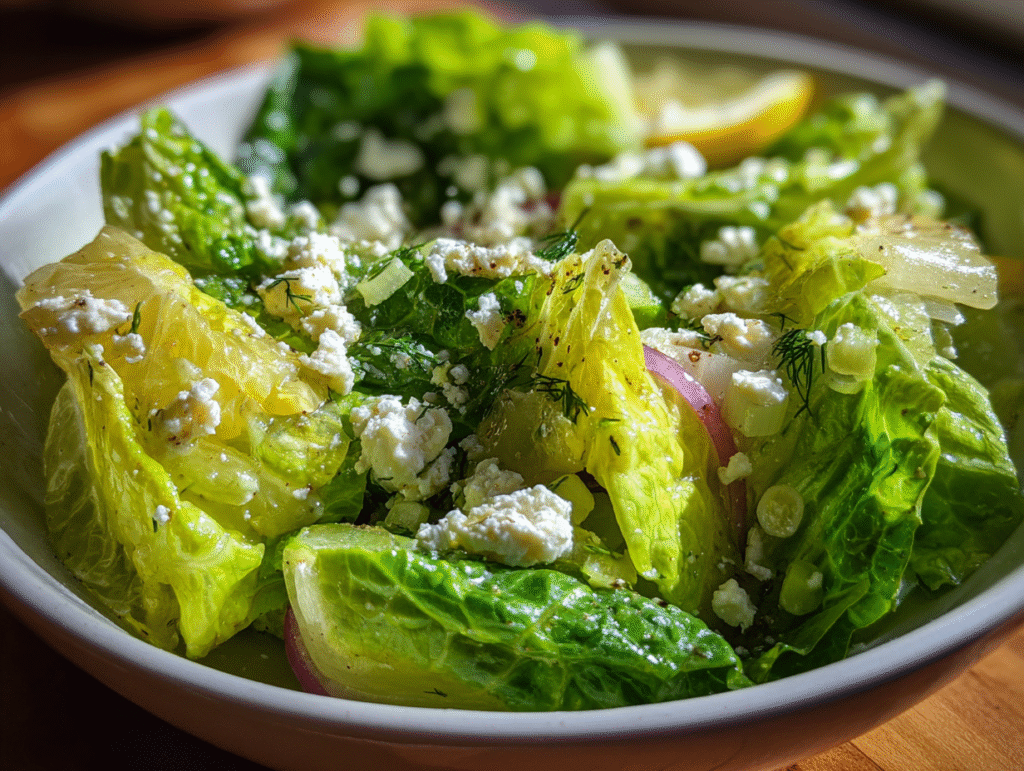
The Mediterranean diet continues to be one of the most celebrated and well-researched approaches to healthy eating, and this Maroulosalata (Greek Lettuce Salad) embodies its principles perfectly. Abundant vegetables, healthy fats from olive oil, moderate amounts of quality cheese—this is eating the way generations of Greeks have eaten.
Another significant trend is the appreciation for simple, authentic recipes with minimal ingredients. In a world of complicated cooking techniques and endless ingredient lists, there’s something deeply satisfying about a dish that lets a few high-quality components shine. This salad is a masterclass in that philosophy.
AI-powered meal planning tools can help you incorporate Mediterranean-inspired meals like this into your weekly rotation. Apps like Mealime or Yummly allow you to save this recipe, generate shopping lists, and even suggest complementary main dishes like grilled fish or roasted chicken.
The growing availability of high-quality, authentic ingredients—Greek feta, excellent extra virgin olive oil, fresh herbs—makes recipes like this accessible no matter where you live. Seek out a good olive oil and real feta; the difference in flavor is remarkable.
Frequently Asked Questions (FAQ)
Question: Can I use a different type of lettuce?
Answer: Romaine is traditional and ideal because of its crisp texture and ability to hold up to dressing. However, you can use a mix of crisp lettuces like Little Gem, butter lettuce, or even a sturdy spring mix. Avoid delicate lettuces like mesclun, which will wilt too quickly.
Question: I don’t have fresh dill. Can I use dried?
Answer: Fresh dill is strongly recommended for this salad. Dried dill has a much more concentrated, less bright flavor and won’t provide the same fresh, herbal quality. If you absolutely must substitute, use fresh mint or parsley instead—both would be delicious in their own way, though different from the traditional version.
Question: Is this salad suitable for a low-carb or keto diet?
Answer: Yes! Romaine lettuce is very low in carbohydrates, and the dressing contains no sugar. The feta adds minimal carbs. This salad fits perfectly into low-carb and keto lifestyles. For a complete keto meal, top with grilled chicken or salmon.
Question: Can I make this salad ahead of time for a party?
Answer: You can prep all components separately up to a day ahead: wash and dry the romaine (store with a paper towel in a sealed container), chop the herbs and onions, crumble the feta, and make the dressing. Combine everything and dress the salad just before serving to maintain maximum crispness.
Question: What can I serve with this salad?
Answer: This salad is incredibly versatile. It pairs beautifully with grilled meats like lamb chops, chicken souvlaki, or fish. It’s also wonderful alongside roasted vegetables, spanakopita, or as part of a mezze spread with hummus, tzatziki, and pita bread.
Question: Can I add tomatoes or cucumbers to this salad?
Answer: While this specific recipe is for the traditional maroulosalata, which focuses on lettuce and dill, you can certainly add chopped tomatoes, cucumbers, or red onion if you’d like. It will then resemble a combination of maroulosalata and horiatiki—still delicious!
Conclusion
This Maroulosalata (Greek Lettuce Salad) is a testament to the beauty of simplicity. With just a handful of fresh, high-quality ingredients, you can create a salad that’s vibrant, refreshing, and deeply satisfying. The crisp romaine, the bright dill, the tangy feta, the simple lemon-olive oil dressing—each element plays its part perfectly.
We encourage you to make this salad for your next meal, whether as a side dish for a Greek-inspired feast or as a light lunch on its own. It comes together in minutes and delivers flavor that far exceeds the sum of its parts. This is the kind of recipe that becomes a staple—easy enough for weeknights, elegant enough for entertaining.
For more recipes that help you create simple, nourishing meals with intention, explore our full collection at SugarDetoxLab.com. Did you try this salad? We’d love to hear about your experience in the comments below!