
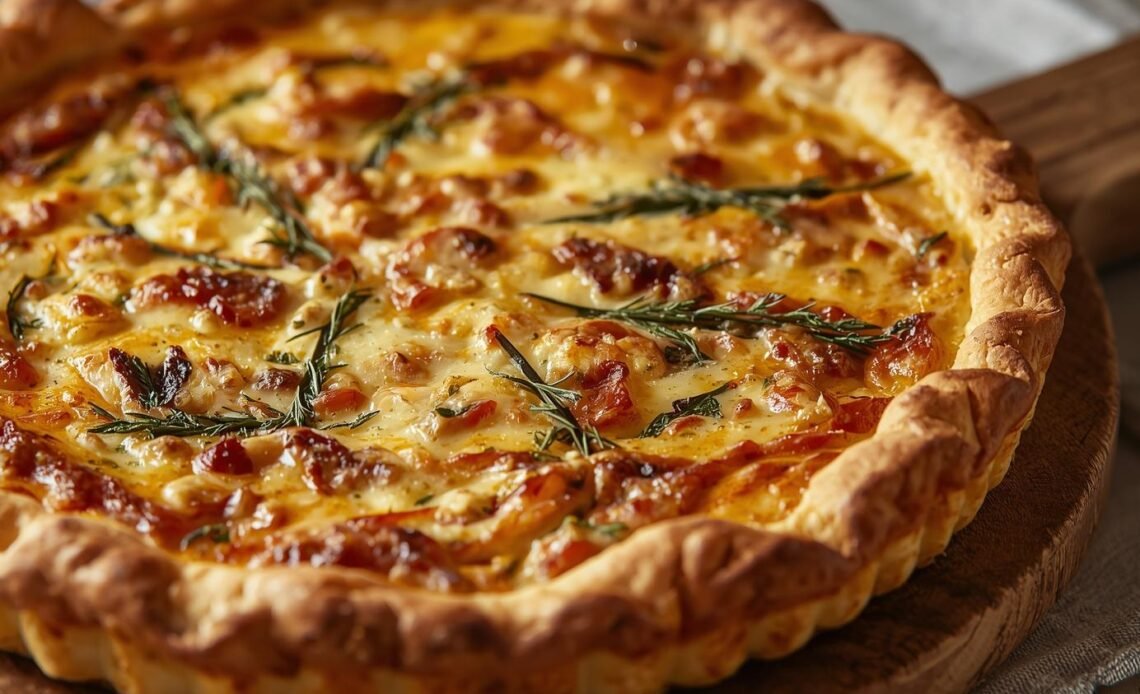
Here at Sugar Detox Lab, we explore the intersection of culinary heritage and modern wellness. We believe that respecting tradition while making mindful choices is the key to a sustainable, joyful approach to food. There are few dishes more iconic than the Classic French Quiche. A savory custard tart from the Lorraine region of France, it represents the pinnacle of simple, high-quality ingredients transformed into something greater than the sum of its parts. More than just an egg pie, it’s a lesson in technique, balance, and the profound satisfaction of a meal that is both rustic and elegant.
What Is a Classic French Quiche and Why Does Its Authenticity Matter?
The word “quiche” has become a broad term for any baked egg dish in a crust. The modern, globalized version often features pre-made crusts, low-fat dairy, an overabundance of filler vegetables, and processed cheeses. This can result in a watery, bland, or rubbery imitation that bears little resemblance to the original and often contains hidden stabilizers and sugars.
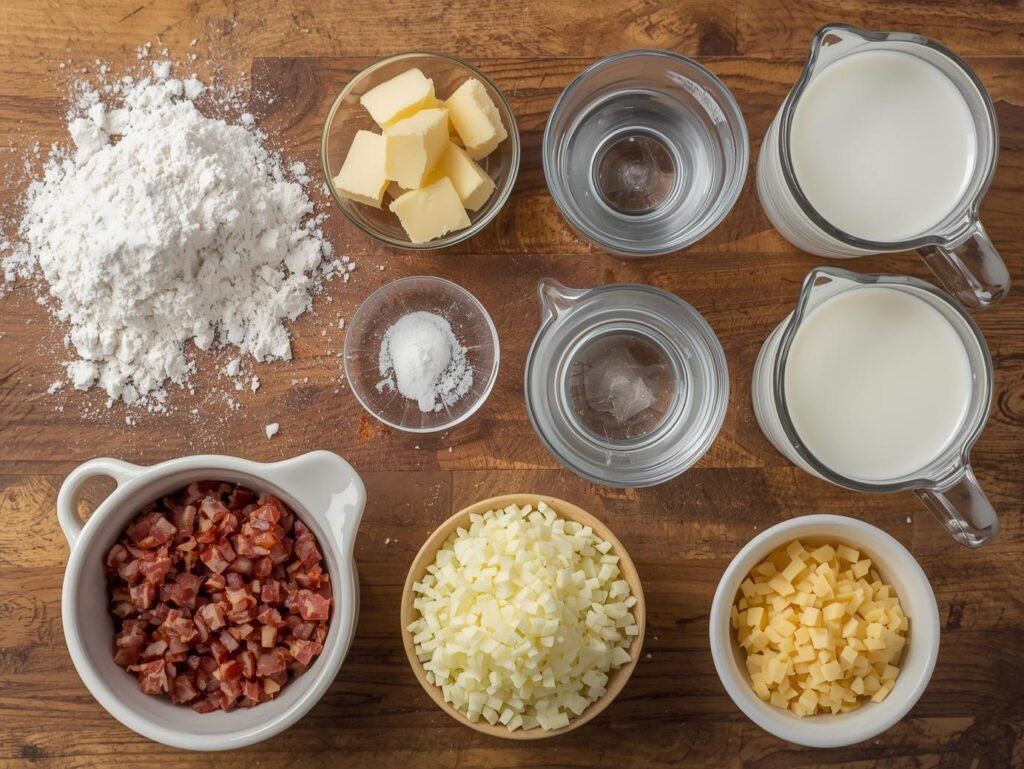
Understanding and preparing a true Classic French Quiche matters because it reconnects us with intentional cooking. At its heart, it is a study in minimalism and quality: a pâte brisée (shortcrust pastry), a rich custard of cream and eggs, and a few select, flavorful fillings—traditionally lardons (cured pork belly) and Gruyère cheese. There are no thickeners, no sugary additives, and no overwhelming lists of ingredients. This purity is its strength. By mastering the authentic technique—the flaky, blind-baked crust; the perfectly set, silky custard; the rendering of the lardons—you create a dish where every component shines. This version, while rich, is made from whole, recognizable ingredients.
Nutritional Perspective: A Whole-Foods Approach to a Rich Dish
Let’s examine the components of this Classic French Quiche through a lens of mindful eating and nutrient density.
- The Foundation: Pâte Brisée (Pastry Crust). Made from just flour, butter, salt, and water, this is a simple, whole-food crust. While it is a source of carbohydrates and saturated fat, it’s free from industrial seed oils, hydrogenated fats, and preservatives found in many store-bought versions. The key is in the portion—a thin, crisp layer that provides textural contrast rather than being the main event. Using high-quality, grass-fed butter can also increase the content of beneficial nutrients like vitamin K2 and conjugated linoleic acid.
- The Custard: Eggs and Dairy. This is the protein-packed heart of the quiche. Eggs are a complete protein and a source of choline, vital for brain health. The combination of heavy cream and whole milk provides a rich source of energy, fat-soluble vitamins (A, D, E, K), and calcium. The fats contribute to a profound sense of satiety, helping to regulate appetite. When sourced from well-raised animals, this dairy is a nutrient-dense food.
- The Fillings: Bacon (Lardons), Onion, and Gruyère. These ingredients are used for maximum flavor impact.
- Bacon/Lardons: Providing savory depth and protein. Opting for a thick-cut, high-quality bacon without added nitrites or sugar is a cleaner choice.
- Gruyère Cheese: This aged Swiss cheese is rich in calcium and protein, and its strong, nutty flavor means you need less to achieve a significant taste.
- Onion: Cooked until sweet and translucent, it adds fiber, antioxidants, and flavor complexity.
This Classic French Quiche dish is inherently low in sugar and high in protein and fat. It is not keto due to the flour crust, but a crustless version (“quiche sans pâte”) is a fantastic keto option. It is naturally gluten-free if you use a GF flour blend for the crust. It fits a “real food” or “clean eating” philosophy perfectly, as it contains no processed ingredients.
The Art of Technique: Tips for a Flawless Quiche Lorraine
The challenges are achieving a crisp, non-soggy crust and a custard that is set yet still creamy.
Here are our non-negotiable tips for success:
- Keep Everything Cold for the Pastry: The butter must be cold, and the water must be ice-cold. This prevents the butter from melting into the flour, which is what creates flaky layers when it vaporizes in the oven. Work quickly and let the dough rest in the fridge.
- Blind Bake the Crust Thoroughly: This is the single most important step. After chilling the shaped dough, line it with parchment and fill with pie weights or dried beans. Bake until the edges are set and just starting to color. Then, remove the weights and parchment and bake a few more minutes until the bottom is dry and sandy to the touch. This creates a moisture barrier against the wet custard.
- Render the Bacon and Cook the Onions: The bacon should be cooked slowly to render its fat and become crisp. The onions should be cooked in that fat until deeply sweet and golden. This not only builds flavor but also removes excess water that would leak into the custard.
- The Custard Ratio and Bake: The classic French ratio is equal parts dairy to eggs by volume. Here, 2 cups dairy to 4 eggs is perfect. Bake at a moderate temperature (usually 325-350°F / 160-175°C) until the custard is just set—it should still have a slight wobble in the center, as it will continue to cook from residual heat.
Tips and Trends: Honoring Tradition in a Modern Kitchen
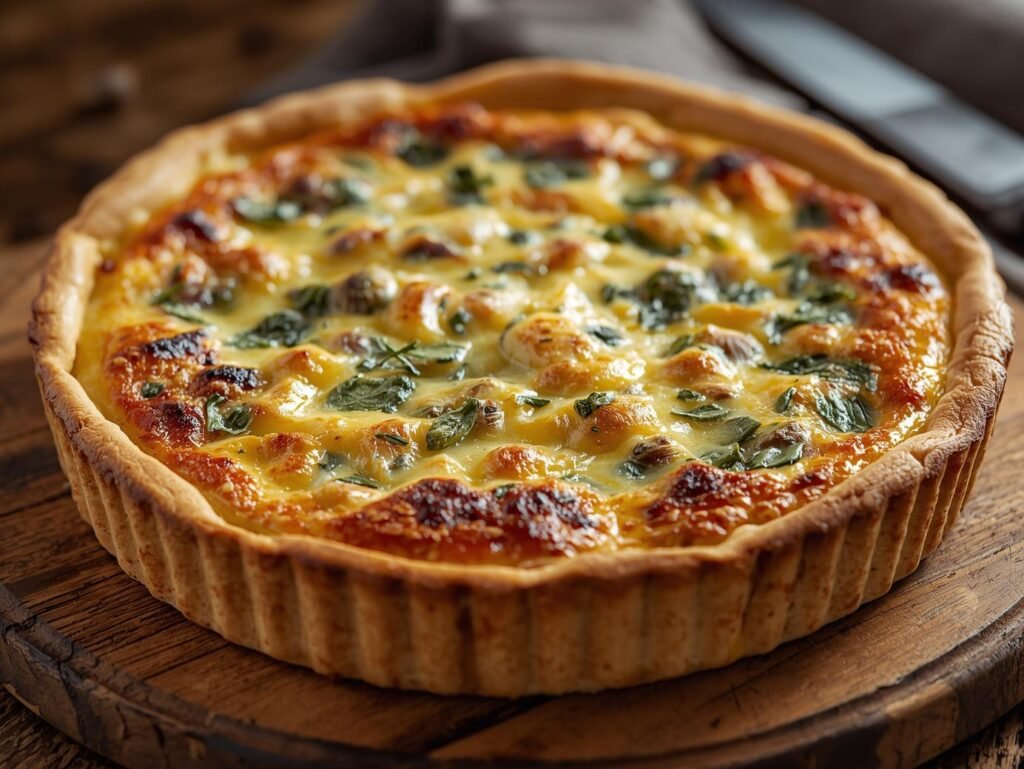
Mastering this Classic French Quiche connects you to a centuries-old culinary tradition. It’s a perfect example of “slow food” that rewards patience and skill. Modern tools like a food processor make the pastry effortless, and an oven thermometer ensures perfect baking temperature. The trend towards sourcing high-quality, artisanal ingredients—local eggs, farmstead cheese, heritage-breed bacon—elevates this dish from simple to sublime and aligns with a conscious food ethos.
Frequently Asked Questions: Classic French Quiche Recipe
Question: My custard puffed up like a soufflé and then sank. What happened?
Answer: This is caused by over-whisking the custard, which incorporates too much air. When baked, the air expands and then collapses. Whisk the eggs and dairy just until smoothly combined; you should not see a layer of foam on the surface. Baking at a steady, lower temperature (325°F) also helps prevent this.
Question: Can I use half-and-half instead of cream and milk?
Answer: Yes, you can use 2 cups of half-and-half for a slightly lighter, but still rich, custard. The texture will be slightly less luxurious but still excellent. Avoid using only milk, as the custard may not set as firmly.
Question: Is it necessary to use a tart pan with a removable bottom?
Answer> It is highly recommended. The fluted sides and removable bottom are designed for this type of pastry and make for a beautiful presentation and easy, clean slicing. A pie dish can work in a pinch, but serving neat slices will be more difficult.
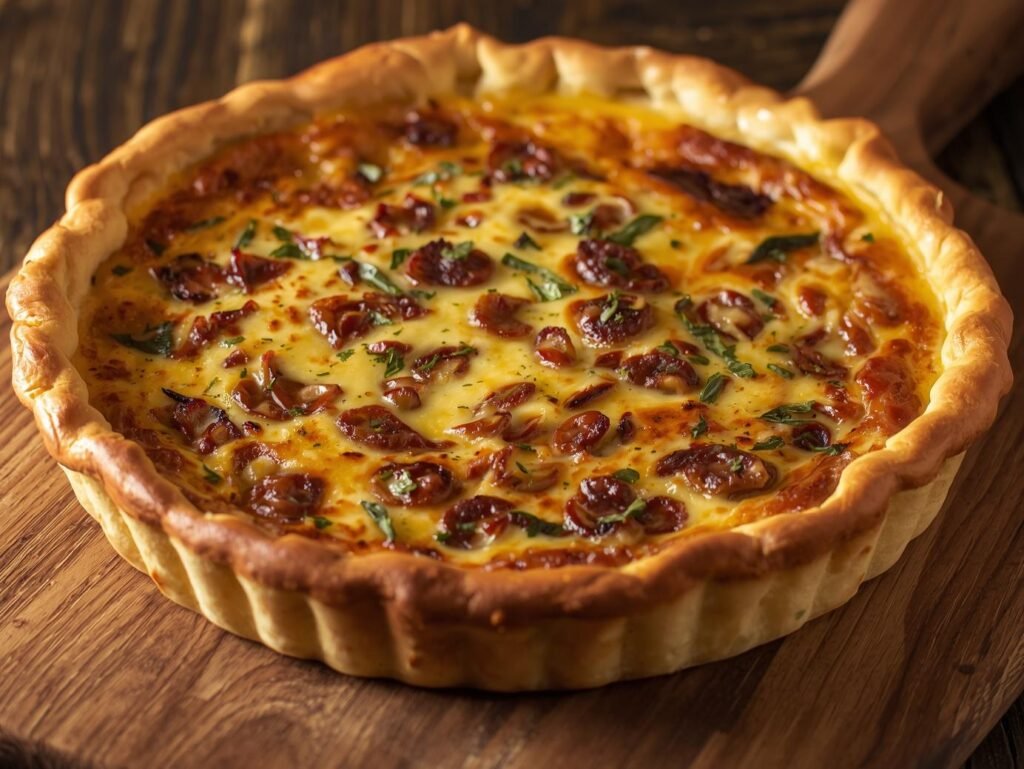
Conclusion: Classic French Quiche
This Classic French Quiche is more than a recipe; it’s a culinary lesson and a celebration of craftsmanship. It teaches the value of technique, the importance of quality ingredients, and the deep satisfaction that comes from creating something beautiful and nourishing from scratch. It proves that a diet focused on real food can include dishes that are rich in history and flavor.
We encourage you to embrace the process—the chill of the pastry, the aroma of browning bacon and onions, the quiet patience of the bake. Share this masterpiece with good company, and savor each creamy, savory bite. For more recipes that honor tradition while supporting a mindful, sugar-conscious lifestyle, explore our full collection at sugardetoxlab.com, subscribe for weekly inspiration, and tell us in the comments about your first quiche adventure!