


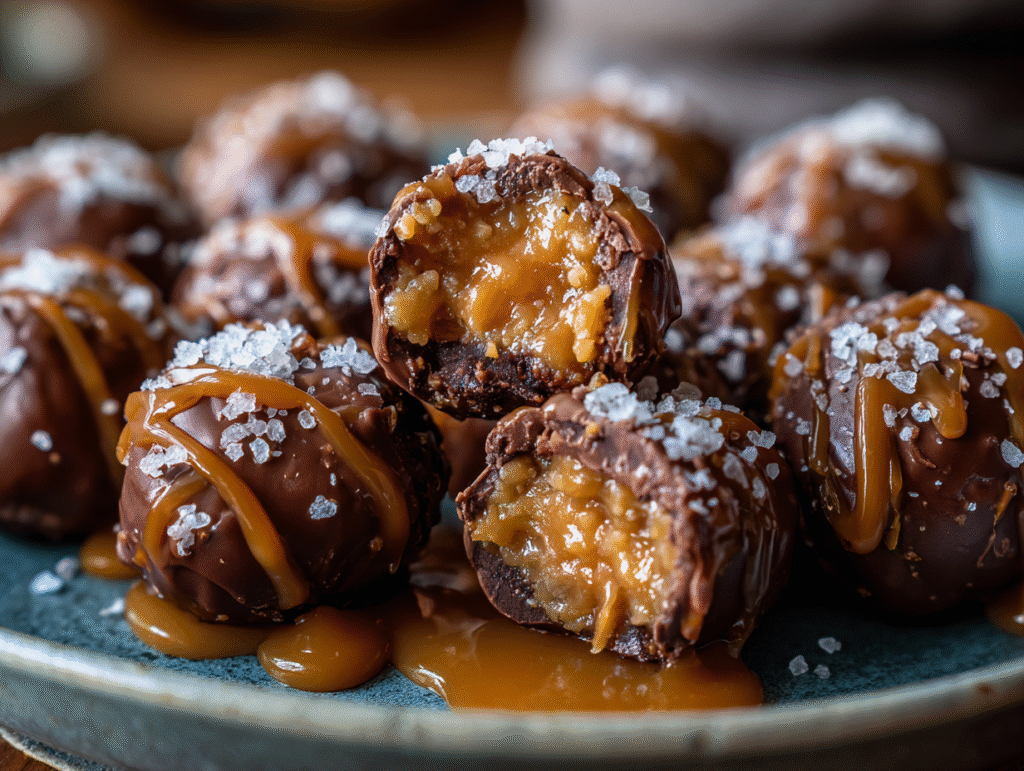
At Sugar Detox Lab, we navigate the sweet spot between unwavering commitment to wellness and a deep appreciation for life’s rich pleasures. We believe the path to sustainable health isn’t paved with restriction, but with intelligent adaptation. It’s about understanding the powerful allure of flavors like deep chocolate and silky caramel, and then crafting versions that satisfy the soul without undermining your well-being. Today, we’re embracing one of the most irresistible pairings in the confectionery world: salt and caramel. We present our recipe for Salted Caramel Fudge Truffles—a decadent, bite-sized homage to this classic duo, designed with mindfulness at its core to allow for smarter ingredients and conscious enjoyment.
What Are Salted Caramel Fudge Truffles and Why Reinvent Them?
A traditional fudge truffle is an intensely sweet confection, typically made from a base of chocolate and heavy cream or sweetened condensed milk, often enrobed in more chocolate. When caramel is added, the sugar content climbs even higher. Store-bought or standard recipe versions can be a one-way ticket to a sugar spike, relying heavily on refined sugars, corn syrup, and processed ingredients to achieve their creamy texture and long shelf life.
Our version of Salted Caramel Fudge Truffles matters because it serves as a masterful blueprint for indulgence with awareness. By making them from scratch, we reclaim control. This recipe provides the luxurious, foolproof technique (using sweetened condensed milk for a perfectly fudgy base) while openly inviting strategic swaps. We can choose a high-percentage dark chocolate to increase antioxidants and reduce sugar, select a caramel sauce with cleaner ingredients, and use a flaky sea salt that enhances flavor, potentially allowing us to use less sweetener overall. This approach doesn’t just create a candy; it creates an experience centered on quality and balance.

A Balanced Perspective on Decadent Ingredients
Let’s take a thoughtful look at the components of these Salted Caramel Fudge Truffles and explore their role in a health-conscious framework.
- Dark Chocolate & Cocoa: We specify semi-sweet chocolate chips, but this is a prime opportunity for an upgrade. Opting for chips with a higher cocoa percentage (60% or more) increases the content of flavonoids, beneficial plant compounds with antioxidant properties. Darker chocolate also naturally contains less sugar than milk chocolate, making it a smarter choice for managing overall sugar intake.
- The Sweetened Base: Sweetened condensed milk and caramel sauce are the primary sweeteners. This is the heart of the adaptation challenge. For a lower-sugar version, you can explore using a sugar-free sweetened condensed milk alternative (often made with erythritol and allulose) and a sugar-free caramel sauce. These swaps can significantly reduce the glycemic load of the final truffle.
- The Role of Salt: High-quality flaky sea salt (like Maldon or fleur de sel) isn’t just a garnish; it’s a crucial flavor catalyst. The salt crystals provide a bright, contrasting pop that cuts through the sweetness, enhancing the perception of both the chocolate and caramel flavors on your palate. This interplay can lead to greater satisfaction with a smaller portion, as the flavor experience is more complex and complete.
This recipe, in its standard form, is a “sometimes treat” for a balanced lifestyle. However, its true power lies in its adaptability. With the specific sugar-free ingredient swaps mentioned, it can be transformed into a dessert suitable for keto or low-glycemic eating plans, proving that mindful indulgence is truly inclusive.
Crafting Perfection: Navigating Texture and Tempering
The main challenges with homemade truffles are achieving a smooth, firm fudge center and a crisp, non-streaky chocolate shell.
Here are our essential tips for success:
- Low and Slow for the Fudge: When melting the chocolate chips with the condensed milk, butter, and caramel, use very low heat and stir constantly. Chocolate can seize (become grainy) if overheated. A double boiler is the safest method, but a heavy-bottomed saucepan on the lowest setting works if you are vigilant.
- Patience with Chilling: The fudge mixture must be completely firm before shaping. Rushing this step leads to sticky hands and misshapen truffles. A minimum of 3-4 hours in the fridge is recommended; overnight is ideal.
- Simplifying the Coating: Properly tempering couverture chocolate yields a professional, snappy shell, but it can be tricky. For a simpler, stable coating, “melting chocolate” or chocolate almond bark is formulated to set smoothly without tempering. Adding a teaspoon of coconut oil to your melting chocolate can also improve its fluidity for easier dipping.
Tips and Trends: The Smart Confectioner’s Toolkit
The world of mindful sweets is rich with innovation. Use a recipe nutrition calculator to input your specific brand choices for these Salted Caramel Fudge Truffles, especially when using alternatives, to track your macros accurately. The trend toward “better-for-you” caramel, made with dates or coconut sugar, and high-quality, low-sugar dark chocolate opens new doors for gourmet, health-conscious confections. These truffles are a perfect project for experimenting with these premium ingredients, elevating a simple treat into a thoughtful, artisan gift.
Frequently Asked Questions
Question: My fudge mixture is grainy, not smooth. What happened?
Answer: Graininess usually occurs if the chocolate was overheated or if a bit of steam or moisture got into the mixture during melting, causing the chocolate to “seize.” To prevent this, always use dry utensils and ensure your heat is very low. If it seizes, you can try to rescue it by vigorously stirring in a tablespoon of warm coconut oil or neutral oil until it smoothens again.
Question: Can I use homemade caramel sauce in this recipe?
Answer: Absolutely! Homemade caramel, where you control the sugar and cream, is an excellent choice. Ensure it is a thick, pourable sauce consistency, not a hard or chewy caramel. Let it cool to room temperature before mixing it into the condensed milk.
Question: Why do my coated truffles have white streaks after setting?
Answer: Those white streaks are called “bloom.” It happens when the chocolate is not properly tempered or experiences temperature fluctuations (like moving from a cold fridge to a warm room). It’s purely a cosmetic issue—the truffles are still perfectly safe and delicious to eat. Using “melting chocolate” formulated to not require tempering can prevent this.
Conclusion
These Salted Caramel Fudge Truffles represent the pinnacle of what we stand for at Sugar Detox Lab: indulgence, elevated by intention. They offer a path to savor one of the world’s most beloved flavor combinations in a way that respects your health goals, whether you enjoy the classic version as an occasional delight or adapt it into a sugar-free staple.
We encourage you to embrace the process, share these luxurious bites with those you love, and revel in the satisfaction of creating something truly special. Ready for more decadent, smartly-crafted recipes? Explore our full collection of sugar-conscious desserts at sugardetoxlab.com, subscribe for weekly inspiration, and tell us in the comments what other classic candies you’d love to see reimagined.